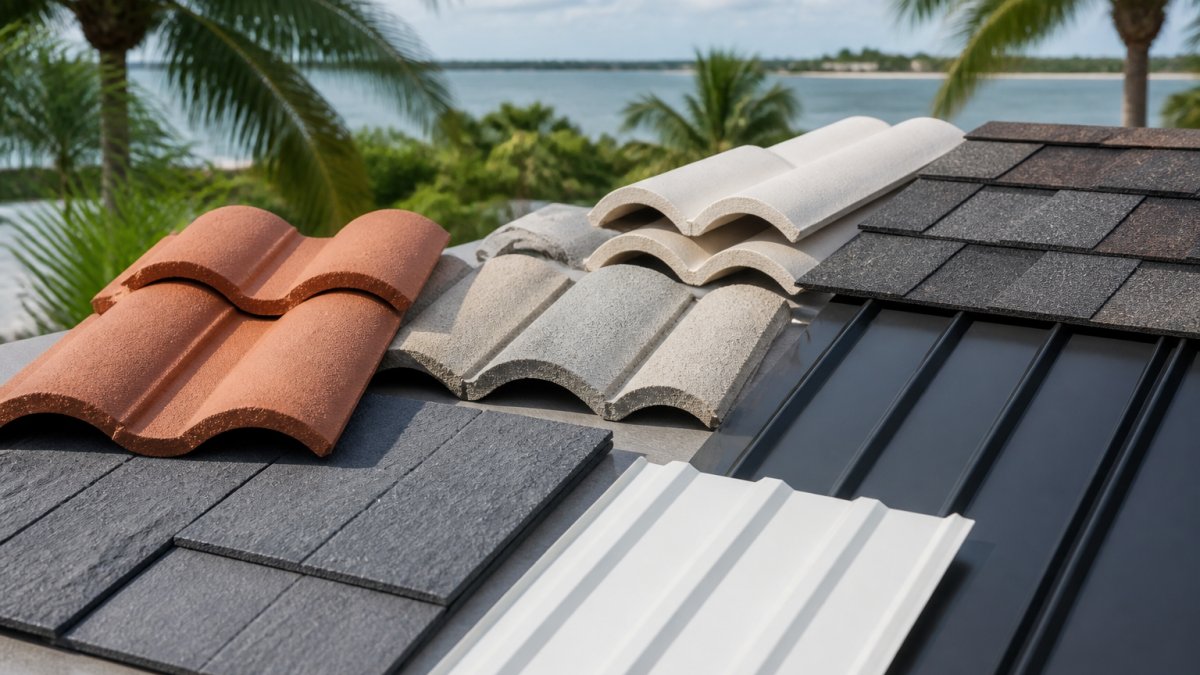
 blog
blog
Best Roofing Materials for Florida Climate: 2026 Guide
Table of Contents
- Why Florida's Climate Demands Specific Roofing Materials
- Metal Roofing: Standing Seam and Galvalume Performance
- Clay and Concrete Tile: Durability and Thermal Mass
- Asphalt Shingles: Pros, Cons, and Algae Resistance
- Energy Efficiency and Heat Reflection in Florida Roofing Materials
- New Roof Installation Cost: What Drives Pricing
- Florida Building Code Roofing Requirements and the Permitting Process
- Insurance Premium Impact, HOA Rules, and Sustainable Disposal
- Frequently Asked Questions
Last Updated: October 3, 2026
Why Florida's Climate Demands Specific Roofing Materials
Choosing the best roofing materials for Florida climate is not a style decision. It is an engineering one. Between salt air, relentless UV exposure, and hurricane-season wind loads that can push past 140 mph along the Gulf Coast, a roof here faces conditions that would end the life of a roof built for a milder region.
At LRI Restorations, we have over 25 years of industry experience in roofing, and the pattern is consistent: homeowners who match material to climate get decades of service, while those who pick on appearance alone end up replacing far sooner. Below, we break down how the leading options actually perform, what drives new roof installation cost, and how Florida building code roofing requirements shape every project.
Metal Roofing: Standing Seam and Galvalume Performance
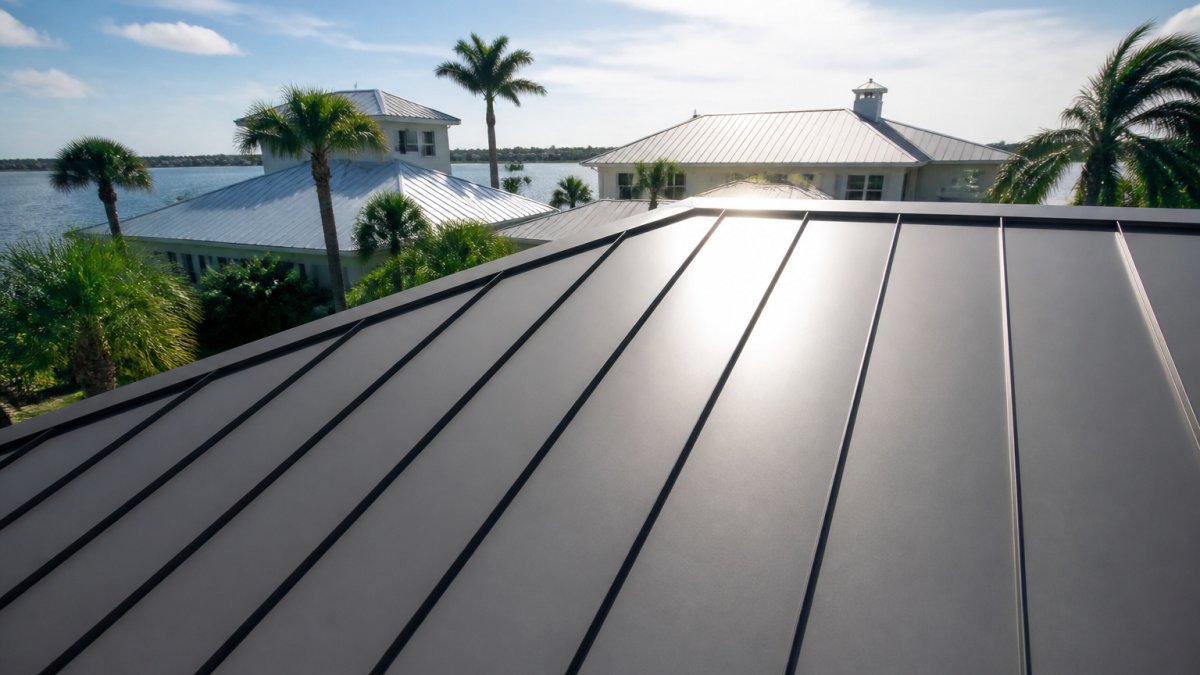
Metal roofing is the strongest performer for coastal Florida, and standing seam panels in Galvalume steel lead the category. The interlocking seams eliminate exposed fasteners, which is where corrosion and leaks typically begin in salt air.
Galvalume is a steel sheet coated in an aluminum-zinc alloy, and that coating is what resists coastal corrosion far better than standard galvanized metal. For a home within a few miles of the water, that difference decides whether the roof lasts 20 years or 50.
Wind Ratings and Hurricane Protection
Metal panels are engineered to resist uplift, the force that peels a roof off during a storm. Because standing seam panels lock together and attach with concealed clips, they hold their seal under sustained wind that shreds lighter materials. That uplift resistance is exactly what wind mitigation inspectors look for when they rate a home for insurance.
Clay and Concrete Tile: Durability and Thermal Mass
Clay tile and concrete tile are the traditional Florida roof for good reason. Both resist rot, insects, and UV degradation, and neither corrodes in salt air. Their real advantage is thermal mass: the dense material absorbs heat slowly during the day and releases it after sunset, which reduces heat transfer into the attic.
The trade-off is weight. Tile is heavy, so the roof structure and roof pitch must be engineered to carry the structural load. On an older home, that may mean reinforcement before installation. Synthetic slate offers a lighter alternative that mimics the look of natural slate without the load.
Asphalt Shingles: Pros, Cons, and Algae Resistance
Asphalt shingles are the most affordable option and the fastest to install, which keeps them popular across the state. The catch is lifespan. Intense UV exposure breaks down the asphalt over time, and in coastal salt air the granules erode faster than they would inland.
Algae resistance is the other factor. Warm, humid conditions encourage algae streaks that stain the roof and make it look older than it is. Shingles rated for algae resistance use copper-infused granules to slow that growth (Asphalt Shingle Technology). If you choose asphalt, buy the algae-resistant line and plan on a shorter maintenance cycle than you would with tile or metal.
Energy Efficiency and Heat Reflection in Florida Roofing Materials
Energy efficiency in roofing comes down to two things: solar reflectivity and ventilation. A reflective surface bounces sunlight away instead of absorbing it, which lowers the heat transfer into your attic. Metal with a reflective finish and light-colored tile both perform well here.
Ventilation matters just as much. Even a reflective roof traps heat if the attic cannot breathe. Ridge vents, soffit vents, and proper intake work together to move hot air out, and a roofing contractor should confirm the ventilation plan before installation, not after.
New Roof Installation Cost: What Drives Pricing
New roof installation cost depends on factors that vary from one home to the next, so any honest quote starts with an inspection. Roofing is priced by the "square", 100 square feet of roof surface, and a typical single-family home runs somewhere between 20 and 35 squares once you account for pitch, overhangs, and complex rooflines.
The main drivers are material choice, roof size and pitch, the condition of the existing decking, and whether the old roof needs a full tear-off. A steep or cut-up roof takes longer to install and generates more waste, so labor per square climbs. If the decking is soft or delaminated, those sheets get replaced before anything goes down.
Pricing also depends on the details that protect the roof: underlayment grade, flashing, ventilation upgrades, and the attachment method required for your wind zone.
| Material | Relative Cost | Typical Lifespan | Best For |
|---|---|---|---|
| Standing seam metal | Higher upfront | Longest | Coastal homes, salt air |
| Clay / concrete tile | Higher upfront | Long | Heat reflection, wind zones |
| Synthetic slate | Mid to high | Long | Slate look, lighter load |
| Asphalt shingles | Lowest upfront | Shortest | Budget projects, inland |
Two cost traps catch homeowners in this climate specifically. First, tear-off: many homes already carry one or two layers of shingles, and code generally limits how many layers a roof can carry, so a full tear-off may be mandatory rather than optional.
Florida Building Code Roofing Requirements and the Permitting Process
Florida building code roofing requirements exist because the state's wind zones demand specific attachment methods, product approvals, and inspections. Your roof must be installed to the code for your wind zone, and the product itself must carry the required approvals. This is not paperwork for its own sake. It is what makes the roof insurable and safe.
The Florida Building Code sets the standards, and your local building department enforces them. Because requirements shift over time, confirm the current edition with your contractor or the building department before work begins.
Roof Replacement Permitting Process Step by Step
- Inspection and scope. A contractor inspects the roof and documents the damage or age.
- Permit application. The contractor files for the roof permit with your local building department.
- Product approval check. The materials must meet the code for your wind zone.
- Installation. Work proceeds to the approved scope and attachment method.
- Inspection. The building department inspects the finished roof and issues a passing report.
- Final documentation. You receive the permit closeout and, if applicable, the wind mitigation report.
A full-service contractor handles every one of these steps, so you are not chasing permits or scheduling inspectors yourself.
Insurance Premium Impact, HOA Rules, and Sustainable Disposal
Three things most roofing guides skip can matter as much as the material itself. This is where a roof stops being a construction project and starts being a financial and legal one.
Insurance and wind mitigation credits. Insurers do not price your roof on appearance, they price it on a wind mitigation inspection, a standardized form an inspector completes after the roof is installed. The form documents features like roof-to-wall attachment, roof deck attachment, secondary water barrier, and the roof covering's product approval.
HOA and zoning rules. Many communities restrict roof color, material, and profile, and some architectural review boards require approval before a single panel or tile is ordered. Tile profiles, metal panel color, and even the direction of standing seams can be governed. Check your HOA covenants and local zoning before you order materials, and get any approval in writing.
Sustainable disposal. Old roofing generates a large volume of waste, a tear-off on a typical home can run several tons of shingle, felt, and nails.
Frequently Asked Questions
What type of roof lasts 25 years in Florida?
Asphalt shingles typically last 15 to 20 years in Florida due to intense UV exposure and heat, so they may not reach 25 years without replacement. Concrete and clay tile roofs often last 50 years or more, and metal roofs can last 40 to 70 years. For a 25-year lifespan, tile or metal are more reliable choices. Proper ventilation and underlayment also extend any roof's life.
How does the 25% roof rule impact my replacement options?
The 25% rule means if you repair or replace more than 25% of your roof's surface area, the entire roof must be brought up to current Florida building code. This can affect material choices because upgrading to a heavier tile roof may require structural reinforcement. It also triggers a full permitting process. Consulting a licensed contractor early helps you plan for code compliance and avoid unexpected costs.
Which roofing materials offer the best protection against hurricane-force winds?
Standing seam metal roofs and concrete or clay tile roofs offer the highest wind resistance, often rated for 140-160 mph winds when installed with proper fasteners and underlayment. Asphalt shingles can also perform well if they meet high wind ratings, but they are more prone to uplift in extreme storms. Wind mitigation features like secondary water barriers and ring-shank nails improve any material's performance.
Are metal roofs better than asphalt shingles for energy efficiency?
Metal roofs with reflective coatings or Galvalume can reduce heat transfer significantly, lowering cooling costs by reflecting solar radiation. Asphalt shingles absorb more heat, though lighter-colored options with algae resistance help somewhat. For maximum energy efficiency in Florida's climate, metal or tile with a high solar reflectivity rating is generally the better choice, especially when paired with proper attic ventilation.