 ultimate-guide
Hiring a Contractor for Out-of-State Owners: A Complete Guide
Table of Contents
- Why Out-of-State Owners Face Unique Contractor Challenges
- How to Verify Contractor Licenses Across State Lines
- Understanding Bonding, Insurance, and Worker Classification
- Red Flags When Hiring a Contractor Remotely
- Construction Contract Templates for Remote Owners
- Contractor Communication Tools for Owners Managing Projects Remotely
- Remote Oversight and Quality Control Strategies
- Payment Security and Escrow for Out-of-State Projects
- Frequently Asked Questions
Last Updated: October 2, 2026
Why Out-of-State Owners Face Unique Contractor Challenges
Managing a construction project from a distance introduces complexities that local owners never encounter. You can't drop by the job site on a whim, inspect work in person, or resolve issues with a quick conversation. This fundamental distance creates friction at every stage, from vetting contractors to verifying quality, managing payments, and ensuring compliance with unfamiliar state regulations.
Hiring a contractor for out of state owners requires a different approach than hiring locally. The stakes feel higher because communication delays compound small problems into major ones. A contractor who disappears mid-project becomes exponentially harder to track down when you're not in the same state. Payment disputes escalate faster when you can't meet face-to-face. And licensing, bonding, and tax requirements vary significantly across state lines, leaving room for costly mistakes.
The good news: these challenges are manageable if you know what to look for. The difference between a smooth remote project and a disaster often comes down to three things: upfront vetting rigor, crystal-clear documentation, and the right communication infrastructure.
How to Verify Contractor Licenses Across State Lines
Before you sign anything, confirm that your contractor actually holds a valid license in the state where the work will happen. This is non-negotiable. Each state maintains its own licensing board, and a contractor licensed in one state may not be licensed in another, even if they claim they can work anywhere.
Start by visiting the licensing board's website for the state where your project is located. Most states have a public contractor database you can search by name or license number. Look for the contractor's classification (general contractor, roofing specialist, etc.), the issue date, and the expiration date. Verify the license covers the specific work you need done. A roofing license doesn't automatically authorize electrical work, for example.
Call the licensing board directly if you find anything unclear. Ask whether the contractor has any open complaints, disciplinary actions, or past violations. This conversation takes five minutes and prevents hiring someone with a history of cutting corners or abandoning jobs.
Don't accept a contractor's word that they're licensed. Don't trust a copy of their license they email you. Verify it yourself, directly with the state board. Out-of-state owners are particularly vulnerable to licensing fraud because you can't easily verify credentials in person.
Understanding Bonding, Insurance, and Worker Classification
Three legal protections matter most when hiring a contractor for out of state owners: bonding, liability insurance, and proper worker classification.
Bonded and Insured Requirements
A bonded contractor has purchased a surety bond, a financial guarantee that they'll complete the work as promised. If they fail to finish the job or violate the contract, the bonding company covers your losses up to the bond amount. This isn't optional for large projects. Most states require general contractors to carry bonds. Verify the bond is active and covers the scope of your project.
Liability insurance protects you if someone gets injured on the job site or if the contractor damages your property. Ask for a Certificate of Insurance naming you as an additional insured. This means you're covered under their policy if something goes wrong. Verify the coverage limits are adequate for your project type. A kitchen remodel and a roof replacement have different risk profiles.
Request both documents before signing any contract. Don't proceed without them. A contractor who resists providing proof of bonding or insurance is a red flag, they're either uninsured or hiding something.
Independent Contractor vs. Employee Status
This classification matters for tax purposes and legal liability. If you hire a contractor who is actually misclassified as self-employed when they should be an employee, you could face penalties and back-tax liability.
The IRS uses a three-part test to determine worker status: behavioral control (do you direct how the work is done?), financial control (do you pay per project or provide tools?), and relationship type (is this ongoing or one-time?) (Independent contractor (self-employed) or employee?). True independent contractors control their own work methods, use their own equipment, and typically work for multiple clients.
When you hire a contractor for out of state owners, request their W-9 form before paying them. This confirms they're claiming self-employed status. If you pay them more than $600 in a year, you'll need to file a 1099-NEC form with the IRS (Form 1099 NEC & Independent Contractors). Keep this documentation. It protects you if the IRS ever questions the worker's classification.
Red Flags When Hiring a Contractor Remotely
Certain warning signs become even more critical when you can't meet the contractor in person. Watch for these patterns.
A contractor who avoids written communication is a major red flag. If they resist email or insist on only phone calls, you lose documentation of what was promised and what was agreed upon. Insist on written communication for all decisions, changes, and timelines. This protects both of you.
Pressure to pay upfront in full is another warning sign. Legitimate contractors understand that out-of-state owners need reassurance. They're willing to work with milestone payments tied to completion of specific phases. If someone demands 100% payment before starting work, walk away.
Vague timelines are red flags in any contractor relationship, but they're especially dangerous remotely. A contractor who says "we'll start sometime in the fall" or "it'll take a few months" hasn't thought through the project scope. Push for specific start dates, phase completion dates, and a final deadline. Build in buffer time, but demand clarity.
References from local clients matter, but ask specifically about their experience with the contractor's communication and timeline adherence. Ask whether the contractor was responsive to questions and whether the final cost matched the estimate. Ask whether they'd hire this contractor again. An evasive answer tells you something.
Construction Contract Templates for Remote Owners
A strong contract is your primary protection when you can't supervise in person. It's not just legal boilerplate, it's your communication tool.
Your contract should specify the exact scope of work, materials to be used, timeline with milestone dates, payment schedule tied to completion phases, and procedures for changes or disputes. Include a clause requiring written approval before any work deviates from the plan. Specify who's responsible for permits and inspections. State what happens if the contractor abandons the project or fails to meet deadlines.
Include a payment schedule that protects you. Never pay 100% upfront. A common structure is 10% deposit, 40% at start, 40% at substantial completion, and 10% at final walkthrough after all inspections pass. This keeps the contractor motivated to finish and gives you use if quality issues emerge.
Add a dispute resolution clause specifying whether disagreements will be handled through mediation, arbitration, or court action. Specify which state's laws govern the contract, typically the state where the work is happening. Include a lien waiver clause requiring the contractor to sign a final lien waiver before you release the last payment. This prevents them from claiming against your property later.
Don't use a generic template without customizing it for your specific project. Vague language creates room for misunderstandings. Be specific about materials, finishes, and quality standards. If you want a specific brand of roofing material or kitchen cabinets, name it in the contract. If the contractor proposes a substitution, require written approval before they proceed.
Contractor Communication Tools for Owners Managing Projects Remotely
Without the ability to visit the site regularly, you need systems that keep you informed and create an audit trail.
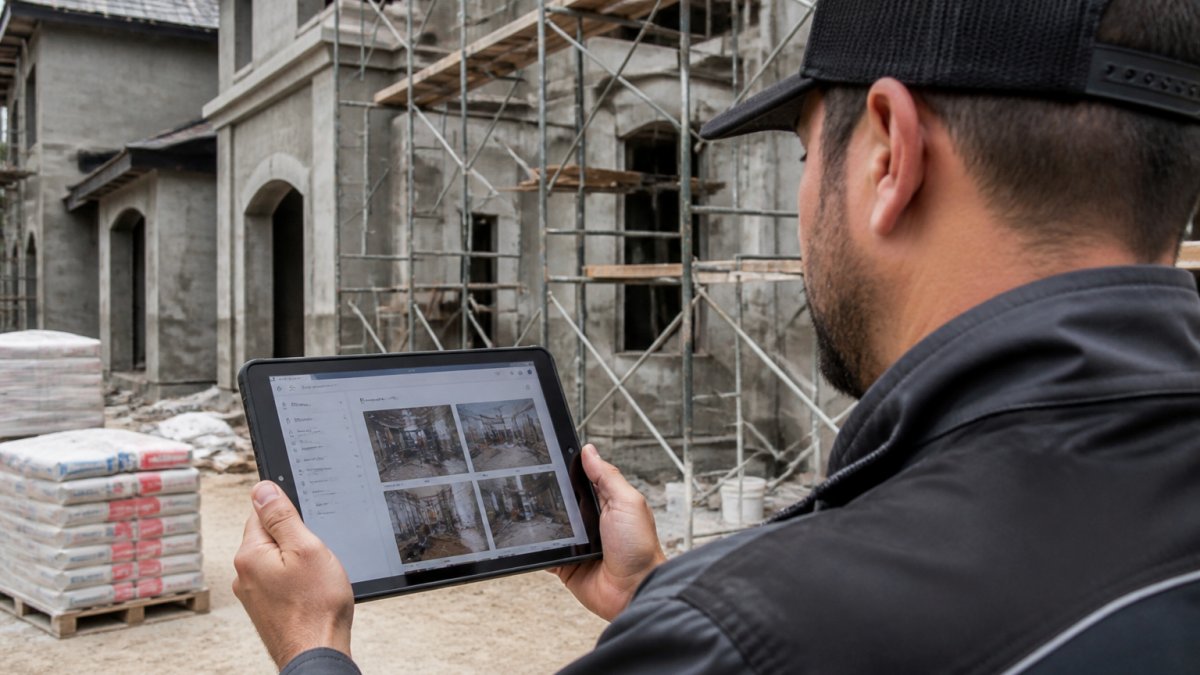
Project management platforms designed for construction, like Asana, Monday.com, or industry-specific tools, let contractors post daily updates, photos, and timelines. You can see progress in real time without being there. Request that your contractor use one of these tools and update it daily. Photo documentation is critical. Before-and-after photos of each phase create accountability and prevent disputes about what was done.
Weekly video calls work better than phone calls for remote projects. You can see the site conditions, ask questions about specific areas, and build a stronger working relationship.
Remote Oversight and Quality Control Strategies
Monitoring quality from a distance requires a different approach than on-site supervision. You can't catch every mistake in real time, but you can catch them before they become expensive.
Payment Security and Escrow for Out-of-State Projects
Sending money to a contractor you've never met in person carries real risk. Structure your payments to protect yourself.
Frequently Asked Questions
How do I verify a contractor's license if they're in another state?
Most states maintain online license lookup databases on their Department of Professional Regulation or licensing board websites. Search the contractor's name and license number in the state where the work will occur. Verify the license is active and in good standing, then confirm any disciplinary history. Ask the contractor directly for their license number and confirm they're bonded and insured. Never hire someone who refuses to provide this information or whose license cannot be verified online.
What are the biggest red flags when hiring a contractor for a remote property?
Watch for contractors who demand full payment upfront, avoid written contracts, or won't provide references you can contact. Be cautious of those who pressure you to decide quickly, can't explain their pricing clearly, or lack proper licensing and insurance documentation. Contractors who discourage site visits, don't return calls promptly, or have no established business address are also warning signs. Trust your instinct, legitimate contractors welcome transparency and documentation.
Do I need a written contract for out-of-state construction work?
Yes. A written contract protects both you and the contractor. It should include the project scope, timeline, payment schedule with milestone dates, materials specifications, warranty terms, and dispute resolution procedures. Include provisions for change orders, how extras will be billed, and what happens if the project stalls. Specify who handles permits and inspections. Have an attorney review the contract before signing. Construction contract templates are available through industry associations, but customizing them to your project and state laws is essential.
How can I oversee a construction project when I'm not there in person?
Use video calls and photo documentation to stay connected. Require the contractor to send weekly progress photos and participate in video walkthroughs. Establish a communication schedule, daily or weekly depending on project phase. Consider hiring a local project manager or inspector to visit the site regularly and report back. Use project management apps to track timelines, payments, and change orders. Schedule in-person visits at key milestones: before work starts, mid-project, and before final payment. This combination of remote oversight and periodic visits protects your investment.