 how-to
Is Emergency Siding Repair Covered by Insurance?
Table of Contents
- Is Emergency Siding Repair Covered by Insurance?
- What Causes of Siding Damage Are Typically Covered
- Does Homeowners Insurance Cover Siding Repair
- How to Document Siding Damage for Insurance
- Emergency Steps: Temporary Siding Repair After a Storm
- Matching Siding in Your Insurance Claim
- Filing Your Siding Damage Claim: Step-by-Step
- Common Coverage Gaps and Exclusions
- Frequently Asked Questions
Last Updated: October 5, 2026
Is Emergency Siding Repair Covered by Insurance?
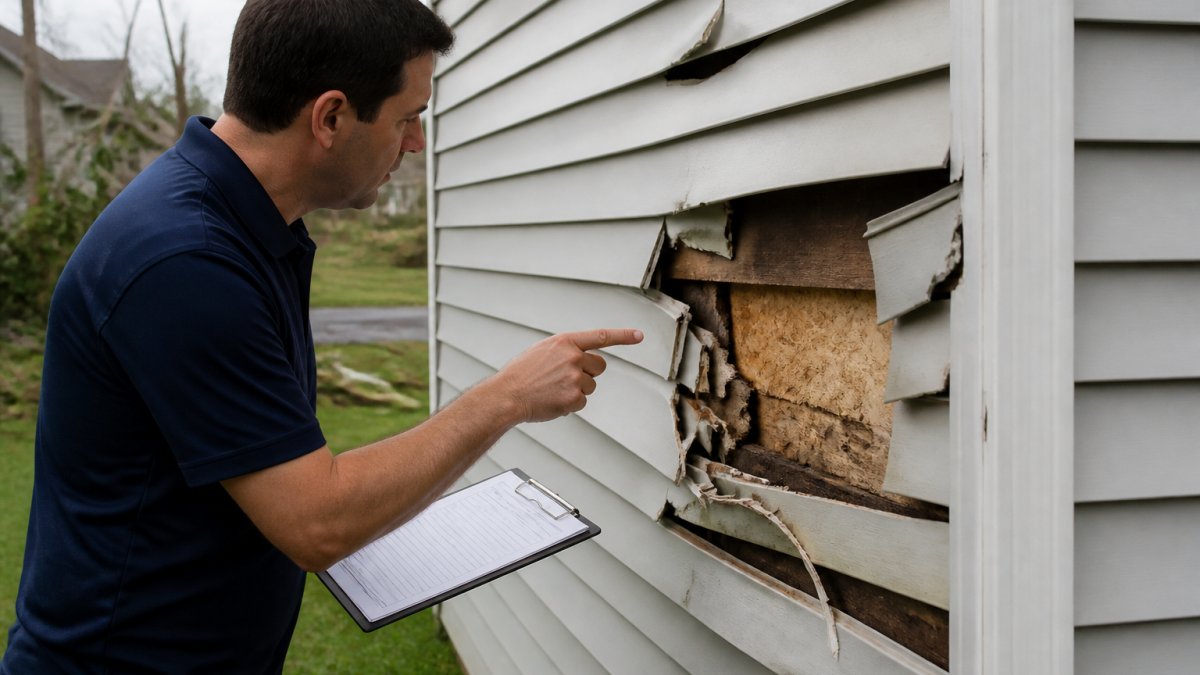
When a storm damages your siding, the first question is whether is emergency siding repair covered by insurance. The answer depends on the cause, your policy, and how quickly you act.
Most homeowners insurance policies cover sudden, accidental siding damage from storms, hail, or wind. But some claims get denied, partially approved, or fall into gray areas where your insurer and contractor disagree.
At LRI Restorations, we've spent over 25 years in the industry, navigating these claims for homeowners across Florida's Gulf Coast. We specialize in navigating insurance claims.
This guide covers what's typically covered, how to document damage so your claim isn't rejected, and the steps to file a claim that stands up to scrutiny.
What Causes of Siding Damage Are Typically Covered
Storm damage is the most common cause of covered siding damage. Wind, hail, and heavy rain that strike suddenly and cause visible harm usually qualify as "sudden and accidental damage."
Covered causes typically include:
- Hail damage: Hail strikes leave dents and cracks, clearly sudden and accidental.
- High winds: Wind can tear siding loose, crack panels, or rip them off, covered if the wind event is documented.
- Fallen tree limbs or debris: A branch crashes through your siding during a storm.
- Impact damage: A neighbor's fence blows into your house.
What's NOT typically covered:
- Wear and tear: Siding that degrades from age, sun, or lack of maintenance is excluded.
- Poor installation or defects: Incorrectly installed siding that lets water behind it is a contractor issue, not a covered claim.
- Deferred maintenance: Cracks you ignored for years that finally let water in aren't covered.
- Gradual water damage: Water seeping through aging caulk or gaps is maintenance, not a covered loss.
- Settling or foundation movement: Cracks from settling are structural, not weather-related.
Insurers scrutinize the cause. If your adjuster suspects wear and tear, they'll deny the claim or offer a lower payout, which is where documentation becomes critical.
Does Homeowners Insurance Cover Siding Repair
Yes, most homeowners insurance policies cover siding repair when damage comes from a covered cause like a storm. But coverage depends on your policy type, limits, and deductible.
Your policy type matters. Standard homeowners insurance covers your home's structure, including exterior walls and siding, under "dwelling coverage." A comprehensive or "all-risk" policy is broader.
Your coverage limit is a cap. Your policy's maximum for dwelling damage covers all structural repairs combined. Siding doesn't get its own limit. If your home is insured for $300,000 and you've claimed $100,000 in roof damage, your remaining coverage is $200,000.
Your deductible is your out-of-pocket cost. Most policies have a standard deductible of $500 to $1,500, though older or high-risk homes may have $2,500 or more. If your repair costs $5,000 and your deductible is $1,000, you pay $1,000 and your insurer pays $4,000.
Storm deductibles are different. In hurricane-prone areas, some policies include a separate "hurricane deductible" or "wind deductible," often 2% to 5% of your home's insured value. A 2% deductible on a $300,000 home means you pay $6,000 out of pocket for storm damage, not $1,000.
The honest answer: yes, your insurance likely covers storm siding damage. But what you receive depends on your deductible, coverage limits, and whether the damage qualifies as sudden and accidental under your policy.
How to Document Siding Damage for Insurance
Documentation is everything. Adjusters inspect your home but also rely on your photos, timeline, and contractor assessment. Poor documentation leads to denials or lowball offers; good documentation leads to faster approvals and full payouts.
Take photos immediately after the damage occurs, the same day if possible. Photograph:
- Close-ups of cracks, dents, or tears in the siding
- Wide shots showing the damage in context
- Visible water intrusion or staining on interior walls
- Fallen debris or storm evidence (broken branches, hail, standing water)
- Overall condition of your roof, gutters, and other exterior elements
Use your smartphone, the timestamp is automatically recorded and proves when you took the photos.
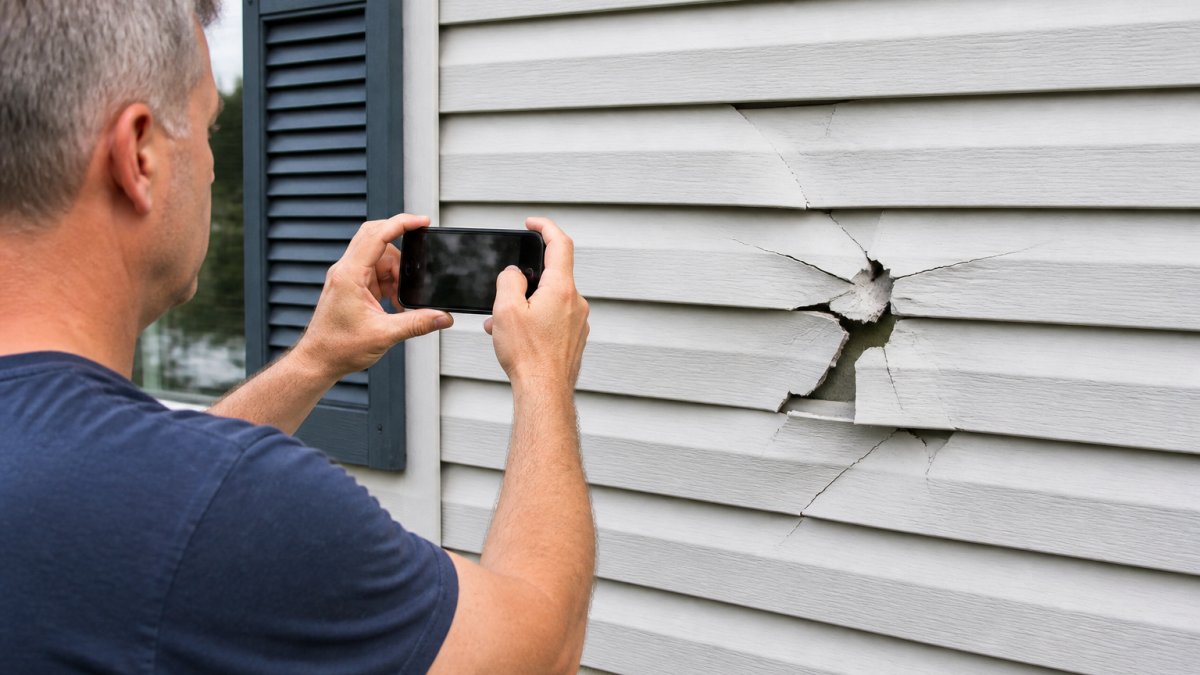
Write down what happened. Create a brief timeline: storm date, weather type, time, and damage noticed. Be specific: "Storm on September 15, 2026, around 3 PM. Hail the size of golf balls.
Get a contractor's written assessment. Before filing, have a licensed, insured contractor inspect the damage and write a report listing visible damage, likely cause, estimated repair cost, and whether it appears recent or pre-existing. This report carries weight, since adjusters trust a contractor's professional opinion.
Don't repair anything yet. Your insurer needs to see the damage; if you've already fixed it, the adjuster can't verify its extent and your claim may be denied or reduced. The exception is emergency repairs to prevent further damage, like tarping a hole. Document those too.
| Documentation Step | What to Include | Why It Matters |
|---|---|---|
| Photos | Close-ups + wide shots, timestamp visible | Proves damage extent and timing |
| Timeline | Date, time, weather type, what you noticed | Establishes sudden event, not wear |
| Contractor report | Damage list, cause, cost estimate | Professional verification insurers trust |
| Insurance documents | Policy number, coverage limits, deductible | Clarifies your coverage before filing |
Emergency Steps: Temporary Siding Repair After a Storm
If your siding has a large hole, water will get inside within hours. Your first priority isn't filing a claim, it's stopping the water.
Secure the opening immediately. Cover large gaps with plywood, tarps, or plastic sheeting, nailed or taped in place. This emergency repair only needs to keep rain out until a contractor can assess and repair properly.
Document the emergency repair. Photograph the damage before covering it and your temporary fix, and note what you did and when. Your policy covers temporary repairs and mitigation, so you can file for reimbursement of materials and labor.
Don't over-repair. Some homeowners patch or install temporary siding themselves to "get it fixed faster," then file a claim. Insurers may deny coverage for repairs you paid out of pocket or reduce their payout because you've already spent money on the problem.
The right approach: do the bare minimum to stop water intrusion, document it, and wait for the adjuster to see the full damage before real repairs begin.
Matching Siding in Your Insurance Claim
Here's a problem many homeowners don't anticipate: your insurer may approve the claim, but the siding your contractor installs doesn't match the rest of your house.
Vinyl siding fades over time, so a 10-year-old section looks different from new vinyl. If hail damages one side and you replace just that section, the new siding looks brighter than the rest. This is called "matching" or "blending."
Your insurer may not pay for matching. They'll pay the actual cash value of the damaged siding at its age and condition, not to replace undamaged siding for a uniform look.
Your contractor can request a supplement. If the adjuster's estimate doesn't account for matching, your contractor can submit a supplemental claim with photos of the color difference and request funds to replace more siding. Some insurers approve; some don't.
This is where negotiation happens. At LRI Restorations, we've fought for supplements on dozens of claims, providing side-by-side photos and arguing why matching is necessary to restore your home to its pre-loss condition. Sometimes we win; sometimes we don't.
The lesson: before signing a repair contract, understand your insurance may not cover perfect matching. You may pay out of pocket for uniformity or accept the visual difference.
Filing Your Siding Damage Claim: Step-by-Step
Step 1: Notify your insurer within 30 days. Call or log into your online account and report the damage, including the storm date, what happened, and what's damaged (siding, roof, gutters, interior water damage).
Step 2: Schedule an adjuster inspection. Your insurer assigns an adjuster, typically within 5-10 business days.
Step 3: Submit your documentation. Give the adjuster your photos, contractor assessment, and timeline before or during the inspection. More evidence means a stronger claim.
Step 5: Get a second contractor estimate if needed. If the insurer's estimate seems low, have your contractor provide a detailed estimate. If there's a significant gap, submit it and ask your insurer to reconsider.
Step 6: Accept or dispute the offer. If you agree, proceed with repairs; your insurer pays the contractor directly or reimburses you after completion. If you disagree, request a supplement or file an appeal.
Step 7: Complete repairs and submit final invoices. Once work is done, send your insurer final invoices and photos of the completed work so they can verify the repairs and process final payment.
Common Coverage Gaps and Exclusions
Not every siding problem is covered. Knowing your policy's exclusions can save you from filing a claim that will be denied.
Wear and tear exclusion. The most common reason for denial. Old siding deteriorating naturally is maintenance, not a covered loss.
Maintenance exclusion. If neglected caulking, painting, or gutter maintenance let water behind the siding, that's your responsibility, not a covered loss.
Cosmetic damage. Some policies exclude fading or minor dents that don't affect function. If the siding still keeps water out, it's not a covered loss.
Pre-existing damage. If the adjuster determines damage existed before the storm, it's not covered, which is why documenting the storm event and timeline is critical.
High deductibles. If your repair costs less than your deductible, you pay the full cost.
Coverage limits. If you've used most of your dwelling coverage on other repairs, there may not be enough left for siding damage.
Flood damage. Standard homeowners insurance doesn't cover flood damage to your siding. You'd need a separate flood insurance policy.
Hurricane or wind exclusions. Some older or high-risk-area policies exclude hurricane or wind damage entirely.
The key: read your policy or ask your agent what's excluded. Surprises happen at claim time, not before.
Frequently Asked Questions
Will homeowners insurance pay to replace all my siding if only one section is damaged?
Most policies cover only the damaged section, not the entire exterior. However, if your policy includes replacement cost value (RCV) coverage and the damage is sudden and accidental, you may receive funds for the affected area. Some insurers apply depreciation under actual cash value (ACV) policies. Check your specific coverage limits and deductible. If only part of your siding needs replacement, your insurer typically won't require you to replace the entire house exterior.
How do I document siding damage for an insurance claim?
Take clear, dated photos of all damage from multiple angles and distances. Capture close-ups of cracks, dents, or missing pieces, and wider shots showing the damage in context. Document weather conditions that caused the damage (hail, wind debris, storm). Keep receipts for any emergency temporary repairs. Create a written timeline of when the damage occurred and what caused it. Store all photos and documents in one folder before contacting your insurer. This documentation strengthens your claim and helps the adjuster assess coverage.
What should I do immediately after storm damage to my siding?
First, ensure your safety and that of your family. Secure any openings to prevent water intrusion and further damage. Make temporary repairs if safe to do so, such as tarping exposed areas or boarding up holes. Take photos and videos of all damage before making repairs. Contact your insurance company within the timeframe specified in your policy (typically 30-60 days). Avoid making permanent repairs until the adjuster has inspected the damage, as this could affect your claim approval and reimbursement.
Does my homeowners insurance cover siding damage from hail or wind?
Most homeowners insurance policies cover sudden and accidental siding damage from hail and wind, provided you have comprehensive or all-peril coverage. However, coverage depends on your specific policy, deductible amount, and whether the damage meets your insurer's threshold for a claim. Damage from wear and tear, poor maintenance, or age is typically excluded. Review your policy's covered events and exclusions, or contact your agent to confirm your siding coverage before filing a claim.