 Listicle
Choosing Between Custom Home Builders: A 2026 Guide
Last Updated: October 23, 2026
Quick Summary
Choosing between custom home builders in Florida requires evaluating their licensing, insurance, portfolio, communication style, and regional expertise. A builder with 15+ years of experience, valid Florida licensing, detailed cost transparency, and a proven warranty program will deliver reliable results and manage the unique challenges of Florida construction, from permitting delays to hurricane season weather impacts.
- Verify Florida construction license, liability insurance, and workers' compensation coverage before signing any contract.
- Request a detailed cost breakdown separating land, site prep, utilities, design, permitting, structure, systems, finishes, and contingency reserves.
- Florida permitting takes 4-8 weeks and custom home construction typically spans 9-14 months from foundation to final inspection.
- Check online reviews and contact at least three recent client references to identify patterns in communication, schedule adherence, and problem-solving.
- Confirm the builder's experience with your specific project type and ask how they manage weather delays during hurricane season.
Table of Contents
- Custom Home Builders vs. Production and Spec Homes
- Questions to Ask a Custom Home Builder
- Custom Home Builder Checklist: What to Evaluate
- Custom Home Building Cost: Budget Planning and Transparency
- Custom Home Construction Timeline and Project Phases
- How to Choose: Builder Selection Framework
- Frequently Asked Questions
Custom Home Builders vs. Production and Spec Homes
The difference between a custom home builder and a production builder comes down to control versus convenience.
According to Residential Design's 2025 construction report, custom-building starts reached 54,000 in the second quarter of 2025, up 4% from the same period in 2024.
The trade-off is real. Production homes come with predictable timelines and locked pricing, while custom homes demand patience, participation, and decisions at every stage.
Questions to Ask a Custom Home Builder
Asking the right questions separates builders who deliver on their promises from those who disappear halfway through. Your goal is to understand their process, communication style, and how they handle problems. The questions below form a verification checklist to work through before signing anything.
Licensing, Insurance, and Contract Protections
Before signing anything, verify that your builder holds a valid state construction license and carries adequate liability insurance. Ask to see proof of both; a legitimate builder won't hesitate to provide it.
Use this checklist to verify credentials and coverage:
- License verification: Ask for the license number and confirm it is active and in the correct category for residential contracting. Check for any disciplinary actions or complaints on record.
- General liability insurance: Request a certificate of insurance showing current coverage limits. Ask whether the policy covers subcontractors and whether you will be named as an additional insured.
- Workers' compensation: Confirm the builder carries workers' compensation coverage for employees and subcontractors. If a worker is injured on your property and coverage is missing, you could face liability.
- Contract review: Request a copy of their standard contract and have an attorney review it. Pay specific attention to payment schedules, change order procedures, and dispute resolution language. A well-drafted contract protects both you and the builder by setting clear expectations upfront.
Project Management and Communication
Ask how they'll keep you informed throughout construction: weekly updates, site visits, a dedicated project manager?
Specifically ask how they handle change orders, the process for modifying the design mid-project, and how quickly they respond to questions.
Also ask how progress is documented. A builder who provides dated photos, milestone inspection reports, and a shared schedule gives you a verifiable record if questions arise later.
Custom Home Builder Checklist: What to Evaluate
Portfolio and Completed Projects
Request a portfolio of completed homes in your area, and visit actual projects if possible. Walk through finished homes and check the quality of finishes, attention to detail, and how well the spaces function.
Look for consistency. A strong portfolio shows builders who understand their market and deliver reliable results. Inconsistency suggests they're experimenting rather than executing a proven process.
References and Customer Reviews
Ask for at least three recent client references and contact them directly: Did the builder stay on schedule? How did they handle unexpected issues? Would you hire them again? Listen for patterns; one negative review might be an outlier, but repeated complaints about the same issue (poor communication, cost overruns, quality problems) signal you should look elsewhere.
Check online reviews on Google, the Better Business Bureau, and industry sites. A 94% recommendation rate reflects consistent delivery and customer satisfaction. But read the negative reviews too, they often reveal how a builder handles problems.
Design Flexibility and Personalization
This is where custom builders prove their value. Ask how much design input you'll have at each stage: can you modify the floor plan, choose materials, adjust finishes?
Ask whether they have in-house architects or work with external designers. Either approach works, but you want to know who's driving the design decisions and how responsive they are to your input.
Custom Home Building Cost: Budget Planning and Transparency
Cost Drivers and Contingencies
Custom home building costs depend on land quality, site preparation complexity, material choices, design scope, and local labor rates. A transparent builder will break down costs into categories, foundation, framing, electrical, plumbing, HVAC, finishes, so you understand where your money goes.
A useful budget separates costs into the following buckets so you can compare bids like-for-like:
- Land and site acquisition: Purchase price, closing costs, and any due diligence such as survey, soil testing, and environmental review.
- Site preparation: Clearing, grading, excavation, fill, retaining walls, and erosion control. Difficult lots with slope, rock, or high water tables can add significant cost.
- Utilities and infrastructure: Water, sewer, electric, gas, and internet connections. If utilities are not at the lot line, connection costs can be substantial.
- Design and engineering: Architectural fees, structural engineering, energy modeling, and plan revisions.
- Permitting and impact fees: Application fees, plan review, inspections, and any jurisdiction-specific impact or connection fees.
Ask your builder to explain their contingency reserve. Most recommend setting aside 10-15% of total project cost for unexpected issues.
Upgrades, Finishes, and Change Orders
Every upgrade and change order adds time and cost. Before construction begins, get a detailed list of what's included in your base price and what costs extra.
Establish a clear change order process: how much notice is needed, how quickly the builder provides a cost estimate, and what the approval process is.
When comparing bids, normalize the numbers. Ask each builder to provide the same scope categories and to state allowances explicitly.
Custom Home Construction Timeline and Project Phases
Permitting, Engineering, and Site Preparation
Permitting is the first bottleneck. In Florida, permitting can take 4-8 weeks depending on jurisdiction and plan complexity, and site preparation (clearing, grading, utility connections) typically takes 2-4 weeks.
Ask your builder how they manage permitting: do they handle it or do you, who communicates with the city, and what happens if the city requests plan modifications? A builder who's navigated local requirements repeatedly will move faster and avoid costly mistakes.
Construction Phases and Weather Considerations
Florida construction faces unique weather challenges, and hurricane season (June through November) overlaps with typical construction timelines. Ask your builder how they account for weather delays: do they adjust timelines during hurricane season, and how do they protect the structure if a storm hits mid-project?
A typical custom home takes 9-14 months from foundation to final inspection, depending on complexity and weather. Foundation and framing take 4-6 weeks. Electrical, plumbing, and HVAC rough-in take another 3-4 weeks. Drywall, insulation, and interior finishes span 6-8 weeks.
How to Choose: Builder Selection Framework
Experience and Regional Expertise
A builder with deep regional experience understands local soil conditions, building codes, permitting processes, and weather challenges.
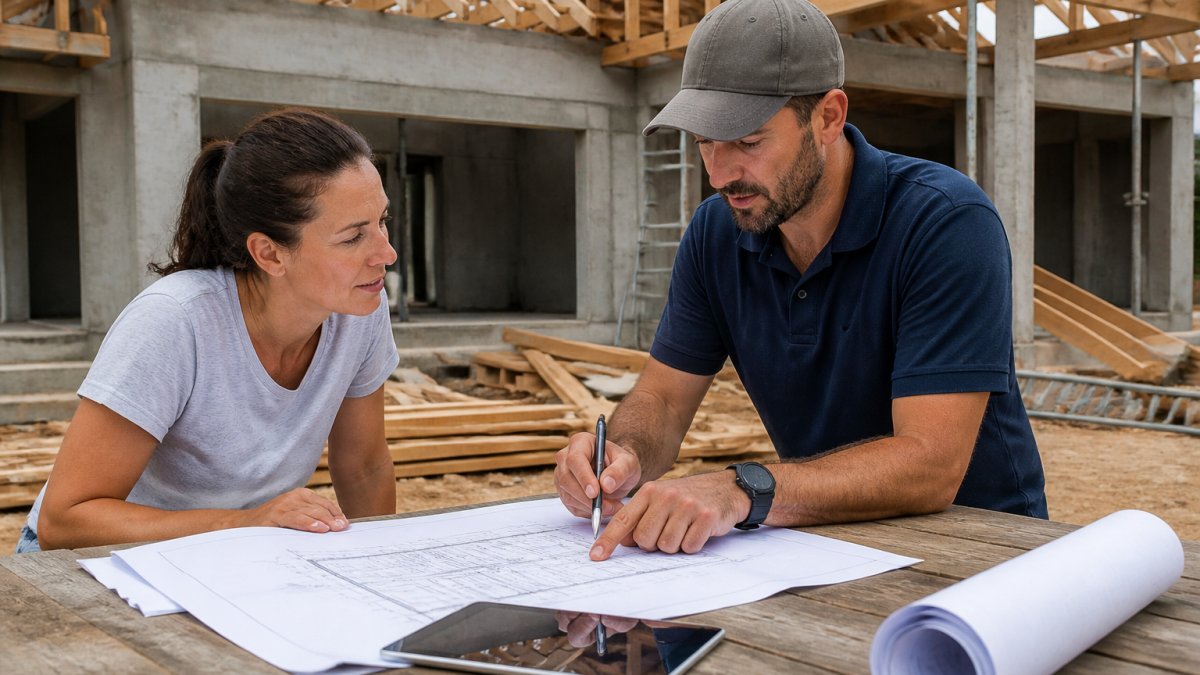
Ask specifically about their experience with the type of home you want to build. A builder strong in beachfront construction might struggle with inland lots. One experienced with luxury custom homes might not excel at efficient mid-range builds. Match their expertise to your project.
Transparency and Long-Term Support
The best builders stand behind their work long after the final walkthrough. Ask about their warranty program: what's covered, for how long, and how claims are handled.
Also ask about post-completion support. Will they help you navigate warranty issues with subcontractors? Do they provide maintenance recommendations? A builder who stays accessible after the project ends is one you can trust.
| Selection Criteria | What to Look For | Red Flag |
|---|---|---|
| Licensing & Insurance | Valid Florida license, proof of liability coverage | Refuses to provide documentation |
| Portfolio | 5+ completed projects in your area, consistent quality | Limited portfolio or inconsistent results |
| References | Recent clients willing to discuss experience | Unwilling to provide references |
| Communication | Weekly updates, dedicated project manager, written change orders | Vague on communication process |
| Transparency | Detailed cost breakdown, clear contingency reserve, itemized scope | Reluctant to explain pricing |
| Experience | Over 25 years of industry experience | New to market or limited project history |
| Warranty | Responsive claims process | No warranty or vague terms |
Choosing between custom home builders requires evaluating experience, communication, transparency, and financial stability. At LRI Restorations, we bring over 25 years of construction expertise, comprehensive project management from permitting to final inspection, and a commitment to clear communication throughout your build.
Frequently Asked Questions
What should I compare when choosing between custom home builders?
Prioritize builder experience in your region, portfolio of completed projects, customer references, licensing and insurance verification, design flexibility, transparency on costs and timelines, and communication style. Request detailed cost estimates and contract terms before signing. Ask how the builder handles permitting, engineering, and inspections. Check whether they specialize in hurricane-resistant construction if you're building in a storm-prone area. A builder's willingness to answer questions and provide references is often as important as their portfolio.
How can I check a custom home builder's license and references?
Verify the builder's state contractor license through your state's licensing board website. Request at least three recent customer references and contact them directly about their experience, timeline adherence, and how the builder handled issues. Ask references about change orders, communication frequency, and whether the final cost matched the original estimate. Check online reviews on independent platforms, but also ask the builder for written testimonials. Ask whether the builder is bonded and insured, and request proof of both general liability and workers' compensation coverage.
What is the typical cost to build a custom home?
Custom home building costs depend on location, lot size, square footage, materials, finishes, and design complexity. Pricing varies significantly based on regional labor costs, permitting fees, and site preparation needs. Rather than relying on generic price ranges, request a detailed cost estimate from builders after they've evaluated your specific site and design requirements. Ensure the estimate breaks down labor, materials, permitting, engineering, and contingency allowances. Ask the builder how they handle cost overruns and whether contingency funds are built into the estimate.
How long does it take to build a custom home?
Custom home construction timelines typically span 12 to 24 months from permitting through final inspection, though this varies based on design complexity, site conditions, and permit approval times. Early phases include site evaluation, engineering, and permitting, which can take 2 to 6 months. The actual construction phase usually runs 8 to 16 months depending on weather, material availability, and design changes. Ask your builder for a detailed project timeline that accounts for permit delays, weather shutdowns during hurricane season, and inspection schedules. Confirm whether the builder commits to a completion date in writing and what happens if delays occur.
What should a custom home building contract include?
A solid contract specifies the total project cost, payment schedule, detailed scope of work, materials and finishes, start and completion dates, warranty terms, and dispute resolution procedures. It should clarify who handles permitting and inspections, how change orders are approved and priced, and what happens if costs exceed the estimate. Include provisions for site conditions that may affect cost or timeline, insurance and bonding requirements, and the builder's responsibility for cleanup and final walkthrough. Have an attorney review the contract before signing to protect your interests.