 how-to
How to Avoid Contractor Project Delays: 7 Proven Steps
Table of Contents
- Start With a Written Scope Before You Sign Anything
- Common Causes of Construction Delays and How to Spot Them Early
- Build a Realistic Home Renovation Project Timeline
- Use a Construction Project Schedule Template to Track Progress
- Managing Construction Permits for Home Additions Without the Wait
- Set a Weekly Communication Rhythm With Your Contractor
- What to Do When Your Contractor Falls Behind Schedule
- Frequently Asked Questions
Last Updated: October 19, 2026
Start With a Written Scope Before You Sign Anything
The most effective way to avoid contractor project delays is a written scope of work signed before work begins. A clear scope defines every task, material, and finish in detail. It leaves nothing to interpretation.
We've watched too many projects stall because the paperwork was vague. A handshake and a one-page bid are not a plan. They're an invitation to argue later.
Here's what a solid scope includes:
- Exact materials, brands, and model numbers
- Room-by-room task lists
- Who pulls permits and who pays fees
- A start date and a completion window
- Payment schedule tied to milestones
Get it in writing. Then read it twice.
Common Causes of Construction Delays and How to Spot Them Early
The common causes of construction delays fall into a few predictable buckets: late materials, scope changes, permit holdups, and poor communication. Spot them early and you can fix them before they cost you weeks.
Most delays don't appear overnight. They build slowly. A backordered tile here, a small "while we're at it" addition there. By the time the schedule slips, the cause is already weeks old.
Watch for these early warning signs:
- Suppliers who won't confirm delivery dates
- A contractor who avoids written change orders
- Permit applications that sit unfiled
- Silence when you ask for a status update
Catch these signals in week one, not week six.
Material Lead Times and Backorders
Material lead times and backorders cause more schedule slips than any other single factor. Order long-lead items first and confirm dates in writing.
Ask your contractor for a procurement list with confirmed ship dates. Cabinets, windows, and specialty tile often take the longest. If a supplier can't commit to a date, treat that item as a risk and build a buffer around it.
Change Orders and Scope Creep
Change orders and scope creep quietly stretch a project timeline. Every small addition resets the schedule and often the budget.
A change order is any modification to the signed scope. It should be in writing, priced, and approved before work continues. "We'll sort it out later" is how projects lose weeks.
Build a Realistic Home Renovation Project Timeline
A realistic home renovation project timeline starts with the long-lead items and works backward. Build in buffer time for permits, inspections, and weather. Optimism is not a schedule.
Here's how to build timelines that hold up:
- List every phase from demo to final walkthrough
- Flag long-lead materials and order them first
- Add inspection and permit windows
- Pad each phase with a buffer
- Share the timeline with everyone involved
The buffer is not padding. It's insurance against the delays you can't predict.
| Phase | Typical Duration | Buffer to Add | Watch For |
|---|---|---|---|
| Permits and approvals | 2-6 weeks | 2 weeks | Incomplete submittals |
| Demolition | 3-5 days | 2 days | Hidden damage |
| Rough-in work | 1-2 weeks | 3 days | Inspection scheduling |
| Material delivery | Varies | 1-2 weeks | Backorders |
| Finishes and fixtures | 2-4 weeks | 1 week | Missing parts |
Use a Construction Project Schedule Template to Track Progress
A construction project schedule template turns a timeline into a living document. It shows what's done, what's next, and what's late, all in one place. Without one, progress is guesswork.
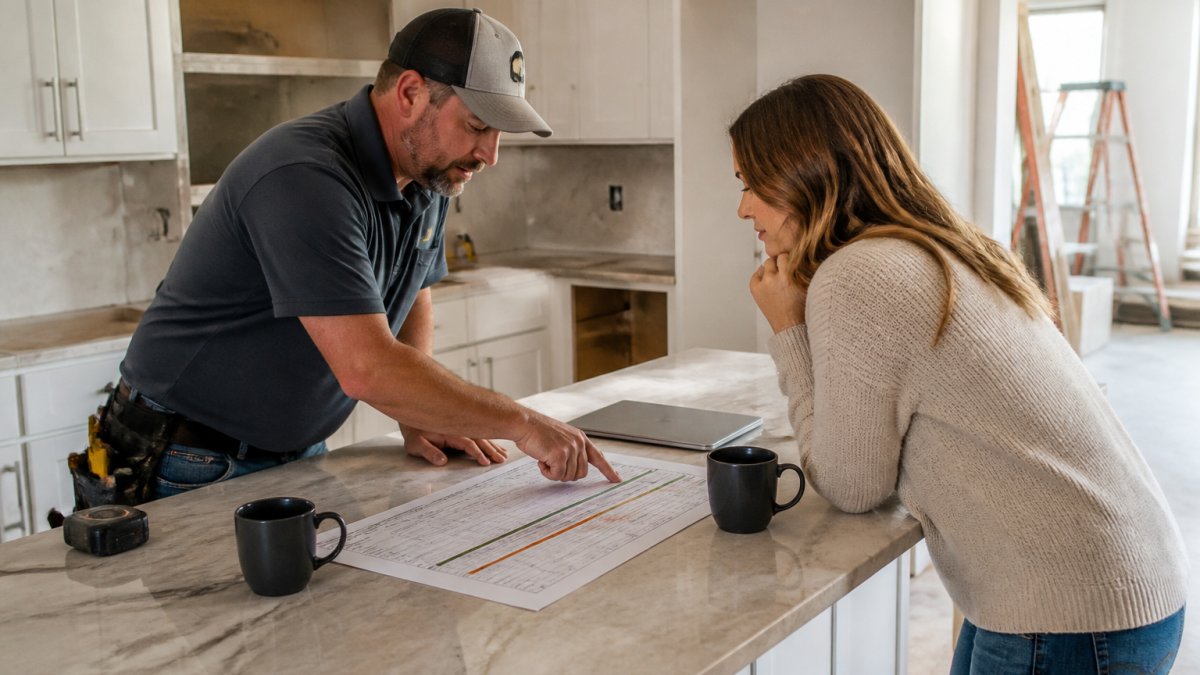
We recommend a simple template with these columns:
- Task name and owner
- Planned start and end dates
- Actual start and end dates
- Status (not started, in progress, done)
- Notes and blockers
Update it weekly. A schedule nobody updates is just a wish list. The template only prevents contractor project delays when someone actually uses it.
Managing Construction Permits for Home Additions Without the Wait
Managing construction permits for home additions starts before the first nail goes in. Submit a complete application early and track it closely. Most permit delays come from incomplete paperwork, not slow reviewers.
Here's how to keep permits moving:
- Confirm which permits your project needs up front
- Submit a complete package the first time
- Respond to reviewer comments within days, not weeks
- Track your application status weekly
- Schedule inspections as soon as each phase is ready
Check your local building department's official site for current requirements and timelines. Rules vary by jurisdiction, so verify rather than assume.
A contractor who knows the local permit process saves you real time. At LRI Restorations, we handle permitting from start to final inspection so nothing stalls in a queue.
Set a Weekly Communication Rhythm With Your Contractor
A weekly communication rhythm keeps small problems from becoming big delays. One scheduled check-in per week, with a written summary, prevents most surprises.
Set a fixed day and time. Keep it short. Cover three things:
- What got done last week
- What's planned for next week
- Any blockers or decisions needed
Put the summary in writing and send it to everyone. This written record is your best defense against contractor project delays, because it creates accountability on both sides.
What to Do When Your Contractor Falls Behind Schedule
When your contractor falls behind schedule, act early and stay factual. Request a written recovery plan with new dates. Escalating calmly beats waiting and hoping.
Follow these steps:
- Document the delay in writing with dates
- Ask for a written recovery plan
- Review the plan against the original schedule
- Escalate to a formal notice if the plan slips
- Know your contract's termination terms before you need them
Most delays are fixable when caught early. Silence lets them grow.
If a contractor disappears or refuses to communicate, that's a serious red flag. A family-owned firm that answers the phone and shows up is worth more than a low bid. LRI Restorations is a family-owned and operated construction company dedicated to providing high-quality roofing, custom home building, and interior remodeling services across Florida's Gulf Coast.
Frequently Asked Questions
What are the most common causes of contractor project delays?
The biggest culprits are material backorders, change orders added mid-project, slow permit approvals, and weather. On storm-damaged homes, insurance adjuster visits can also stall work before it starts. Most delays trace back to planning gaps rather than bad luck. A written scope, confirmed material lead times, and a permit timeline set before day one remove most of the risk. When you interview contractors, ask how they handle each of these four issues and get the answer in writing.
How can I keep my home renovation on schedule?
Lock the scope in writing, confirm material delivery dates before demolition starts, and agree on a weekly check-in. Ask for a construction project schedule template that lists each phase with start and end dates, then compare actual progress against it every week. Approve selections and change orders within 48 hours so your contractor is not waiting on you. Build a buffer of one to two weeks into the home renovation project timeline for weather and inspection delays, and treat that buffer as untouchable.
How can permits and inspections affect a renovation schedule?
Permit review and inspection scheduling can add days or weeks depending on the jurisdiction and the scope of work. Additions and structural changes usually need multiple inspections at set stages, and each one has to be scheduled and passed before the next phase begins. Managing construction permits for home additions starts with submitting a complete application the first time. Missing documents or incomplete drawings trigger resubmittals that push everything back. Ask your contractor who pulls the permit and how long approvals typically take in your area.
What should I do if my contractor is falling behind schedule?
Request a written recovery plan within a week of noticing the slip. Ask which phases are behind, why, and what specific dates the contractor commits to for catching up. Put the conversation in writing so there is a record. If delays stem from change orders or owner decisions, resolve them fast. If the contractor cannot explain the gap or refuses to put a plan on paper, that is a warning sign worth acting on early rather than at the end of the project.
A delayed project drains your patience, your budget, and your trust. The fix starts with a written scope, a realistic timeline, and a contractor who communicates. LRI Restorations handles permitting, engineering, and inspections from start to final walkthrough, with clear updates at every step. Get a quote and start your project on solid ground.