 How-to
How Do You Prevent Mold in a Florida Attic?
Last Updated: November 24, 2026
Quick Summary
To prevent mold attic problems in Florida, keep moisture out and air moving: make sure soffit and ridge vents are open, keep attic humidity below 60%, seal duct joints and keep the air handler drain clear, and fix roof leaks quickly. Inspect the attic at least twice a year and after every major storm.
- Pull insulation back from soffit vents so air can move freely from the eaves toward the peak.
- Keep attic humidity below 60% and measure it with a hygrometer placed in the attic.
- Seal duct joints with mastic or approved tape and wrap ducts with insulation rated for attic temperatures.
- Check the air handler condensate drain line regularly to make sure it is clear and pitched to drain.
- Inspect the attic at least twice a year and after any major storm or roof repair.
Table of Contents
- Why Florida Attics Are Prone to Mold
- Step 1: Check and Improve Florida Attic Ventilation
- Step 2: Control Humidity and Attic Condensation
- Step 3: Find and Seal Roof Leaks Before They Feed Mold
- Step 4: Run a Full Attic Mold Inspection Checklist
- Common Mistakes That Make Attic Mold Worse
- Scheduling Your Next Attic Check Before Storm Season
- Frequently Asked Questions
Why Florida Attics Are Prone to Mold
Florida's subtropical climate makes attic moisture control a year-round job. Humid outdoor air carries moisture into the attic through vents, gaps and roof penetrations, and it condenses on cool surfaces. Mold needs moisture to grow, so the attic becomes a good place for it if moisture isn't controlled.
Several things make Florida attics especially vulnerable. Warm, wet air is common for much of the year. Ducts and air handlers in the attic can sweat when cold air meets warm, humid space. Heavy rain and storms can push water through damaged shingles or flashing. Florida Department of Health mold guidance
Here's the key point: you can't always see the problem. Mold often starts on the underside of roof decking, on insulation, or on framing before any stain shows up in the ceiling below.
Step 1: Check and Improve Florida Attic Ventilation
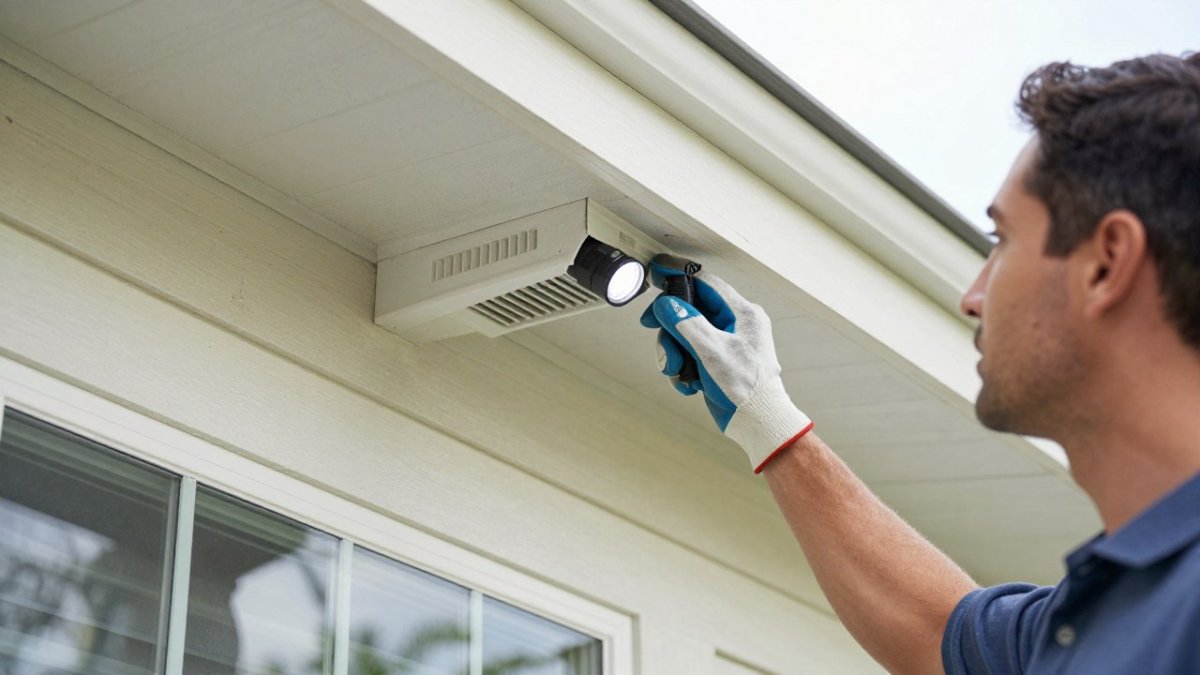
Good airflow keeps humid air moving out of the attic before it can condense. Start by checking that your soffit vents (under the eaves) and ridge vents (along the roof peak) are open and unblocked.
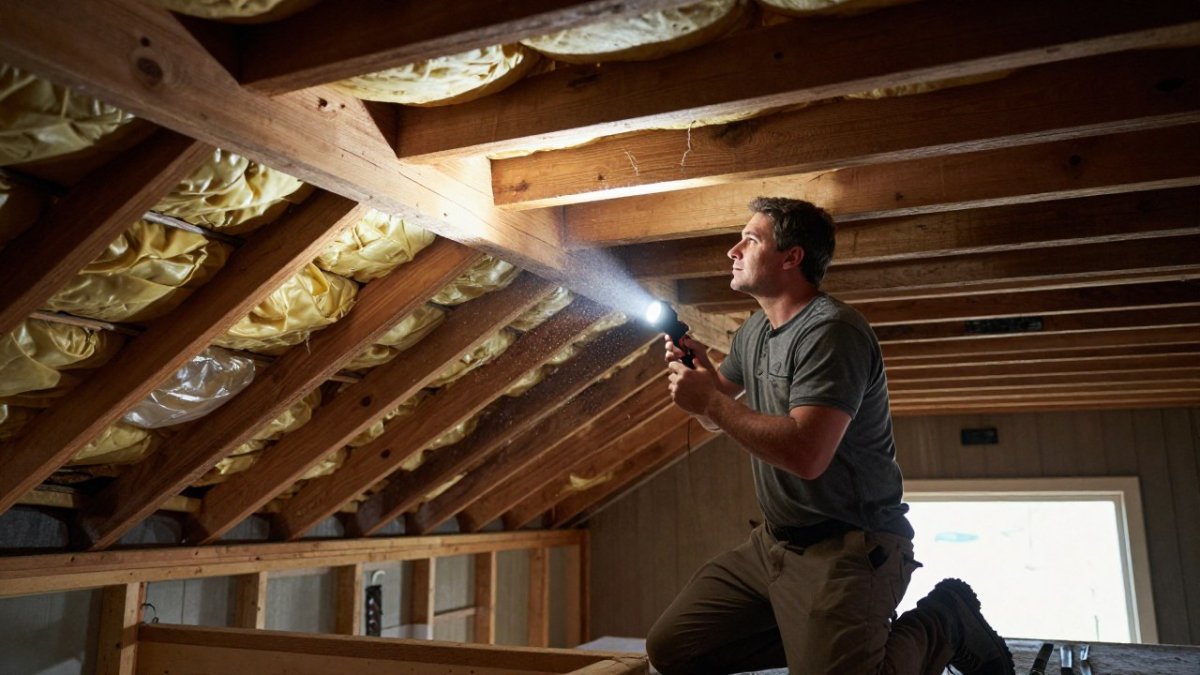
Walk through the attic with a flashlight and look for:
- Insulation pushed against or covering soffit vents
- Vents blocked by dust, nests or debris
- Missing or damaged vent screens
- Areas with no air movement at all
Many attic problems come from blocked soffits. Insulation often gets blown in and covers the vents, which cuts off airflow entirely. Pull it back so air can move freely from the eaves toward the peak. For a full walkthrough, see our step-by-step guide to new roof installation.
Be cautious with powered attic vents, and focus on fixing the source of excess moisture and keeping passive airflow open instead. University of Georgia Cooperative Extension, "Preventing Mold in Your Home"
Step 2: Control Humidity and Attic Condensation
Keeping attic humidity low is one of the most useful steps you can take. In a Florida attic, moisture commonly comes from humid outdoor air pulled in through vents, condensation on cold surfaces, and the air-conditioning system itself. Address each one directly.
Outdoor humidity and the vented-attic trade-off. A vented attic exchanges air with the outdoors, so on a humid day you are effectively ventilating with moist air. That is why ventilation alone does not guarantee a dry attic. The practical target is to keep attic humidity below 60% and to keep the roof deck from staying wet. A hygrometer placed in the attic, not the living space, tells you what is actually happening. Florida Department of Health, "Mold"
AC ducts and the air handler. Cold duct surfaces meeting hot, humid attic air sweat and drip. That moisture soaks insulation and wood and is one of the most common hidden causes of attic mold in Florida homes. To control it:
- Seal duct joints with mastic or approved tape, then wrap ducts with insulation rated for the attic temperature.
- Check that the air handler's condensate drain line is clear and pitched to drain; a clogged line backs up and wets the attic.
- Keep the thermostat at a steady setting so the system runs consistently rather than short-cycling, which leaves humid air to condense.
- Inspect the drain pan under the air handler for standing water and rust.
Spray foam versus a vented attic. Many homeowners ask whether to seal the attic with spray foam or keep it vented. Both can work, but they manage moisture differently. A vented attic relies on airflow to dry the roof deck; it works best when soffit and ridge vents are open and insulation does not block them.
Watch out: sealing an attic without addressing an existing moisture source traps that moisture and can make mold worse, so fix leaks and duct sweating before you insulate or seal.
Watch for condensation stains on the underside of the roof deck and on duct insulation. They signal that moisture is building up faster than the attic can release it, and they are the earliest visible sign that humidity control is failing. Because condensation can also point to roof leaks rather than humidity alone, attic insulation and moisture control should be considered alongside the roof’s ability to keep water out.
The article's main humidity-control actions come down to a few concrete targets and fixes, summarised below.
| Control | Target or action | Why it matters |
|---|---|---|
| Attic humidity | Keep below 60% | Reduces condensation and mold growth |
| Duct joints | Seal with mastic or approved tape | Stops cold ducts sweating in hot attic air |
| Air handler drain | Keep clear and pitched to drain | Clogged lines back up and wet the attic |
| Thermostat | Keep a steady setting | Avoids short-cycling that leaves humid air to condense |
| Drain pan | Check for standing water and rust | Catches leaks before they soak the attic |
| Hygrometer | Place in the attic, not living space | Shows what the attic is actually experiencing |
Step 3: Find and Seal Roof Leaks Before They Feed Mold
Even small leaks can keep wood and insulation wet enough for mold to grow. After a storm, check the roof for loose or missing shingles, cracked flashing and damaged vent boots. Look for light coming through the decking from inside the attic, and look for wet or darkened wood near every roof penetration.
Roof penetrations are the most common leak points. These include plumbing vents, chimneys, skylights and exhaust fans. Make sure the sealant and flashing around each one are intact.
Storm damage can be hard to spot from the ground. If you suspect hidden damage, a professional inspection is worth the cost. Insurance Information Institute on storm damage claims
Find out more about signs of hidden storm damage on your roof before the next rainy season.
Step 4: Run a Full Attic Mold Inspection Checklist
Inspect the attic at least twice a year, once in late spring before storm season and once in the fall, and again after any major storm or roof repair. Bring a flashlight, a hygrometer, and a camera to document what you find.
Use this checklist:
- Look for dark spots, fuzzy growth, or discoloration on roof decking, framing, and insulation
- Smell for a musty odor; note where it is strongest
- Check soffit and ridge vents for blockage by insulation, dust, nests, or debris
- Inspect ducts for sweating, sagging, or damaged insulation
- Look for water stains, rust, or corrosion around roof penetrations and the air handler
- Measure attic humidity with a hygrometer and record the reading
- Confirm any attic exhaust fan runs properly and is not blocked
- Note wet or compressed insulation for replacement
- Photograph anything suspicious with a date reference
DIY versus professional remediation. A small patch of surface mold can sometimes be cleaned by a homeowner wearing appropriate protection, provided the moisture source is found and fixed first. Mold that covers a large area, has soaked into insulation or drywall, keeps returning after cleaning, or is accompanied by an active leak calls for a professional assessment. Cleaning without fixing the moisture source often leads to regrowth.
Smart monitoring as an early warning. A growing number of homeowners install battery-powered or Wi-Fi humidity and temperature sensors in the attic that alert a phone when humidity crosses a set threshold. These do not replace an inspection, but they catch the slow buildup, a duct that starts sweating, a vent that gets blocked, before mold has a chance to establish. Place one sensor near the air handler and one near the roof peak for the most useful readings.
Record every inspection in a simple log: date, readings, findings, and repairs. Over time the log reveals patterns, such as a leak that returns with every heavy rain or a vent that keeps getting blocked, and it gives a professional a clear history if you ever need to call one.
Common Mistakes That Make Attic Mold Worse
A common mistake is sealing the attic completely to keep cool air in. Without airflow, moisture has nowhere to go, and mold grows faster.
Another mistake is ignoring a small stain. A stain on the ceiling often means the attic has been wet for some time. Trace it back to its source rather than just painting over it.
Some homeowners also try to scrub mold with bleach. Bleach works poorly on porous wood and insulation. The real fix is removing the moisture source and replacing badly affected materials.
Finally, don't assume a clean-looking attic is a dry one. Test humidity and moisture levels, not just appearances.
If you find mold during any repair, plan how it will be handled before demolition starts. Learn how to handle mold found during demolition.
Scheduling Your Next Attic Check Before Storm Season
Florida's storm season runs from June through November, and the best time for an attic check is before it starts. Schedule an inspection in late spring, then repeat it after any major storm.
Keep a simple log. Write down the date, what you checked, any moisture readings and any repairs made. Over time, the log shows patterns, such as a leak that returns every heavy rain or a vent that keeps getting blocked.
A regular roof maintenance routine helps too. Use a roof maintenance checklist for Florida homes to plan your seasonal checks, and see how roof age and climate affect lifespan when deciding on repairs.
The right ventilation, humidity control and leak checks are what keep a Florida attic mold-free. Start with one step this week and build from there.
Watch out: Never seal every vent in the attic to save on cooling. Blocking airflow traps moisture and speeds up mold growth.
Frequently Asked Questions
How can I prevent mold from growing in my attic?
Start by controlling moisture sources: fix roof leaks, make sure bathroom and kitchen exhaust fans vent outside the attic, and seal air leaks where warm, humid house air rises into the attic. Keep attic vents clear of insulation and debris so air can move. Keeping indoor humidity low and venting moisture out of the home helps limit mold growth. Check the attic every few months, especially after heavy rain or a storm, and dry any wet insulation or framing promptly to limit mold growth.
What causes mold to grow in a Florida attic?
Mold needs moisture, warmth and a food source such as wood, paper or dust. Florida's humid subtropical climate supplies all three. Warm, moist air from living spaces leaks into the attic through gaps around light fixtures, plumbing and attic hatches. Air conditioning ductwork can also sweat when it runs cold in a hot attic. Roof leaks and poorly ventilated attics add more water, so mold often shows up on rafters, sheathing and the underside of the roof deck.
Can a roof leak cause attic mold?
Yes. Even a small roof leak can wet insulation and roof decking, and mold can begin to grow when materials stay damp. Look for water stains on the roof deck, dark spots on rafters, and insulation that feels damp or compressed. After any storm, check the attic with a flashlight the same day and look for daylight coming through the roof. Repairing the leak is the first step; cleaning and drying the affected area comes next.
When should attic mold be inspected by a professional?
Consider a professional inspection if mold covers a visible area, if there has been flooding or a major leak, or if musty odors persist after you have fixed ventilation and moisture problems. Homeowners who have health concerns, such as breathing issues, should also have an expert evaluate the attic. A qualified inspector can use a moisture meter to find hidden dampness that a visual check misses. Contact LRI Restorations for current pricing or a quote.