 how-to
Signs of Hidden Storm Damage on Roof: 2026 Guide
Table of Contents
- Why Hidden Storm Damage on a Roof Is Easy to Miss
- Step 1: Ground-Level Inspection for Roof Debris and Shingle Damage
- Step 2: Signs of a Roof Leak After a Storm Inside Your Home
- Step 3: Hail Damage on Roof Shingles and Other Impact Marks
- Step 4: How to Schedule a Roof Inspection After a Storm
- Storm Damage vs. Normal Aging: How to Tell the Difference
- Documenting Your Storm Damage Roof Insurance Claim
- Urgent Warning Signs and Temporary Mitigation
- Frequently Asked Questions
Last Updated: October 14, 2026
Why Hidden Storm Damage on a Roof Is Easy to Miss
Hidden storm damage on a roof rarely announces itself.
That gap between storm and symptom is what makes it dangerous: by the time water shows up inside, the roof deck, insulation, and framing may already be wet.
At LRI Restorations, we've inspected roofs across Florida's Gulf Coast for over 25 years.
Below is a safe, step-by-step inspection you can do yourself, plus the signs that mean you need a professional roofer immediately.
What You'll Need Before You Start
Gather these before you go outside:
- A notepad or your phone for photos
- Binoculars (so you never have to climb)
- A flashlight for the attic
Step 1: Ground-Level Inspection for Roof Debris and Shingle Damage
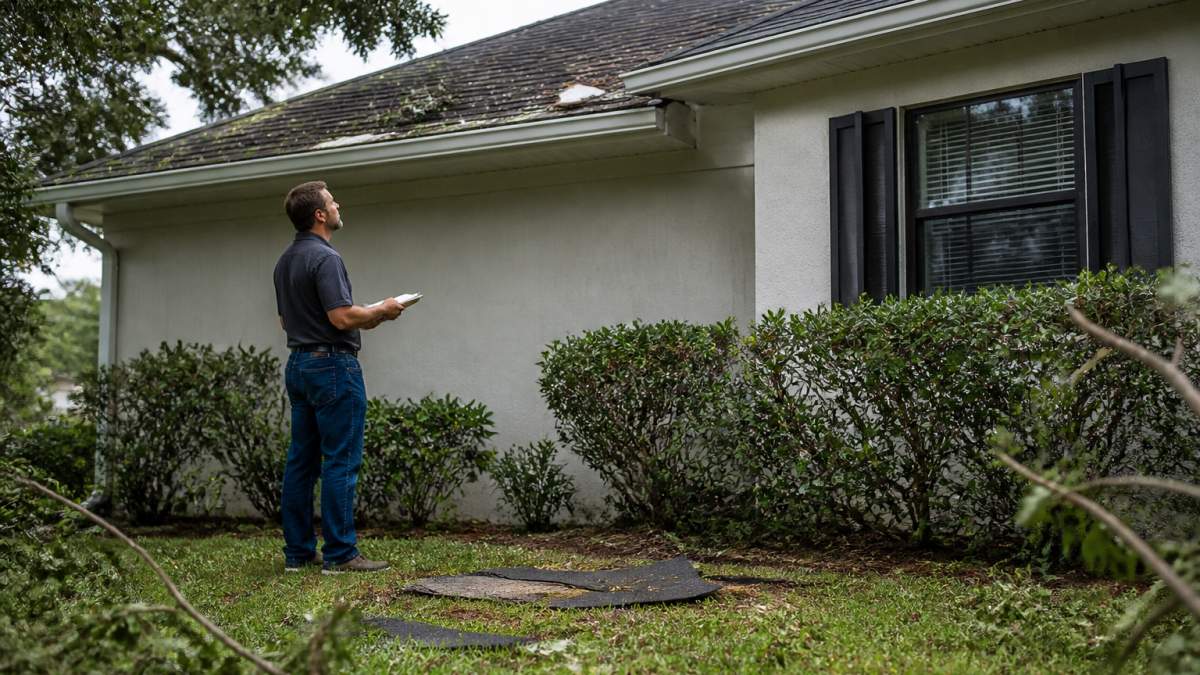
Walk the full perimeter of your home, looking up at the roof edge, ridge, and every visible slope. This ground-level inspection catches obvious problems before you ever need a ladder.
Here's what to look for:
- Missing shingles, bare patches where the roof deck shows through
- Cracked or broken shingles, splits that let water straight through
- Loose or lifted shingles, edges curling up or flapping in wind
- Misaligned shingles, rows that no longer sit straight
- Roof debris, fallen branches, shingle fragments, or scattered material on the ground
Lifted shingles are the sneakiest: they look almost normal from the ground, but a broken seal lets water slide underneath during the next heavy rain.
Granule Loss and Roof Sediment in Gutters
Check your gutters and downspouts next. Asphalt shingles shed granules as they age, but a storm can strip them off in one event; a heavy buildup of granules or grit is a strong sign of hail or wind damage.
Also look for:
- Clogged gutters holding standing water
- Shingle fragments resting in the downspouts
- Dark spots or dents on gutters and roof vents
Bent vents and dented flashing are often the first visible clue that hail hit your roof system.
Step 2: Signs of a Roof Leak After a Storm Inside Your Home
To spot the signs of a roof leak after a storm, look inside first. Water intrusion almost always leaves an indoor trail before it becomes obvious on the roof.
Grab a flashlight and check:
- Ceiling stains, brown or yellow rings, even faint ones
- Wall stains, streaks running down from the ceiling line
- Bubbling paint, paint that looks like it's peeling away from moisture
These marks can show up days or weeks after the storm. That delay is normal: water travels along rafters and decking before it drips, so the leak point and the stain rarely match.
Attic Inspection: Wet Insulation, Dampness, and Exposed Nails
Your attic tells the truth about your roof. Look for wet insulation, dark streaks on the deck, and daylight coming through.
Check these areas:
- Wet or matted insulation
- Damp or discolored wood on the deck
- Exposed nails poking through the deck
Exposed nails matter more than people think: when shingles shift, nails back out and create tiny openings that let water in, and rust around them confirms moisture has been sitting there.
Step 3: Hail Damage on Roof Shingles and Other Impact Marks
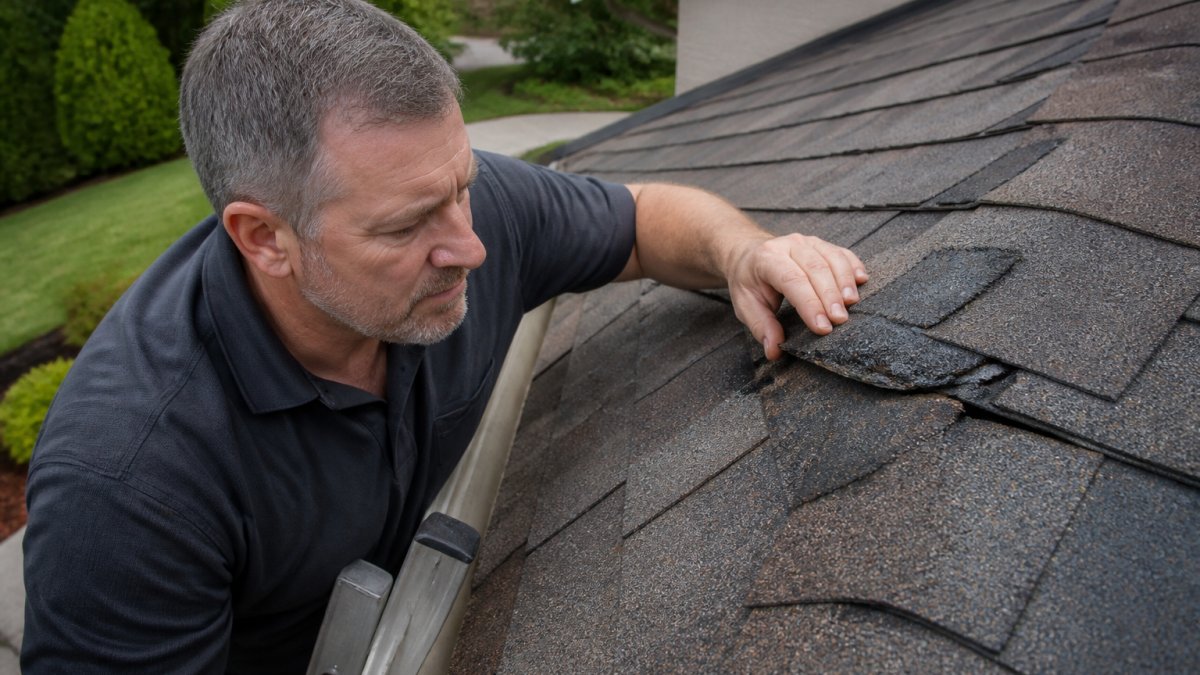
Hail damage on roof shingles is easy to miss from the ground because it often doesn't tear anything. Instead, hail bruises the shingle, knocking granules loose and softening the mat underneath.
Signs of hail damage include:
- Dark spots where granules have been knocked off
- Impact marks or dents that feel soft when pressed
- Cracks radiating from a strike point
Hail bruising is tricky because the shingle may still look intact. The damage is underneath, shortening the shingle's life even if it doesn't leak today.
Step 4: How to Schedule a Roof Inspection After a Storm
Most articles stop at "call a roofer." The useful question is what happens after you call and how to prepare so the inspection produces evidence you can use. A storm inspection is not a sales visit, it is a documented survey of the roof system.
What a Professional Storm Inspection Actually Includes
A thorough inspection covers the whole roof system, not just the field shingles. Expect the inspector to assess:
- Field shingles on every slope, checking for lifted seals, creasing, mat exposure, and impact marks
- Ridge, hip, and rake edges, where wind concentrates and shingles tear first
- Flashing at chimneys, sidewalls, valleys, and skylights, since bent or lifted flashing is a common leak path
Ask the inspector to photograph each finding with a scale reference, like a tape measure or coin, so hail strike and crack sizes are documented rather than described.
How to Prepare Before the Inspector Arrives
A little prep makes the visit faster and the report stronger:
- Write down the storm date and time, plus any hail size or wind reports you remember or can find from local weather records.
- Photograph what you already found, from the ground and inside, before anyone touches the roof.
- Note the interior symptoms, including the date you first saw each stain, drip, or musty smell.
- Clear attic access and make sure the inspector can reach the roof safely.
- Gather your policy number and deductible, so you can ask coverage questions on the spot.
- Ask for the report in writing, with photos attached, before any repair work is discussed.
Questions Worth Asking on the Call
- How many storm inspections have you completed in this area this season?
- Will you provide a written report with dated photos?
- Do you document the difference between storm damage and normal wear?
That last question matters: when a contractor and adjuster walk the roof together, disputed findings get resolved in real time instead of through letters.
At LRI Restorations, we handle the full inspection and walk you through what we find. We've spent years helping homeowners navigate insurance claims, so you're not guessing at what your policy covers.
Storm Damage vs. Normal Aging: How to Tell the Difference
This is the hardest judgment call in roof inspection, and it decides most insurance claims. Storm damage shows up suddenly, in patterns, often on one side of the roof; normal aging happens slowly and evenly. The ambiguous cases, a little granule loss, a few cracked shingles, an old stain, are where homeowners get stuck.
Why the Two Look Alike
Asphalt shingles age from the top down: sun oxidizes the asphalt, granules loosen, and the mat embrittles. A storm accelerates the same processes in one event, so a shingle that lost granules to hail can look almost identical to one that lost them to fifteen summers of UV exposure.
The difference is usually in the pattern and the timing, not in the shingle itself.
Side-by-Side Comparison
| Clue | Storm Damage | Normal Aging |
|---|---|---|
| Timing | Sudden, after a dated weather event | Gradual over years |
| Pattern | Clustered on one slope, one elevation, or one side | Even across the whole roof |
| Shingles | Cracked, lifted, creased, or missing | Curling, brittle, and thinning |
| Granules | Heavy, sudden loss in gutters and at downspout outlets | Slow, steady shedding over seasons |
| Metal | Dents, spatter marks, and impact points on soft metals | Rust, chalking, and surface wear |
| Flashing | Bent, lifted, or pulled away at edges | Sealed but aged caulk and surface oxidation |
| Interior | Stains that appear days to weeks after the storm | Stains that grow slowly over months |
How to Read the Ambiguous Signs
Granule loss. Run your hand along a gutter after a rain. A light dusting is normal.
Cracked shingles. Cracks that radiate from a single point, or that appear in a cluster on one slope, suggest impact.
Old stains. A brown ring that has been there for years is likely a slow leak from worn flashing.
Lifted shingles. A shingle that has lost its seal but is otherwise intact is a classic wind-damage signature.
Why the Distinction Matters for Your Claim
Insurers pay for storm damage, not wear and tear, and they look for reasons to classify a claim as maintenance.
If your roof is near the end of its service life, an adjuster may argue the storm only accelerated an inevitable replacement, a harder claim to win, and one where a contractor who understands insurance language makes a real difference.
At LRI Restorations, we document the difference clearly and stand behind the findings. We've spent years helping homeowners navigate insurance claims, so you're not guessing at what your policy covers.
Documenting Your Storm Damage Roof Insurance Claim
A storm damage roof insurance claim lives or dies on documentation. The more evidence you collect early, the stronger your claim.
Do this:
- Photograph all damage from the ground and inside
- Note the date of the storm and when you noticed each sign
- Keep receipts for any temporary repairs
The Federal Emergency Management Agency's disaster damage guidance recommends documenting damage with dated photos before making any repairs. That record protects you if your insurer questions the claim.
If your claim gets denied or underpaid, a contractor who understands insurance can help you respond.
Urgent Warning Signs and Temporary Mitigation
Some signs mean you should stop and call a professional today because they point to active water intrusion or a roof breach.
Call a roofer immediately if you see:
- Water actively dripping inside during or after rain
- Sagging ceilings or bulging drywall
- Daylight visible through the attic roof deck
While you wait, limit the damage: move furniture and valuables away from leaks, place buckets under drips, and if it's safe, tarp the affected area from the ground with professional help.
Hidden storm damage doesn't wait, and neither should you. Water intrusion gets worse with every rain, and insurance deadlines pass quickly.
Frequently Asked Questions
How can you tell if a roof has hidden storm damage?
Hidden storm damage rarely shows up as a missing shingle. Look for granule loss (dark patches on asphalt shingles and grit in gutters), cracked or misaligned shingles, bent roof vents, and damaged flashing. Inside, check the attic for wet insulation, dampness, and ceiling or wall stains. Because most of these signs appear in areas you cannot see from the ground, a professional roof inspection after a storm is the most reliable way to confirm what is really going on.
Does homeowners insurance cover roof damage caused by wind?
Most homeowners policies cover sudden wind damage, including lifted or missing shingles and the water intrusion that follows. Coverage usually depends on your deductible, policy terms, and whether the damage is documented as storm-related rather than normal aging. Photograph everything, keep receipts for temporary repairs, and file your storm damage roof insurance claim promptly. A contractor experienced with claims can help you present evidence clearly if the insurer disputes part of the loss.
How soon should you have a roof inspected after a storm?
Schedule a roof inspection after a storm as soon as it is safe, ideally within a few days. Some damage, like lifted shingle seals or small flashing breaches, lets water in slowly and may not show up as a ceiling stain for weeks. Early inspection catches those problems while the cause is still obvious to an adjuster. If you see sagging, exposed nails, or active dripping, treat it as urgent and call a professional roofer right away.
Is it safe to inspect your roof yourself after a storm?
Stay on the ground. Wet shingles, loose granules, and weakened decking make walking a storm-damaged roof dangerous, and most homeowners do not have fall protection. A ground-level inspection with binoculars, plus an attic check through a hatch, gives you useful information without the risk. Leave the roof surface itself to a professional roofer. If you notice urgent warning signs like sagging or a roof breach, keep everyone away from the area and call for help.