 how-to
Avoiding Contractor Delays on Home Renovations
Table of Contents
- Why Contractor Delays Happen and What They Cost You
- Setting a Realistic Home Renovation Project Timeline
- Questions to Ask a Remodeling Contractor Before You Sign
- How to Prevent Renovation Material Delivery Delays
- Contract Clauses and a Contractor Delay Notice Template
- Tracking Progress, Managing Change Orders, and Protecting Your Budget
- Frequently Asked Questions
Last Updated: October 9, 2026
Why Contractor Delays Happen and What They Cost You
Contractor delays are the single most common frustration in home remodeling, and most of them trace back to planning gaps, not bad luck. At LRI Restorations, we have over 25 years of industry experience.
The cost is not just time. A stalled kitchen means weeks of takeout and disrupted routines. A stalled roof leaves your home exposed. And every extra week can push your completion date further out.
Common Causes of Renovation and Construction Delays
Most renovation and construction delays fall into a handful of buckets. Knowing them helps you spot trouble early.
- Permits and building approvals that take longer than expected
- Material availability and lead times that shift after you order
- Trade coordination problems when subcontractors overlap or no-show
The U.S. Department of Housing and Urban Development notes that thorough pre-construction planning reduces costly surprises. That matches what we see on every job.
How to Distinguish Preventable Delays from Legitimate Disruptions
Not every delay is a contractor's fault. The skill is telling them apart.
Preventable delays come from poor planning, slow decisions, or weak scheduling. Legitimate disruptions come from weather, hidden damage, or supply chain shocks no one could forecast.
A contractor who warns you about a delay before it happens is managing the project. One who explains it after the fact is reacting.
Setting a Realistic Home Renovation Project Timeline
A realistic home renovation project timeline is built backward from your target completion date, with buffer time baked into every phase. Most homeowners underestimate how long permits, inspections, and material lead times actually take, so the schedule slips before the first hammer swings.
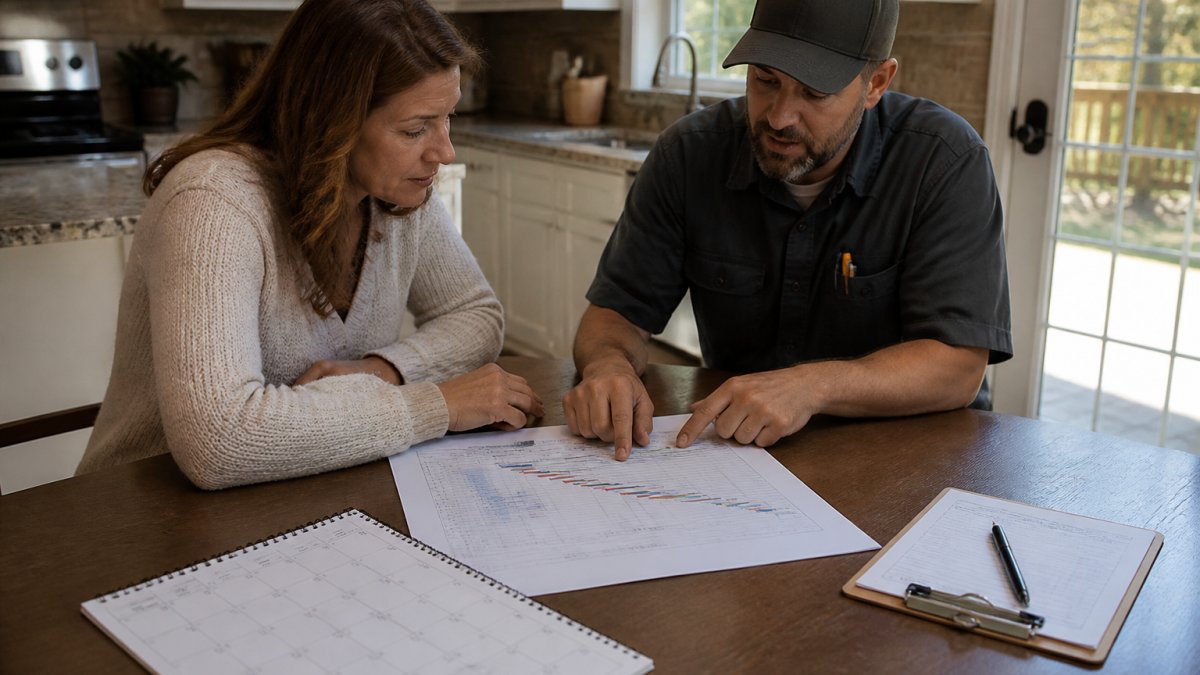
A Practical Pre-Construction Checklist and Schedule
Work through this sequence before anyone swings a hammer. The order matters because each step depends on the one above it.
Weeks 1-2: Define the project
- Confirm your total budget and carve out a 10-15% contingency fund separate from the main budget
- Write the scope of work in plain language: rooms, finishes, fixtures, and what is explicitly out of scope
- Decide which selections you will make yourself and which you will delegate to the contractor
Weeks 2-4: Lock the contractor and design
- Verify licensing, insurance, and references for your top choice
- Sign a contract that includes the completion date, milestone dates, delay notice process, and change-order procedure
- Finalize design drawings and finish selections so permits and orders can proceed
Weeks 3-6: Permits and approvals
- Submit permit applications and note the typical approval window for your jurisdiction
- Ask the contractor which inspections will be required and when they fall in the sequence
- Build inspection wait time into the schedule as its own line item, not as slack
Weeks 4-8: Order long-lead materials
- Order cabinets, windows, doors, tile, and specialty fixtures first
- Get written lead times, not verbal estimates, and save the confirmations
- Schedule delivery windows so materials arrive before the phase that needs them, not during it
Week 8 onward: Site preparation and trade sequencing
- Lock the trade coordination sequence: demo, rough-in, inspections, insulation and drywall, finishes, punch list
- Set a fixed weekly progress review day with your contractor
- Confirm site access, parking, dumpster placement, and utility shutoff windows
How to Build Buffer Without Padding the Schedule
Buffer is not the same as padding. Padding hides slack in every task; buffer is a visible, named block of time reserved for known risks.
When a milestone slips, ask three questions: Was the slip caused by a decision, a delivery, or a discovery? Could it have been foreseen? What is the recovery step and its cost? A contractor who answers those in writing is managing the schedule.
Distinguishing Preventable Delays from Legitimate Disruptions
Not every delay is a contractor's fault, and treating them all the same damages the working relationship. The skill is telling them apart and responding proportionately.
Preventable delays typically trace to slow homeowner decisions, weak trade coordination, missing permits, or materials ordered too late.
A simple decision framework: if the cause was knowable before the contract was signed, treat it as preventable and ask for a recovery plan.
Questions to Ask a Remodeling Contractor Before You Sign
The questions you ask a remodeling contractor before signing reveal more than the answers. They show whether the contractor thinks about scheduling at all. We encourage every homeowner to ask these, even of us.
- How many active jobs will run alongside mine?
- Who is my main point of contact, and how often will I hear from them?
- What happens if a subcontractor no-shows?
Red Flags That Signal a Contractor May Not Finish on Time
Watch for these warning signs during vetting:
- Vague answers about the project schedule
- No written agreement offered
- Pressure to pay a large deposit upfront
How to Prevent Renovation Material Delivery Delays
Renovation material delivery delays are one of the easiest problems to avoid, and one of the most common to ignore. The fix starts with ordering early and confirming lead times in writing.
- Order long-lead items like cabinets and windows first
- Get written lead times, not verbal estimates
- Confirm delivery dates a week out
If you supply your own materials, you own that risk. Coordinate delivery windows with your contractor so nothing sits exposed or blocks a trade.
Contract Clauses and a Contractor Delay Notice Template
Strong contract terms are your best protection against a blown schedule, and most homeowners never read the clauses that matter until something goes wrong. Before you sign, confirm the agreement addresses five things in plain language: the completion date, milestone dates, the delay notice process, the change-order procedure, and the remedy if deadlines slip. Contract rules vary by state and locality, so have a local attorney review anything you do not understand.
Clauses to Look For Before You Sign
- Completion date and milestones. A single end date is weak on its own. Ask for named milestones tied to phases so slippage is visible early.
- Delay notice process. Who must notify whom, in what form, and within how many days of learning about a delay. Written notice by email is common; some contracts require certified mail.
- Change-order procedure. Every change should be written, priced, and signed before work starts. Verbal changes are the most common source of disputes.
- Allowances. If the contract uses allowances for tile, fixtures, or appliances, confirm what happens when actual costs exceed the allowance and how that affects the schedule.
A Contractor Delay Notice Template
Here is a simple delay notice template you can adapt. Send it by email and by mail so you have two dated records.
Delay Notice
Date: [Date] Project: [Address] To: [Contractor Name]
This notice concerns a delay to the agreed completion date of [Date]. The delay involves [describe the issue]. As of today, the project is [number] days behind schedule.
Please respond within [number] days with a written plan to correct the schedule.
Escalation Steps When Communication Fails
If your contractor stops responding, escalate in order. Each step creates a dated record and gives the contractor a clear chance to correct course before the next step.
- Send a written delay notice by email and mail. State the milestone missed, the days behind, and the response deadline.
- Request a sit-down meeting with a written agenda covering the recovery plan, revised milestone dates, and any cost impact.
- Document everything. Photos with timestamps, dated messages, delivery receipts, and inspection reports. Keep a single project log.
- Review your contract's dispute resolution clause. If it requires mediation before litigation, follow that sequence so you do not waive your rights.
- Contact your state licensing board. Most states have a complaint process for licensed contractors, and a board inquiry often prompts a response.
- Consult a local attorney if the delay involves significant money, abandoned work, or a contractor who has stopped communicating entirely.
Contingency Planning for Living Arrangements and Finances
A renovation that runs late is not just a schedule problem; it is a logistics and cash-flow problem. Plan for both before work starts.
- Temporary housing and essential rooms. If the kitchen or only bathroom will be out of service, decide in advance whether you will stay, relocate, or set up a temporary kitchen. Budget for the cost either way.
- Storage and access. Confirm where furniture, appliances, and personal items will go, and how trades will access the work area without disrupting the rest of the home.
- Carrying costs. Mortgage payments, rent, storage, and utility changes continue during a delay. Keep a separate line in your budget for these costs.
- Payment schedule. Tie progress payments to completed milestones, not to calendar dates, and hold back a final payment until the punch list is closed.
Tracking Progress, Managing Change Orders, and Protecting Your Budget
Progress tracking keeps a project honest. Set measurable milestones and check them on a fixed day each week. When a milestone slips, address it that week, not at the end.
Change orders are the quiet budget killer. Every change should be written, priced, and signed before work starts. Keep your contingency fund separate from your main budget so surprises do not derail the whole job.
At LRI Restorations, we manage every phase from permitting to final inspection, so homeowners are not left coordinating subcontractors themselves. Our team handles multi-phase jobs on occupied homes, which means your life keeps moving while the work does.
Frequently Asked Questions
What should I do if a contractor keeps delaying my renovation?
Start by checking your written agreement for schedule terms and any delay clauses. Send a written notice referencing the contract and asking for a revised completion date. If delays continue without a valid reason, you may need to escalate through a formal demand letter or consult an attorney. Document every communication, photo, and missed milestone. A clear paper trail protects your investment and gives you leverage if the dispute ends up in mediation or court.
What are the most common causes of contractor delays?
The most frequent causes include permit and inspection backlogs, material lead times and supply chain issues, poor trade coordination among subcontractors, hidden damage discovered during demolition, change orders that expand the scope of work, and weather disruptions. On home renovations, decision-making delays from homeowners also stall progress. Understanding which category a delay falls into helps you respond appropriately instead of assuming the worst.
How can I reduce delays caused by materials or deliveries?
Order long-lead items like cabinets, windows, and tile as soon as the scope of work is finalized. Confirm written lead times with your supplier and build a buffer into the project schedule. Decide who is responsible for homeowner-supplied materials and where they will be stored. Ask your contractor for a material delivery schedule and check it against the construction timeline so nothing sits idle waiting on a shipment.
What should a home renovation contract say about the schedule?
A solid contract includes a start date, substantial completion date, and milestone schedule. It should define what counts as an excusable delay, such as weather or permit holds, and what happens if the contractor misses deadlines without cause. Include language on change order pricing and timeline impact, payment tied to milestones rather than calendar dates, and a written notice requirement for any schedule changes. Review these terms before signing.
Home renovations rarely fail because of one big mistake. They fail because small planning gaps stack up until the schedule collapses. LRI Restorations brings over 25 years of experience, family-owned accountability, and full project management from permitting to final walkthrough. We keep communication clear and timelines honest. Get a quote from LRI Restorations and start your project with a schedule you can actually trust.