 how-to
Challenge Denied Storm Insurance Claims: Step-by-Step
Table of Contents
- Why Storm Insurance Claims Get Denied or Underpaid
- Review the Storm Damage Insurance Claim Denial Letter
- Gather Supporting Documentation and Evidence
- Understand Your Policy and Coverage Limits
- How to Appeal a Denied Homeowners Insurance Claim
- Escalate Through Appraisal or Formal Dispute Resolution
- When to Seek Professional Help
- Frequently Asked Questions
Last Updated: October 11, 2026
Why Storm Insurance Claims Get Denied or Underpaid
Denied storm insurance claims often result from policy exclusions, insufficient documentation, or disputes over damage cause. Understanding why denials happen puts you in a stronger position to challenge them.
Common denial reasons include:
- Policy exclusions. Your policy may not cover certain types of storm damage, like flood or wind damage above a specific threshold.
- Lack of documentation. Without photos, repair estimates, or proof of loss, insurers question the validity of your claim.
- Timing issues. Missing deadlines for filing or appealing can result in automatic denial.
- Depreciation disputes. Insurers may deduct depreciation from payouts, reducing what you receive.
Many property owners don't realize that denials aren't always final, they're often negotiable. The key is responding strategically with evidence and clear documentation.
Review the Storm Damage Insurance Claim Denial Letter
Your denial letter is your roadmap. Read it carefully to identify the specific reason for denial, which policy section applies, the appeal deadline, and the claims adjuster's contact information. Write down the denial reason word-for-word, this becomes your appeal focus. If the letter is vague, request a detailed written explanation. Look for inconsistencies between verbal statements and the written letter, as these may indicate mishandling or error.
Gather Supporting Documentation and Evidence
Strong evidence wins appeals. Collect documentation proving the damage occurred, your policy covers it, and the insurer's denial reason is incorrect. Organize evidence to directly address the specific denial reason.
Evidence Checklist by Denial Reason
Your denial letter states a specific reason. Use this checklist to gather evidence that directly contradicts that reason:
If denied for "not covered" or "policy exclusion":
- Original policy declarations page and full policy document with coverage sections highlighted
- Any endorsements or amendments to your policy
- Written communication from your agent confirming coverage at time of purchase
- Comparison of the insurer's cited exclusion against your actual policy language
If denied for "insufficient documentation" or "lack of proof of loss":
- Dated photos and video of all damage
- Proof of loss form (your formal claim statement)
- Repair estimates from licensed contractors
- Weather service records confirming the storm occurred
If denied for "pre-existing damage" or "poor maintenance":
- Maintenance records (HVAC service logs, roof inspections, gutter cleaning receipts)
- Pre-storm photos (if available)
- Receipts for recent repairs or upgrades
- Contractor statements confirming damage is storm-related, not wear-and-tear
If denied for "depreciation" or "actual cash value vs. replacement cost":
- Your policy language on depreciation and actual cash value calculations
- Repair estimates showing replacement cost (not depreciated value)
- Comparable repair costs from other contractors
If denied for "claim filed too late" or "missed deadline":
- Proof of timely filing (certified mail receipt, email confirmation, or dated claim form)
- Documentation of any communication with the insurer before the denial
Essential Documents to Collect Immediately
Regardless of the denial reason, gather these core documents:
- Original policy documents. Request a certified copy from your insurer if you don't have it. Highlight coverage sections and exclusions relevant to your claim.
- Proof of loss. Your formal statement detailing the damage and requesting payment. If you haven't submitted this, prepare it now.
- Photos and video. Document damage from multiple angles and distances. Include close-ups of specific damage areas (see section below).
- Repair estimates. Get at least two independent estimates from licensed contractors. These provide objective cost assessments and should itemize repairs clearly.
- Weather records. Obtain official storm data from the National Weather Service showing wind speeds, hail size, or rainfall amounts for your area on the date of the damage.
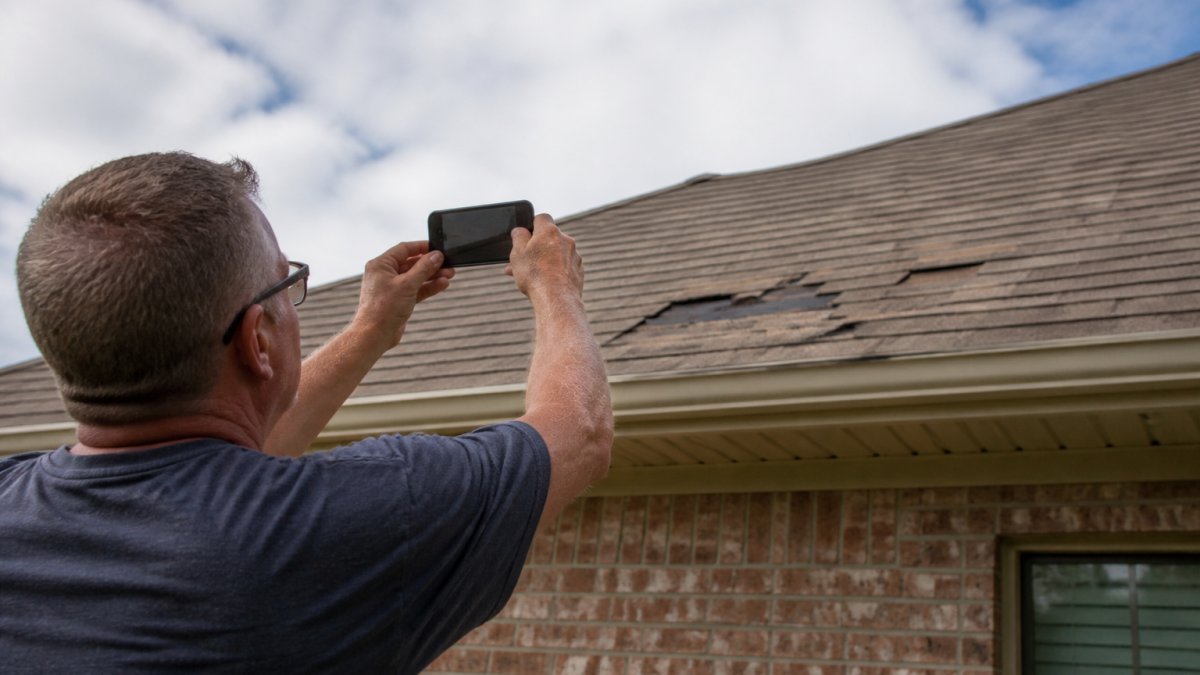
Photograph and Document All Damage
Photos are your strongest evidence. Take them immediately after the storm, before any repairs.
Photograph every damaged area:
- Wide shots showing the full extent of damage to the roof, siding, or other affected areas
- Close-ups of specific damage (hail dents, torn shingles, broken gutters, cracked windows)
- Before-and-after images if you have pre-storm photos
- Damage from multiple angles and lighting conditions
- Any visible storm debris near the damaged area
Date stamp your photos. Use your phone's built-in camera to automatically tag images with the date and time.
Create a photo inventory listing each photo with its filename, date, location on the property, and brief description. This organization helps when presenting evidence to the insurer and makes it easy to reference specific photos in your appeal letter.
Obtain Independent Assessments
Insurance adjusters work for the insurance company. An independent assessment provides an unbiased evaluation of your damage.
Consider hiring:
- Licensed contractors. Get written estimates from at least two contractors licensed in your state. Request that they note the cause of damage (storm-related) and itemize repairs clearly.
- Independent adjusters. These professionals work for you, not the insurer. They inspect damage, prepare detailed reports, and negotiate with the insurer on your behalf. They typically charge a fee ($300-$1,000 for residential inspection) or a percentage of the settlement increase.
- Engineers. For structural damage or complex claims, an engineer's assessment carries significant weight and may be called as expert testimony if litigation becomes necessary.
Request that any professional assessment explicitly address the insurer's stated denial reason.
Organize Evidence for Your Appeal Submission
When you submit your appeal, organize evidence logically:
- Create an evidence index. List all attachments with page numbers or file names.
- Number each attachment. Reference attachments by number in your appeal letter (e.g., "See Attachment 3: Contractor Estimate").
- Group by category. Organize photos together, estimates together, policy documents together, and weather records together.
- Include a cover letter. Briefly explain what each category of evidence shows and how it supports your appeal.
- Send copies, not originals. Never send original documents. Make copies or scans.
- Use certified mail. Send your complete submission via certified mail with return receipt requested. Keep a copy for your records.
This organization makes it easy for the insurer to review your evidence and understand your argument. It also creates a professional impression and shows you've prepared a thorough case.
Understand Your Policy and Coverage Limits
Your insurance policy is a contract. Understanding what it covers is essential for challenging a denial.
Key policy sections to review:
- Declarations page: coverage limits and deductibles
- Coverage sections: what's covered (dwelling, personal property, additional living expenses)
- Exclusions: what's NOT covered (flood, wear and tear, maintenance issues)
- Conditions: your obligations (reporting timeframes, cooperation with investigation)
Compare your policy language directly to the insurer's denial reason. If the denial cites an exclusion, verify that exclusion actually appears in your policy. Insurers sometimes cite exclusions that don't apply to your specific coverage.
How to Appeal a Denied Homeowners Insurance Claim
Appealing denied storm insurance claims follows a formal process. Most states require insurers to provide a clear appeal procedure:
- Request a detailed explanation if the denial letter is vague.
- Gather your evidence: documentation, photos, estimates, and assessments.
- File a reconsideration request with a formal letter requesting review of the denial decision.
- Escalate if necessary by filing a complaint with your state's insurance commissioner or pursuing appraisal or mediation.
Each step has deadlines. Missing a deadline can forfeit your right to appeal. Check your denial letter and your state's insurance regulations for specific timeframes.
File Your Insurance Claim Reconsideration Letter
A reconsideration letter is your formal request for the insurer to review their denial decision. Structure your letter:
- Opening: State your policy number, claim number, and denial date.
- Restate the denial reason: Quote the insurer's stated reason directly from their letter.
- Present your evidence: Explain why the denial is incorrect, supported by your documentation.
- Reference your policy: Cite specific policy language that supports your coverage claim.
- Request reconsideration: Clearly ask the insurer to overturn the denial and approve your claim.
- Closing: Include your contact information and request a written response within 30 days.
Keep the letter professional and factual. Attach copies of supporting documents (photos, repair estimates, weather records, policy sections). Number your attachments and reference them in the letter. Send via certified mail with return receipt requested.
Know Your Hail Damage Insurance Claim Deadline
Deadlines are critical. Missing a deadline can eliminate your right to appeal, regardless of the strength of your case.
Common deadlines include:
- Claim filing deadline: Usually 1-3 years from the date of loss
- Appeal deadline: Often 30-90 days from the denial letter
- Appraisal deadline: Usually 60-90 days to request appraisal if you and the insurer disagree on repair costs
Check your denial letter for the appeal deadline. If not stated, contact your state's insurance commissioner's office. Document all deadlines and set calendar reminders.
Escalate Through Appraisal or Formal Dispute Resolution
If your reconsideration request is denied, escalation options exist:
Appraisal process. If you and the insurer disagree on repair costs, either party can request appraisal. An independent appraiser and an insurer's appraiser evaluate the damage. If they disagree, a neutral umpire breaks the tie. The appraisal decision is binding.
Mediation. A neutral third party helps you and the insurer reach agreement. Mediation is less formal than litigation and often faster.
Insurance commissioner complaint. Your state's insurance commissioner investigates complaints against insurers. File a complaint if you believe the insurer acted in bad faith or violated state insurance laws.
Litigation. If other options fail, you can sue the insurer. This is expensive and time-consuming but may be necessary for large claims.
When to Seek Professional Help
Some claims warrant professional assistance. Consider hiring a professional if:
- The insurer's denial seems unreasonable or contradicts your policy language
- The claim amount is substantial (over $10,000)
- The damage is extensive and requires specialized assessment
- The insurer is unresponsive or dismissive
Public adjusters represent you in claims disputes.
Insurance attorneys can review your case and advise on next steps.
Contractors with claims experience understand insurance processes.
The cost of professional help is often offset by higher settlements.
Challenging a denied storm insurance claim requires organization, documentation, and persistence.
If you're facing a denied or underpaid claim, Get a Quote from LRI Restorations today.
Frequently Asked Questions
What should I do first after my denied storm insurance claim is rejected?
Start by carefully reading the denial letter to understand the insurer's stated reason. Request a detailed written explanation if one wasn't provided. Then review your policy to verify coverage, exclusions, and deadlines. Photograph all damage immediately, gather repair estimates, and collect supporting documentation. These steps form the foundation of a strong appeal. Act quickly, most insurers have strict deadlines for appeals and disputes, typically 30 to 60 days from the denial date.
How do I write an insurance claim reconsideration letter after a denial?
Structure your reconsideration letter with a clear subject line referencing your claim number and date. Begin by restating your claim and the denial reason. Present new evidence: photographs, contractor estimates, independent adjuster reports, or policy language supporting your position. Explain specifically why the denial was incorrect, for example, if the insurer attributed damage to wear and tear, show evidence the damage is storm-related. Keep the tone professional and factual. Include copies of supporting documents, not originals. Send via certified mail and request written acknowledgment of receipt.
What is the deadline for filing an appeal on a hail damage insurance claim?
Most homeowners insurance policies and state regulations allow 30 to 60 days from the denial date to file a formal appeal or request appraisal. Some states have longer windows or specific complaint procedures through the state insurance commissioner. Check your policy's appeal section and your state's insurance regulations for exact deadlines. Do not wait, filing before the deadline is critical. If you miss the deadline, your right to appeal may be forfeited. When in doubt, contact your state's Department of Insurance for jurisdiction-specific requirements.
What evidence is most effective when challenging a denied storm damage claim?
The strongest evidence includes: dated photographs and video of damage taken immediately after the storm, repair estimates from licensed contractors, an independent adjuster's inspection report, weather records confirming the storm event, proof of the damage's cause (wind, hail, or lightning), and your original policy documents highlighting applicable coverage. Pre-storm photographs of your property strengthen your case by showing the condition before damage. Keep written communication from the insurer, weather service reports, and any third-party assessments. Avoid emotional language; let the evidence speak for itself.