 How-to
How to Keep Pets Safe During a Home Renovation
Quick Summary
A pets safe renovation starts with planning before work begins: choose a closed, quiet room far from the work zone, lock up chemicals and tools, and keep pets out of dust and fumes until the area is cleaned and aired. Share a written checklist with your contractor and review it weekly as the project changes.
- Plan before work starts, since pets sense change and stress builds quickly.
- Use a solid-door room far from active work, with bedding, food, water and a litter box.
- Store paint, solvents, adhesives and sharp tools in locked cabinets or outside the house.
- Run a HEPA air purifier in the safe room and keep its door closed during work.
- Wait at least 24 hours after painting or staining, and vacuum with a HEPA vacuum before pets return.
Table of Contents
- Why Pets Need a Plan Before Renovation Work Starts
- Choosing Where to Keep Pets During Remodeling
- Building a Pet-Safe Renovation Checklist
- Controlling Dust, Fumes and Construction Hazards
- Helping Dogs Cope With Renovation Noise and Strangers
- When Boarding Pets During Home Renovation Makes Sense
- Booking Your Renovation Walkthrough With LRI Restorations
- Frequently Asked Questions
How to Keep Pets Safe During a Home Renovation
Last Updated: November 11, 2026
Why Pets Need a Plan Before Renovation Work Starts
Renovation is one of the most stressful events a household can go through, and pets feel it too, so a clear pets safe renovation plan matters from day one. A quiet home can quickly turn into a loud, dusty, unfamiliar place, and that affects dogs and cats a great deal. Pet safety during a home renovation is not something to figure out on the first day of demolition.
Pets sense change before people do. Drills, hammers, strangers walking through the house, and missing furniture can all push an animal into fear or fight-or-flight mode. A plan made before work begins gives you time to set up safe spaces and routines.
Houzz reports that 34% of respondents considered pet-friendly products and materials when planning home improvement projects, which shows how common this concern has become. Houzz report on pets and home improvement projects
Start planning as soon as you have a project timeline. Ask yourself these questions:
- Which rooms will be under construction, and for how long?
- Where can my pet stay that is far from the noise and dust?
- Who will supervise my pet on work days?
- Do I need outside help, such as boarding or a pet sitter?
- Does my pet have any health conditions that need extra care?
Write the answers down, because a pets safe renovation plan is far easier to manage when you can share it with your contractor.
Choosing Where to Keep Pets During Remodeling
The safest spot is a closed, quiet room far from active work areas. A bedroom or spare room with a solid door usually works best. Pick a room that has water, a comfortable bed, and good airflow, but no open windows that let in dust.
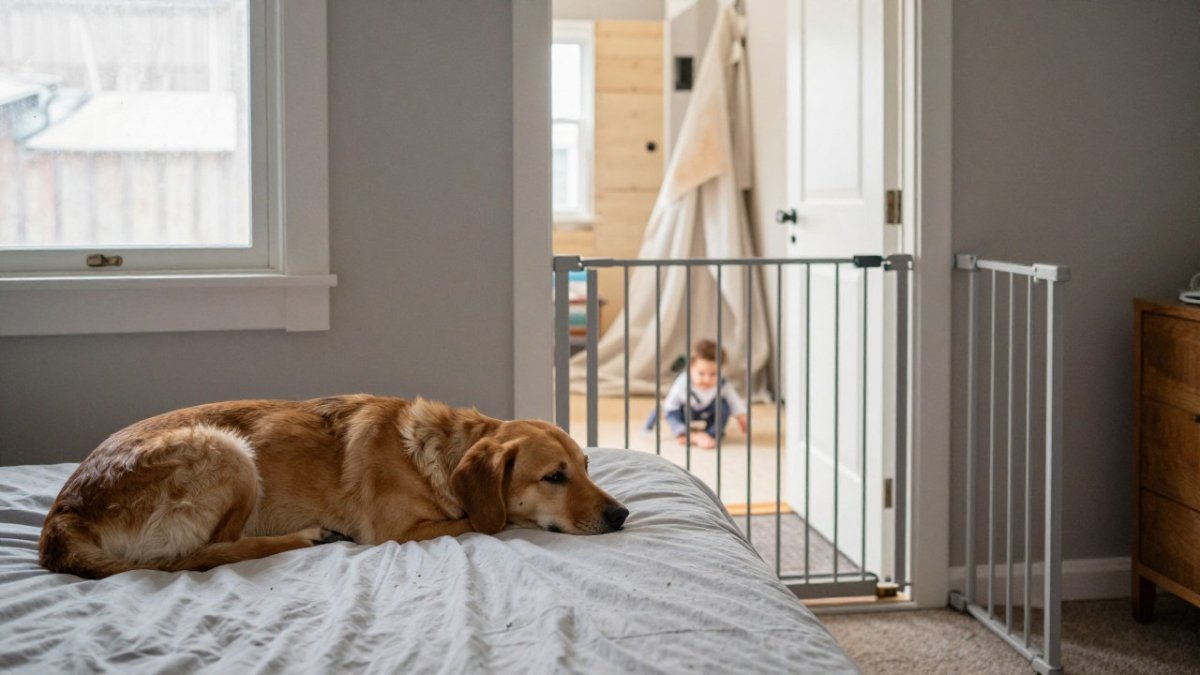
Set up the room before work begins. Include familiar bedding, toys, food, and water bowls. Keep the litter box or puppy pads in the room, away from the food and water.
Pet-safe zone checklist:
- Solid door that closes and stays shut
- Baby gate or crate for extra containment
- No access to tools, paint, or cleaning products
- Window screens in good shape
- Familiar smells, like a worn shirt or favorite blanket
If your home is open-plan, use a closed room with a gate across the entrance. Never leave a pet alone in an area where a door could open or a worker could walk in.
Building a Pet-Safe Renovation Checklist
A written checklist keeps everyone on the same page. Share it with your contractor, family members, and any helpers. Make it part of your renovation plan, not an afterthought.
Use this checklist as a starting point:
- Walk through the house and mark every spot where a pet could reach a hazard
- Confirm with the contractor which rooms will be off-limits each day
- Keep doors closed and use gates or barriers to block access
- Label entry and exit routes so workers know to shut doors behind them
- Store chemicals, adhesives, and sharp tools in locked cabinets or outside the house
- Plan feeding and potty breaks around work hours
- Keep a leash and carrier near the safe room for emergencies
Watch out: Open paint cans and loose nails are common causes of injury. Ask the crew to pick up debris at the end of every workday.
Review the checklist each week. Work schedules change, and new hazards can appear as the project moves from demolition to finishing.
Controlling Dust, Fumes and Construction Hazards
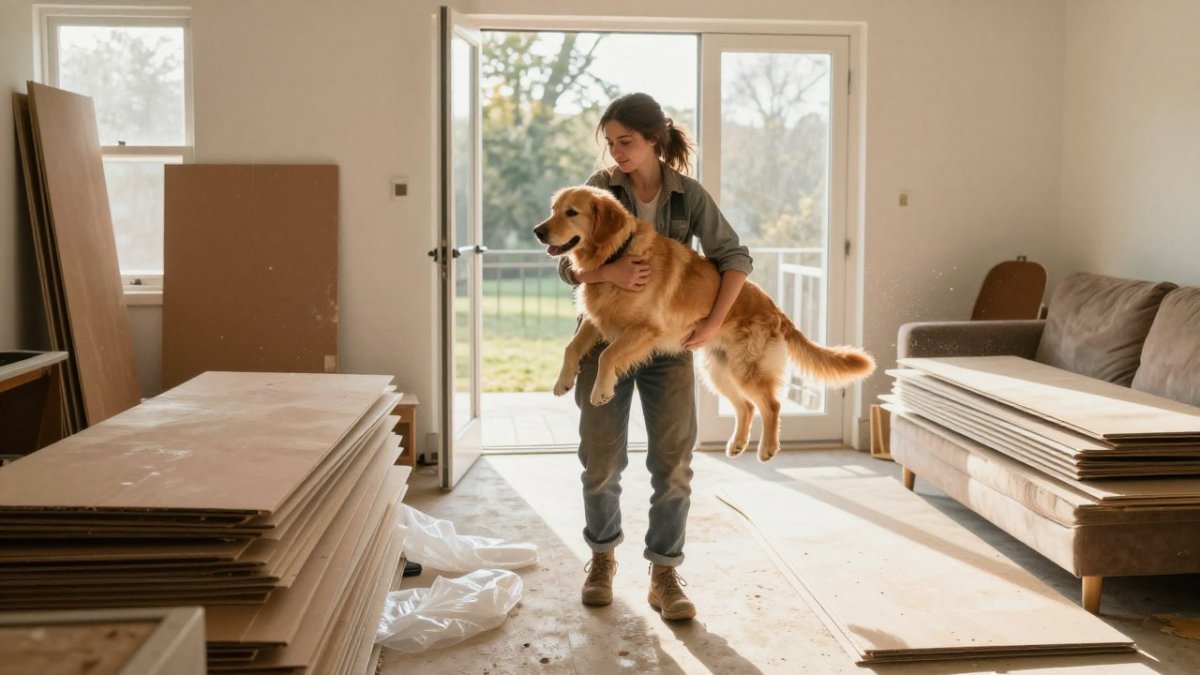
Dust and fumes can be significant risks during renovation, and they can affect pets differently than people. Fine particles from drywall, sanding, and demolition can settle on floors, bedding, and paws, and pets ingest them while grooming. Paint, sealant, adhesive, and solvent fumes can irritate lungs, especially in small animals, birds, and pets with breathing problems.
Source control first. Ask your contractor how they plan to control dust and fumes in the work area before work begins. For sanding and drywall work, wet methods and sanders with dust ports cut airborne particles dramatically. Ask about low-VOC or low-odor material options for your project.
Ventilation and filtration. Run the HVAC fan continuously during active work, and change filters more often than usual, most practitioners find that a pleated filter rated MERV 11 to MERV 13 captures more fine dust without overloading a residential system. In the pet's safe room, run a portable air purifier with a HEPA filter and keep it on during work hours.
Species-specific exposure risks. Dogs and cats can lick dust and residue from paws and coats, so wipe them with a damp cloth when they leave the safe zone. Birds are far more sensitive to fumes and aerosols, remove birds from the home during painting, adhesive, and solvent use, and do not bring them back until odors have cleared.
Re-entry criteria. Do not let pets back into a work area just because the crew has left for the day. Wait until dust has settled, odors have cleared, and surfaces have been wiped. A common pattern is to keep pets out of the work zone for at least 24 hours after painting or staining, and longer if the product label specifies a longer cure time.
Watch out: Signs of exposure, coughing, sneezing, watery eyes, vomiting, lethargy, or changes in appetite, warrant a call to your veterinarian. Do not wait for the project to finish, and do not assume a pet will "shake off" fumes or dust.
The table below summarises how different pets are affected by renovation dust and fumes, and what to do about each risk.
| Pet | Main risk | Key precaution |
|---|---|---|
| Dogs and cats | Licking dust and residue from paws and coats | Wipe paws with a damp cloth after leaving the safe zone |
| Birds | Sensitivity to fumes and aerosols | Remove from home during painting, adhesive and solvent use |
| Small mammals and reptiles | Temperature swings and draft | Keep enclosures away from work zones with stable heat and humidity |
| Fish | Pumps pulling contaminants into water | Cover tanks during dusty work and keep away from fumes |
| All pets | Dust and odor left after work | Wait at least 24 hours after painting or staining, and vacuum with HEPA first |
Helping Dogs Cope With Renovation Noise and Strangers
Dogs often handle noise and new people differently from cats, and each dog has its own limits. Some dogs stay calm if they have a quiet space to retreat to. Others pace, bark, or try to escape when workers come and go.
Introduce your dog to the crew before work starts, if possible. Keep the first meeting short and calm. Let the contractor offer treats, but only if your dog is comfortable with that. Ask workers to avoid reaching toward the dog's face and to ignore the dog if it seems nervous.
To reduce stress from noise:
- Play calming music or white noise in the safe room
- Keep the daily routine as close to normal as possible
- Give long-lasting chews or puzzle toys during work hours
- Take extra walks before and after the workday
- Ask your veterinarian whether a calming aid is appropriate for your dog
Watch for signs of stress, such as panting, pacing, drooling, hiding, or trying to escape. These may signal that your dog needs a quieter place or additional support.
When Boarding Pets During Home Renovation Makes Sense
Some renovations are too loud, dusty, or disruptive for pets to stay at home, and deciding when to relocate is one of the most consequential choices in the project. Boarding, daycare, or staying with a trusted friend or family member can be safer than keeping a pet in a home that is effectively a construction site.
Project-phase criteria. Demolition and structural work generate the most noise, dust, and unpredictability, this is the phase most practitioners recommend for off-site care if a pet is anxious or sensitive. Finishing phases bring fumes from paint, stain, and adhesive, which are a particular risk for birds and pets with respiratory conditions. If the home will lack water, electricity, heat, or a secure safe room for any part of the project, relocation is the safer choice.
Pet-specific criteria. Consider boarding or a trusted caregiver if your pet is very anxious, reactive, or prone to escape; if your pet is elderly, very young, or has a medical condition such as respiratory or mobility issues; or if your pet has shown severe stress signals during earlier work, pacing, drooling, hiding, loss of appetite, or attempts to bolt.
Choosing and preparing care. Book boarding early, especially during busy seasons, and ask about vaccination requirements, medication handling, and how the facility manages separation anxiety. Visit before the stay if you can, and send familiar bedding, food, and a written routine. Update identification tags and confirm microchip details are current before any relocation, and leave emergency contacts with the caregiver.
Re-entry planning. When your pet comes home, expect an adjustment period. Keep the old routine, reintroduce the home room by room, and watch for changes in behavior over the next few days. If the project is still active, bring the pet back only after the work area has been cleaned and aired out, and keep the safe room set up as before. A common pattern is a short, supervised reintroduction rather than free run of the house on day one.
Watch out: If your pet shows signs of severe stress or illness after returning home, persistent vomiting, lethargy, refusal to eat, or labored breathing, contact your veterinarian promptly rather than waiting to see if it settles.
Booking Your Renovation Walkthrough With LRI Restorations
Pet safety should be part of every renovation conversation, from the first estimate to the final walkthrough. At LRI Restorations, we manage permitting, engineering, and inspections for projects across Florida's Gulf Coast, and we can plan work phases around your pets' needs. Schedule a renovation walkthrough with our team to review the work zones, safe room options, and daily schedule before construction starts. Get a quote today and tell us about your pets so we can plan together.
Frequently Asked Questions
Can pets stay in the house during interior remodeling?
Many pets can stay home if the work zone is sealed off and they have a quiet, closed room with their bed, food, water and toys. Dust, paint fumes, power tools and unfamiliar workers are the main concerns. Keep pets out of active work areas at all times, and move them out entirely if the project involves demolition, major dust or long periods of noise. Ask your contractor for a schedule so you know which days will be the loudest.
Where should pets stay while contractors are working?
The best option is a closed room far from the work zone, ideally with a solid door, a crate or baby gate, and good ventilation. Place familiar bedding, toys, a litter box or potty area, and fresh water inside. If the house is not safe for pets during the loudest phases, consider a trusted friend, a pet sitter or a boarding facility. Check the room at the start and end of each workday.
How do I keep pets away from dust, tools and hazardous materials?
Close doors and use barriers to block access to the work area, and never let pets wander through open framing or stacked materials. Keep paint, solvents, adhesives and cleaning products stored high and sealed. Run an air purifier in the pet room and wipe paws after any contact with the work zone. Watch for coughing, sneezing, watery eyes, drooling or lethargy, and call a veterinarian promptly if you notice them.
Should I board my pet during a major renovation?
Boarding is worth considering when work involves demolition, extended dust, loud equipment, or when you will be away and unable to supervise. It is also a good choice for anxious pets or pets that are prone to escaping. Arrange boarding or daycare before the first day of work and visit the facility in advance if possible. Bring familiar items so your pet keeps its routine.