 How-to
7 Steps to Appeal a Denied Siding Insurance Claim
Last Updated: November 21, 2026
Quick Summary
To appeal a denied siding insurance claim, request your claim file in writing, gather dated photos and weather records, get an independent contractor's written causation opinion, then send a short appeal letter that answers the stated denial reason point by point. Send it certified mail and log every communication.
- Read the denial letter twice and calendar the appeal deadline immediately, since dispute windows are often shorter than homeowners expect.
- Photograph and label each elevation separately, because insurers evaluate wind, hail, and water damage on each side individually.
- Do not make permanent repairs before documenting the damage, or you may erase the evidence your appeal depends on.
- Ask your contractor for a written report stating, per elevation, what damage was observed and what peril caused it.
- If the appeal fails, start with the cheapest escalation step: a reinspection with your contractor on site.
Table of Contents
- Why Siding Damage Claims Get Denied
- Read the Denial Letter Before You Do Anything Else
- Evidence for a Storm Damage Insurance Appeal
- How to Appeal a Denied Siding Insurance Claim Letter
- How to Dispute a Home Insurance Claim Denial
- Does a Denied Home Insurance Claim Count Against You?
- Get a Contractor Assessment Before You File
- Frequently Asked Questions
Why Siding Damage Claims Get Denied
A denied siding insurance claim rarely means your damage isn't real. It usually means the insurer believes the damage doesn't meet your policy terms.
Across storm damage claims, the same denial reasons recur:
- Wear and tear - the insurer says age, not a storm, caused the damage
- Pre-existing damage - the damage was there before your policy period
- Excluded peril - the cause isn't a covered event under your policy
Wind, hail, and water damage are the covered perils most homeowners file under, but proving which one damaged your siding is the hard part.
If you're facing a denial, see the wider playbook for how to fight denied insurance claims before drafting anything.
Read the Denial Letter Before You Do Anything Else
The denial letter is your roadmap: it states the exact reason your claim was rejected, which tells you what evidence to gather next.
Read it twice. Then find these four things:
- The claim number and policy number
- The stated reason for denial, word for word
- Any policy language or exclusions the insurer cited
- The deadline to appeal or request reconsideration
Most policies set a dispute window shorter than homeowners expect. Miss it and your options shrink fast.
Write the denial reason in plain language. If it says "damage is consistent with wear and tear," your appeal must prove storm causation.
Evidence for a Storm Damage Insurance Appeal
Strong evidence for a storm damage insurance appeal proves the damage exists, proves a covered peril caused it, and proves it wasn't there before.
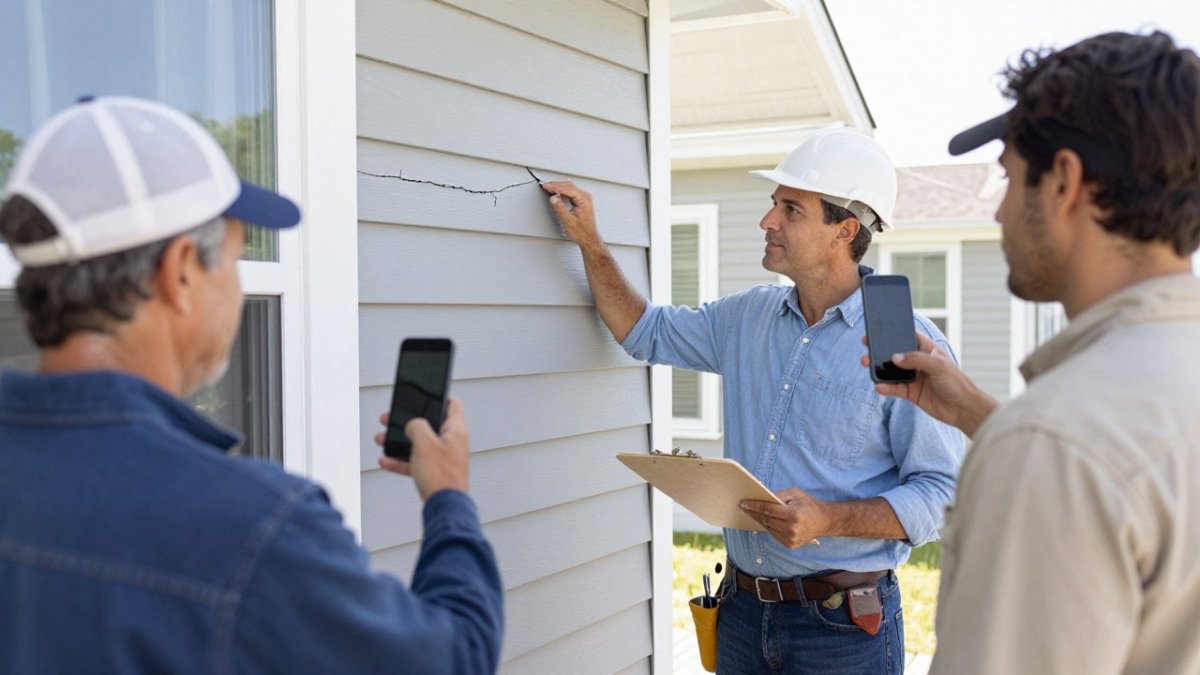
Start with the basics, then go siding-specific:
- Dated photographs of every damaged section, plus wide shots showing the whole wall and the surrounding elevation
- Storm documentation - weather reports, hail reports, or news coverage from the date of loss
- Repair estimates from licensed contractors
Request the insurer's inspection report in writing, since it may contain details that help your case. Compare their photos to yours and flag any missed elevation or poor lighting in your appeal.
Document damage by elevation and by cause
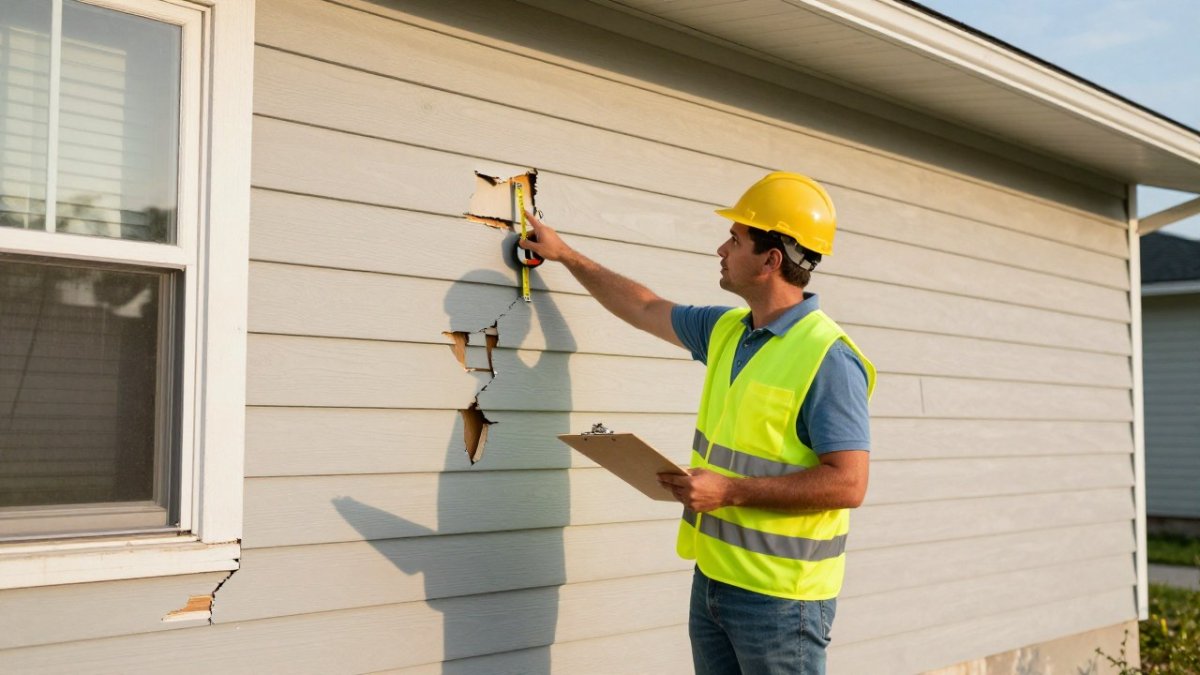
Siding damage is rarely uniform. Wind, hail, and water leave different signatures on different walls, and the insurer evaluates each elevation separately. Photograph and label each side - front, rear, left, right.
Match the damage signature to the peril you are claiming:
- Hail - cracks, chips, and circular impact marks, often with a bruised or soft spot around the strike; on vinyl, look for cracks radiating from an impact point; on fiber cement, look for chips and craters; on wood, look for dents and split grain
- Wind - lifted, curled, or missing panels; fasteners pulled through; panels separated at seams; damage concentrated on windward elevations and around corners, eaves, and openings
- Water intrusion - staining, swelling, delamination, or soft spots behind or below the siding, often appearing after wind or hail has compromised the surface
Photograph the point of origin - where the damage started - not just the visible crack. Show lift, impact marks, or granule loss that points to wind or hail rather than age.
Separate sudden damage from wear, deterioration, and installation issues
The most common insurer counterargument is that the siding was already failing.
Watch out: Do not make permanent repairs before the damage is documented. Replacing cracked panels can erase the evidence the insurer needs, and the carrier may treat the repair as an admission the damage was minor. If you must make emergency repairs, photograph and video first, keep the removed materials, and save every receipt.
Address repairability, matching, and code requirements
A denial or low estimate often turns on scope rather than causation. The insurer may agree a storm caused damage but pay only to replace the visibly damaged panels. Whether that is enough depends on the siding product and local rules:
- Matching - discontinued or faded siding may not match new material, and many policies or state insurance rules require reasonable matching of undamaged areas to the repaired area. Document the product name, color, and lot if available, and get a contractor's written statement on whether a match can be achieved.
- Repairability - some siding types can be patched; others cannot be repaired without replacing a full course or elevation. Get a contractor's written explanation of why a repair is not feasible, not just an assertion that replacement is needed.
- Code requirements - permits, flashing, house wrap, and ice or water barrier requirements can expand the scope beyond the damaged panels. A contractor's estimate that cites the applicable code provisions is far stronger than a lump-sum bid.
Get an independent inspection and a written causation opinion
A contractor's inspection should do more than list damage. Ask for a written report stating, for each elevation, what damage was observed and what peril most likely caused it, with photos keyed to the report.
Keep everything in one file: photos by elevation, weather records, the claim file, contractor reports, estimates, receipts, and a log of every insurer conversation. A complete file separates an appeal that gets reconsidered from one that gets a form denial.
How to Appeal a Denied Siding Insurance Claim Letter
A formal appeal is a written request asking the carrier to reconsider. It should be short, factual, and tied directly to the denial reason. The biggest mistake is describing damage in general terms instead of answering the specific reason for denial.
Follow this sequence:
- Request the claim file in writing and keep a copy
- Gather your evidence using the checklist below
- Get an independent inspection from a licensed contractor
- Draft the appeal letter addressing the stated denial reason point by point
- Attach supporting documents and reference each one in the letter
- Send it certified mail and keep the receipt
- Log every communication - date, name, and what was said
For a full walkthrough of the letter itself, this guide on challenging denied storm insurance claims step by step covers the structure and timing.
Tie each piece of evidence to the stated denial reason
Before drafting, write the denial reason at the top of a page and list the evidence that rebuts it. The letter should mirror that structure. Common denial reasons and the evidence that answers them:
- Wear and tear - dated photos showing intact siding adjacent to damaged siding, a contractor's written causation opinion, and weather records from the date of loss
- Pre-existing damage - photos or inspection reports from before the policy period or before the storm, prior repair receipts, and the installation date
- Excluded peril - weather records and a contractor report identifying the covered peril (wind or hail) rather than the excluded cause
If the denial cites policy language, quote it back and explain why your facts fall within coverage. Argue how the policy applies to the documented damage, not the policy in the abstract.
Use a letter structure that survives review
Here is a template you can adapt:
Re: Appeal of Denied Claim [Claim Number]
Dear Claims Department,
I am formally appealing the denial of claim [Claim Number] dated [Date]. The denial letter cites [stated reason].
I disagree with this determination for the following reasons:
- [Evidence point tied to the denial reason]
- [Independent inspection findings]
- [Photographic or weather documentation]
Attached please find [list each document]. I request a reinspection with my contractor present.
Please respond in writing within [timeframe stated in your policy].
Sincerely, [Name] | [Policy Number] | [Phone]
Keep the letter to two or three pages. Attach evidence as numbered exhibits and refer to each by number so the reviewer can follow without hunting through the file.
Attachment checklist
Include only what supports the denial reason, but include all of it:
- Copy of the denial letter
- Copy of the relevant policy pages, including the appraisal clause if one exists
- Contractor inspection report with license number and causation opinion
Watch the deadlines, and do not assume one universal timeline
Appeal and dispute deadlines vary by policy and state. Some policies also require appraisal or suit within a set period after the loss.
Watch out: Don't send an appeal without the claim file in hand. Homeowners who appeal blind repeat the same gaps the adjuster flagged, and the insurer simply points to the missing evidence again.
Here is the sequence the article lays out for filing a formal appeal.
| Step | What to do |
|---|---|
| 1 | Request the claim file in writing and keep a copy |
| 2 | Gather your evidence using the checklist |
| 3 | Get an independent inspection from a licensed contractor |
| 4 | Draft the appeal letter addressing the stated denial reason point by point |
| 5 | Attach supporting documents and reference each one in the letter |
| 6 | Send it certified mail and keep the receipt |
| 7 | Log every communication - date, name, and what was said |
How to Dispute a Home Insurance Claim Denial
Disputing a denial goes beyond one letter. If the appeal fails, you have escalation options, and they run in a rough order from cheapest to most involved.
- Request a reinspection with your contractor on site
- File a complaint with your state insurance department
- Request appraisal, if your policy includes an appraisal clause
A public adjuster works for you, not the carrier, and typically charges a percentage of the settlement.
Start with the cheapest step: a reinspection. Many denials get reversed once a contractor walks the property with the adjuster and points out what was missed.
Does a Denied Home Insurance Claim Count Against You?
A denied claim generally doesn't count against you the way an approved payout does.
That said, the claim still appears in your claims history, and some carriers weigh claim frequency at renewal even for closed-without-payment claims.
The bigger question is whether you can reopen the claim later. This guide on whether you can reopen a closed insurance claim walks through the steps that actually work.
Get a Contractor Assessment Before You File
A contractor assessment before you file or appeal changes the outcome more than any other single step.
That's our role at LRI Restorations.
Before you hire anyone to assess storm damage, read this guide on finding reliable storm restoration companies so you know what to ask.
If your claim was denied, don't accept the first answer.
A denied claim is a setback, not a final word.
Frequently Asked Questions
Is it worth appealing a denied insurance claim for siding damage?
It often is. Denials are frequently based on missing documentation, a disputed cause of damage, or a misread policy exclusion, and a formal appeal with photos, a contractor assessment, and a written rebuttal gives the carrier a reason to reconsider. The cost is mostly your time. If the denial cites a clear policy exclusion you genuinely fall under, or the repair cost is close to your deductible, the effort may not pay off. Read the stated reason first, then decide.
What evidence helps support a siding insurance appeal?
Strong evidence for a storm damage insurance appeal includes dated photos of the damage from multiple angles, a contractor's written assessment tying the damage to a specific storm date, repair estimates with line-item pricing, receipts for any emergency repairs, and your full claim file from the carrier. Matching damaged siding samples to the original product helps too. Request the adjuster's report and photos so you can point out anything they missed or mischaracterized.
Does a denied home insurance claim count against you?
A denied claim is not the same as a paid claim, but it still appears in your claims history and can affect future underwriting. Carriers may ask about prior claims when you apply or renew, and some use claims databases that record denials. A single denial usually will not cause a nonrenewal, but repeated claims, denied or paid, can raise your premium or make some carriers decline to renew. Ask your agent how the denial is recorded before you file another claim.
Should I hire a public adjuster or an attorney to challenge a denial?
Try the formal appeal first. It costs nothing and resolves many disputes. If the carrier upholds the denial, a public adjuster works on contingency, typically a percentage of the settlement, and can handle reinspection and documentation. An attorney makes sense when the dispute involves bad faith, a large dollar amount, or a deadline you are running out of. Your state insurance department also accepts complaints and can mediate at no cost.