 Comparison
Metal Roofing Cost Per Square Foot: 2026 Florida Pricing Guide
Table of Contents
- Metal Roofing Cost Per Square Foot in Florida: 2026 Benchmark
- Standing Seam Metal Roof Cost Breakdown
- Metal Roof Cost for a 2,000-Square-Foot House
- Metal Roof Installation Cost: Labor and Additional Expenses
- Metal Roof vs. Shingles Cost in Florida
- What Affects Your Metal Roof Price
- Getting an Accurate Metal Roofing Estimate
- Frequently Asked Questions
Last Updated: October 21, 2026
Metal Roofing Cost Per Square Foot in Florida: 2026 Benchmark
Understanding metal roofing cost per square foot in Florida means knowing current market data and what drives price variation. At LRI Restorations, we've guided homeowners through this decision, the numbers matter, but so does knowing what's included in each estimate.
Installed metal roofing in Florida ranges from $7 to $30 per square foot, depending on system type, materials, and installation complexity. Standing seam, a premium option, typically costs $12 to $22 per square foot installed; corrugated panels run $7 to $12. These ranges reflect both material and labor, critical context when comparing quotes.
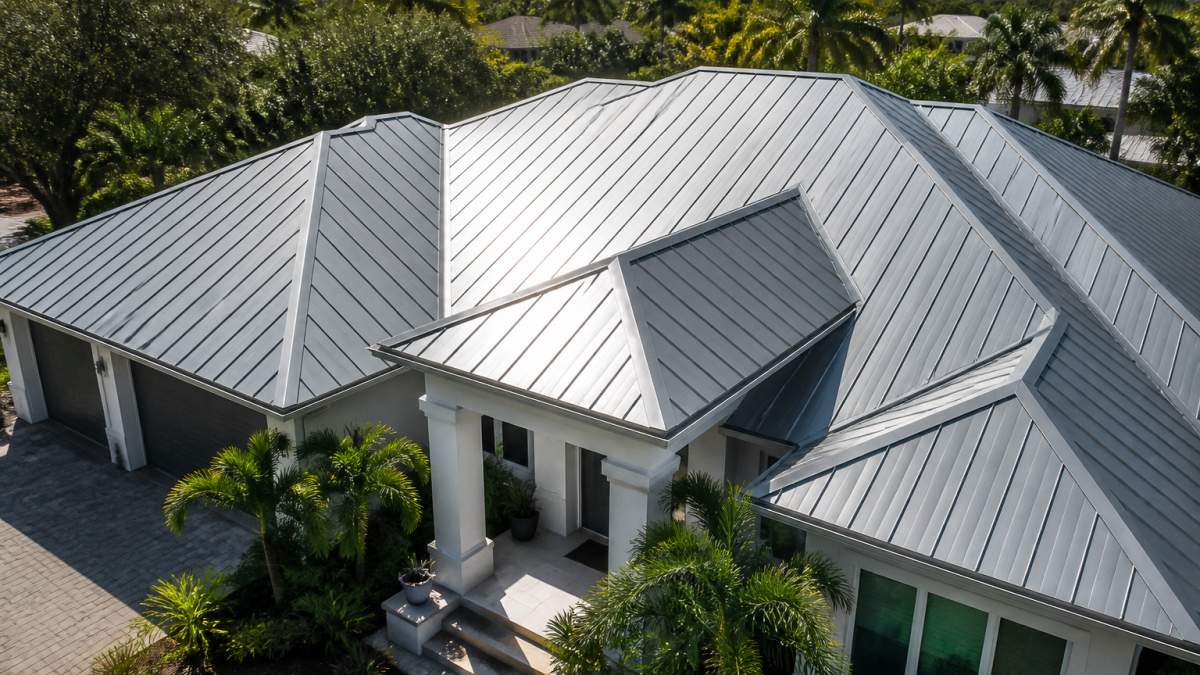
What matters most is the gap between panel-only pricing and a fully installed system. Steel panels alone run $2 to $5 per square foot; the rest covers labor, fasteners, underlayment, flashing, and roof complexity. Florida's salt spray, high winds, and intense sun push installation costs above inland markets.
Standing Seam Metal Roof Cost Breakdown
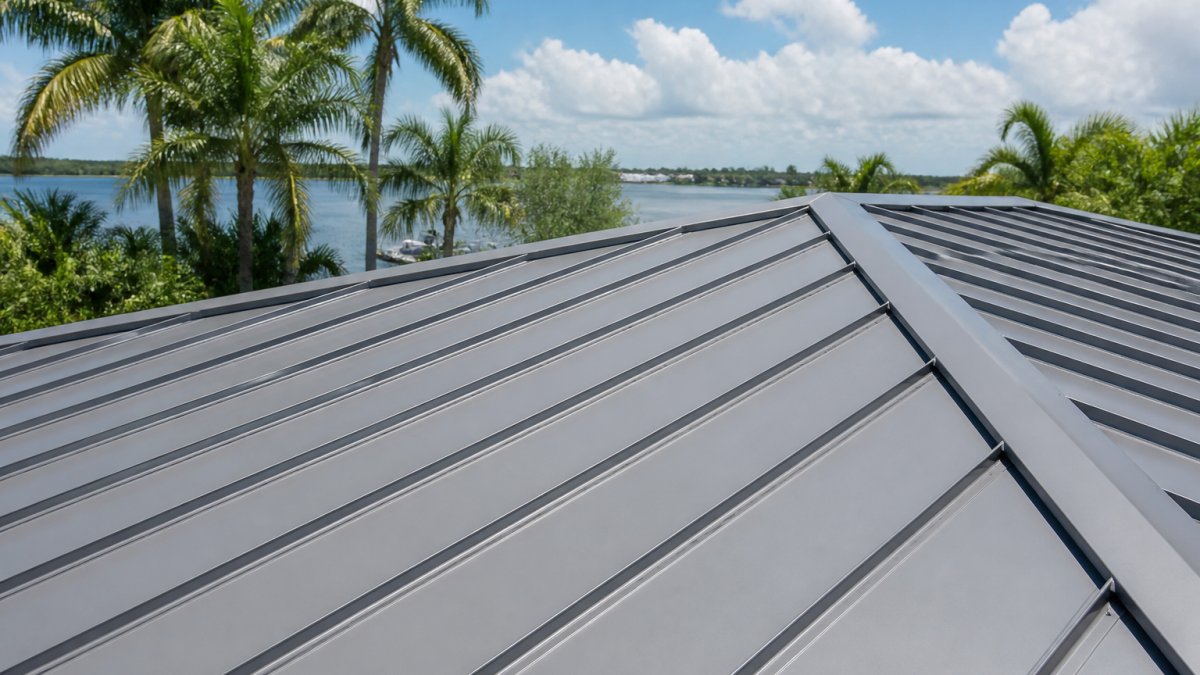
Standing seam is the most common metal roof system in Florida. Its vertical ribs, running eave to peak, handle wind loads exceptionally well and shed heavy rain efficiently. Installed cost typically falls between $12 and $22 per square foot.
Standing seam panels alone run roughly $4 to $8 per square foot. The rest covers detail-intensive labor: underlayment, sealing joints, flashing penetrations, and meeting wind-load requirements.
Coastal areas command premium pricing due to higher wind-load requirements and the expertise needed for hurricane-resistant installations.
Additional expenses within a standing seam installation include:
- Tear-off of the existing roof (if replacing)
- Roof decking repair or replacement
- Underlayment and ice-and-water shield
- Flashing at valleys, penetrations, and edges
- Fastener systems and sealants
- Disposal and haul-away
Request an itemized breakdown when comparing standing seam quotes, it reveals whether a lower price reflects lower labor rates, material choice, or corner-cutting.
Metal Roof Cost for a 2,000-Square-Foot House
A 2,000-square-foot home rarely has a 2,000-square-foot roof, pitch, overhangs, and multiple planes make roof area larger. A common planning assumption is 2,200 to 2,600 square feet of roof for a 2,000-square-foot home, but only measuring the actual roof is reliable.
| System | Installed Cost per Sq Ft | Estimated Total for a 2,400 Sq Ft Roof | What the Range Reflects |
|---|---|---|---|
| Corrugated exposed-fastener steel | $7-$12 | $16,800-$28,800 | Basic trim package, simpler detailing, lower wind-uplift ratings unless specified |
| Metal shingles / stamped panels | $9-$16 | $21,600-$38,400 | More pieces and fasteners, more labor per square, appearance-driven |
| Standing seam (hidden fastener) | $12-$22 | $28,800-$52,800 | Longer panels, concealed clips, tighter tolerances, higher wind ratings |
These totals assume a single-story, moderately pitched roof with standard penetrations, a one-layer tear-off, and code-required underlayment. They exclude structural repairs, major decking replacement, and sales tax. Steeper roofs, multiple valleys and dormers, or high-wind product-approval requirements push costs higher.
Scaling to other home sizes. Rather than memorize one house size, use the per-square-foot ranges and a roof-area multiplier. A 1,500-square-foot home often carries 1,700 to 2,000 square feet of roof; a 2,500-square-foot home often carries 2,800 to 3,300 square feet. Multiply your measured roof area by the system range above.
Why the same house gets different quotes. Two contractors can quote the same home and differ by thousands because of what is and is not included. Ask each bid to state whether it covers:
- Tear-off of existing roofing and disposal
- Underlayment and any ice-and-water membrane at valleys and eaves
- Flashing at walls, valleys, penetrations, and edges
- Permit fees and inspection coordination
- Decking repair allowance (and the per-sheet price if damage is found)
- Wind-load engineering or product-approval documentation
- Sales tax and any manufacturer warranty registration
A lower bid that omits tear-off, flashing, or permits is not a lower price, it is a smaller scope. Normalize every quote to the same inclusion list before comparing totals.
Reroof versus new construction. On a replacement, tear-off and deck condition are the biggest swing factors: one layer on sound decking is a modest add-on, while rotted sheathing or a second layer adds materially. New construction has no tear-off but is detailed from the deck up.
Metal Roof Installation Cost: Labor and Additional Expenses
Labor typically represents 40 to 60 percent of total installed cost. In Florida, experienced metal crews command premium rates because the work requires precision, hurricane-resistant techniques, and local code knowledge.
Metal roofing labor runs higher than asphalt shingles because panels must be cut, fitted, and sealed accurately, and fastener placement and sealant application directly affect wind resistance and longevity. A standing seam crew on a 2,000-square-foot roof typically needs 3 to 5 days.
Additional expenses beyond labor and materials include:
- Permit and inspection fees: Florida requires roofing permits and inspections. Costs vary by municipality but typically range from $200 to $800.
- Removal and disposal: Tear-off and haul-away of old roofing material adds $1,500 to $3,500 for a typical home.
- Decking repair: If existing roof decking is damaged, replacement adds to the project cost.
- Engineering and wind-load certification: Coastal properties often require engineering reports to verify wind resistance. This adds $500 to $1,500.
- Insurance documentation: Some insurers require a detailed roof report. This is typically provided by the contractor at no additional cost.
LRI Restorations handles these components as part of comprehensive project management, ensuring nothing is overlooked and all local code requirements are met.
Metal Roof vs. Shingles Cost in Florida
Asphalt shingles remain an affordable option upfront at $4 to $8 per square foot installed, roughly $8,800 to $20,800 for a 2,000-square-foot house. Metal roofing costs 2 to 3 times more initially.
Over a lifetime, though, metal wins in Florida. Asphalt shingles last 15 to 20 years here, where sun and humidity accelerate degradation; metal roofs last 40 to 70 years with minimal maintenance, making metal more economical over 50 years.
Insurance also shifts the equation: many insurers offer 10 to 25 percent premium discounts for metal roofs because they resist wind and fire better than shingles, offsetting part of the higher installation cost.
Wind resistance matters in hurricane-prone Florida: properly installed metal roofs withstand sustained winds of 140+ mph, while asphalt shingles typically fail above 80 mph. In a major hurricane, shingle roof replacement can exceed the difference in initial cost between the two systems.
| Roof Type | Installed Cost (per sq ft) | Lifespan | Wind Resistance | Insurance Discount |
|---|---|---|---|---|
| Asphalt Shingles | $4-$8 | 15-20 years | Up to 80 mph | None to 5% |
| Corrugated Metal | $7-$12 | 40-50 years | Up to 120 mph | 10-15% |
| Standing Seam Metal | $12-$22 | 50-70 years | 140+ mph | 15-25% |
What Affects Your Metal Roof Price
Most guides list pitch, complexity, and material and stop there.
**1.
2. Coastal versus inland exposure. Salt spray, humidity, and wind-driven rain push material selection toward corrosion-resistant finishes and fasteners.
**3.
4. Existing roof condition and tear-off. On a replacement, the number of existing layers, the condition of the decking, and access for disposal all affect cost.
5. Panel type, gauge, and finish. Thicker steel, aluminum for corrosion resistance, and premium coatings raise material cost.
6. Trim, flashing, and accessory package. The visible cost is the panel; the cost that surprises homeowners is the trim.
7. Permits, inspections, and documentation. Permit and inspection fees vary by jurisdiction. Projects in wind-borne debris regions may also require product-approval documentation or engineering to demonstrate compliance.
8. Insurance considerations. Many insurers offer premium credits for wind-resistant roof systems, but eligibility depends on the specific product, installation method, and documentation.
9. Timing and crew availability. Demand and crew availability affect labor pricing.
| Factor | Typical Cost Direction | What to Ask the Contractor |
|---|---|---|
| Higher wind rating | Up | What wind rating does this system meet, and is it documented? |
| Coastal exposure | Up | Are fasteners and finishes rated for salt exposure? |
| Complex geometry | Up | How many penetrations and valleys are in the bid? |
| Second layer or deck damage | Up | What is the per-sheet decking replacement price? |
| Premium gauge or coating | Up | What gauge and finish are included? |
| Simple gable, single layer | Down | Is tear-off and disposal included? |
Getting an Accurate Metal Roofing Estimate
A reliable estimate requires detailed information about your project. Generic online calculators can't account for your roof's unique characteristics, so in-person assessment is essential.
When requesting quotes, provide contractors with:
- Roof square footage (or home size if roof area is unknown)
- Current roof type and condition
- Roof pitch and complexity
- Number of penetrations (vents, chimneys, skylights)
- Whether you need a tear-off or new construction
- Your location and whether the property is in a coastal wind zone
- Any specific panel type or color preference
Request itemized quotes separating material, labor, permits, tear-off, and additional services so you can compare bids apples to apples. Don't accept the lowest quote without question, it may reflect inferior materials or rushed installation.
Ask each contractor about warranty, insurance coverage, and Florida-specific metal roofing experience. A contractor unfamiliar with local codes and wind-load requirements may underestimate costs or miss compliance details.
If you're planning a metal roof installation or replacement, the numbers in this guide provide a realistic starting point for budgeting. But every roof is unique, and local factors matter enormously. Get a detailed quote from a contractor experienced with metal roofing in Florida who can account for your property's specific conditions. At LRI Restorations, we provide transparent, itemized estimates that include everything, permits, engineering, installation, and inspections, so you know exactly what to expect. Get a quote and let's discuss how metal roofing can protect your home for decades to come.
Frequently Asked Questions
How much should a 2,000-square-foot metal roof cost?
A 2,000-square-foot metal roof installed typically ranges from $14,000 to $60,000 depending on the system type. Standing seam roofs on a 2,000-square-foot home usually fall between $24,000 and $44,000 installed. Corrugated and metal shingle systems cost less. The final price depends on panel type, local labor rates, roof complexity, and whether you're replacing an existing roof or building new. Request a detailed quote from a local contractor to get a precise estimate for your home.
What is the typical cost per square foot for a metal roof in Florida?
Metal roofing in Florida ranges from $7 to $30 per square foot installed as of 2026, with standing seam systems typically at $12-$22 per square foot. The wide range reflects differences in panel type, labor availability, roof pitch, and whether tear-off and decking work are included. Material-only costs run $2-$5 per square foot, while installation and supporting work account for the remainder. Get quotes from multiple contractors to understand what each price includes in your area.
How does metal roof cost compare with asphalt shingles in Florida?
Metal roofing costs more upfront than asphalt shingles. Asphalt shingles typically cost $4-$10 per square foot installed, while metal roofing ranges $7-$30 per square foot. However, metal roofs last 40-70 years versus 15-25 years for shingles, and they perform better in Florida's high winds and salt air. Many homeowners also qualify for insurance discounts with metal roofs. Over the roof's lifetime, metal often costs less when you factor in replacement frequency and durability.
What should a metal roofing estimate include?
A complete metal roofing estimate should itemize panel material cost per square foot, labor cost per square foot, tear-off and disposal, underlayment and flashing, fastener systems, decking repair or replacement, permits and inspections, and any hurricane-resistant or wind-load upgrades required by local code. It should also specify the panel type (standing seam, corrugated, or metal shingles), clarify whether the price covers your specific roof size and pitch, and list any warranties. Ask the contractor to explain what is and isn't included so there are no surprises.