 Comparison
Tile vs Luxury Vinyl for Florida Kitchens: Which to Choose
Last Updated: November 2, 2026
Quick Summary
Tile is the more water-tolerant, longer-lasting choice for a Florida kitchen, while luxury vinyl plank is softer underfoot, quieter, and easier to repair. Both need a sound, moisture-checked subfloor, since a leak can reach the subfloor under either one. Compare installed, line-item quotes rather than box prices when you decide between tile vs luxury vinyl.
- Tile's grout lines are the weak point, while LVP seams can let water reach the subfloor if a leak goes unnoticed.
- Tile requires cement board, thinset, and grout, while LVP is typically a floating or glue-down product that installs faster.
- LVP feels warmer and is less hard on feet and joints than cooler, more rigid tile.
- Demolition, subfloor prep, labor, and transitions often add more than the product itself, so request itemized quotes.
- Tile generally lasts longer when grout is sealed and maintained, while LVP can wear sooner in heavy-use areas.
Table of Contents
- Tile vs Luxury Vinyl at a Glance for Florida Kitchens
- Tile vs Luxury Vinyl Cost: Materials, Installation and Long-Term Value
- Waterproof Kitchen Flooring: Leaks, Standing Water and Subfloor Prep
- Best Kitchen Flooring for Humid Climates and Florida Conditions
- Luxury Vinyl Plank for Kitchens: Comfort, Wear and Repairability
- Durability, Slip Resistance and Daily Maintenance Compared
- Choosing Your Kitchen Floor and Booking a Consultation with LRI Restorations
- Frequently Asked Questions
If you're remodeling a kitchen on Florida's Gulf Coast, the choice between tile and luxury vinyl plank (LVP) comes down to water, heat, and how much wear your floor will take. Both work in humid conditions when installed correctly, but they fail in different ways. The same questions come up on nearly every kitchen job: which floor holds up to spills, what it costs once installed, and what happens when a leak reaches the subfloor. This guide compares tile vs luxury vinyl for Florida kitchens so you can decide with the trade-offs in view.
Tile vs Luxury Vinyl at a Glance for Florida Kitchens
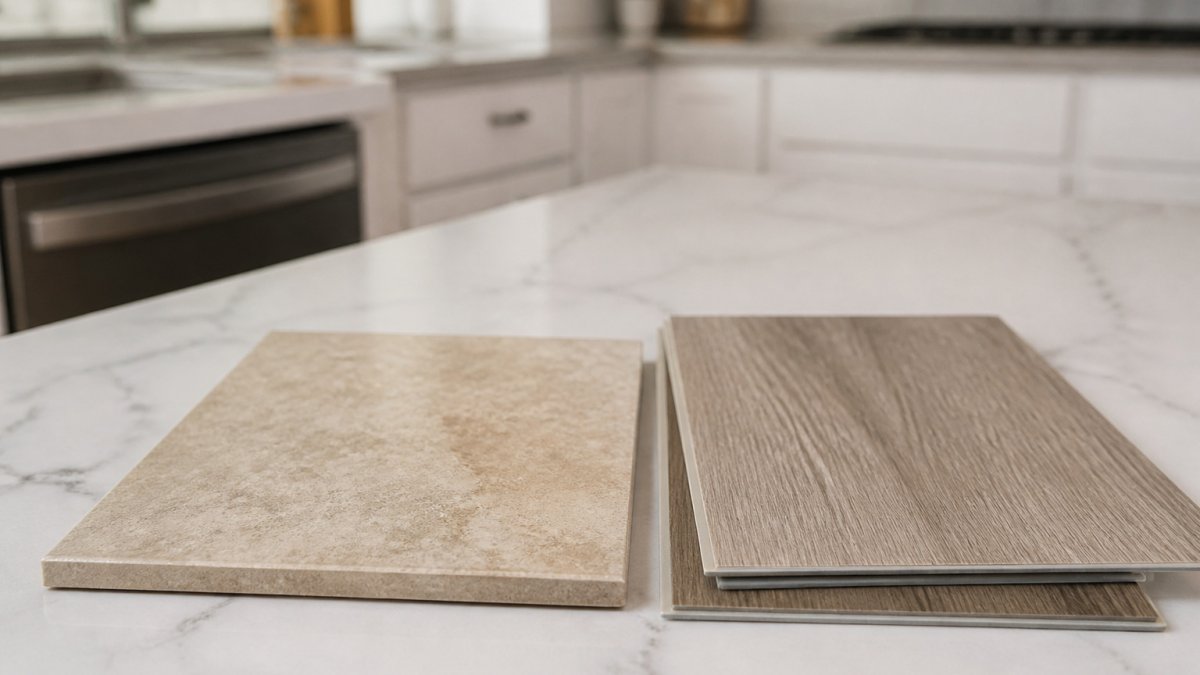
Porcelain tile is the more rigid, water-tolerant option, while luxury vinyl plank is softer underfoot and quieter. Neither is automatically better. Tile holds its look for years when the substrate is prepared properly. LVP is more forgiving on the foot, but it needs a flat, stable surface and can show wear in high-traffic paths over time.
Key differences to weigh:
- Water tolerance: Both resist surface moisture. Tile's grout lines are the weak point, while LVP seams can let water reach the subfloor if a leak sits unnoticed.
- Installation: Tile requires cement board, thinset, and grout. LVP is typically a floating or glue-down product that installs faster.
- Comfort: LVP feels warmer and less hard on feet and joints. Tile is cooler and more rigid.
- Repairs: A single cracked tile can be replaced. Damaged LVP planks can also be swapped, but matching the color after years of sun exposure is harder.
Tile vs Luxury Vinyl Cost: Materials, Installation and Long-Term Value
Material price is only part of the cost. For a broader view of total kitchen remodel pricing, see kitchen remodel cost breakdown. Installation labor, subfloor work, and removal of the old floor often add more than the product itself, so compare installed prices rather than box prices. Pricing varies with the product, the size of the room, and the condition of the existing subfloor, so request a written quote for your specific kitchen. Ask each contractor to itemize materials, labor, and any subfloor repair separately so the totals are easy to compare.
A transparent installed-cost comparison for a kitchen should include these line items for each option:
- Demolition and haul-away: Removing the old floor, scraping adhesive, and disposing of debris.
- Subfloor preparation: Cement board, thinset, and leveling compound for tile; patching, grinding high spots, and moisture testing for LVP.
- Material and trim: Tile, grout, and sealant versus plank, underlayment, and transition strips.
- Labor: Tile setting and grouting take longer and cost more per square foot than floating or glue-down LVP.
- Transitions and thresholds: Doorway reducers, stair nosings, and the transition to adjacent rooms.
- Permits and inspection: Some jurisdictions require permits for structural subfloor work; confirm with your contractor.
Long-term value depends on how the floor ages. Tile generally lasts longer when grout is sealed and maintained, while LVP can wear sooner in heavy-use areas. Factor expected lifespan into the comparison, not just the first invoice. A floor that costs less upfront but needs replacement in a high-traffic kitchen may cost more over time than a tile floor that is maintained and kept sealed.
Maintenance also carries a cost. Grout sealing, pH-neutral cleaners, and periodic resealing add up over the life of a tile floor. LVP needs less sealing but may need spot replacement if planks wear or separate. Include those recurring costs when you compare the two options.
The table below lays out the main cost line items to request for each option, so you can compare installed prices rather than box prices.
| Cost item | What it covers | Note |
|---|---|---|
| Demolition and haul-away | Removing old floor, scraping adhesive, disposing of debris | Include in every quote |
| Subfloor preparation | Cement board, thinset, leveling for tile; patching and high-spot grinding for LVP | Varies with subfloor condition |
| Material and trim | Tile, grout, sealant vs plank, underlayment, transition strips | Compare installed, not box, prices |
| Labor | Tile setting and grouting vs floating or glue-down LVP | Tile takes longer and costs more per sq ft |
| Transitions and thresholds | Doorway reducers, stair nosings, adjacent-room transitions | Often overlooked in estimates |
| Permits and inspection | Permits for structural subfloor work | Confirm with your contractor |
Waterproof Kitchen Flooring: Leaks, Standing Water and Subfloor Prep
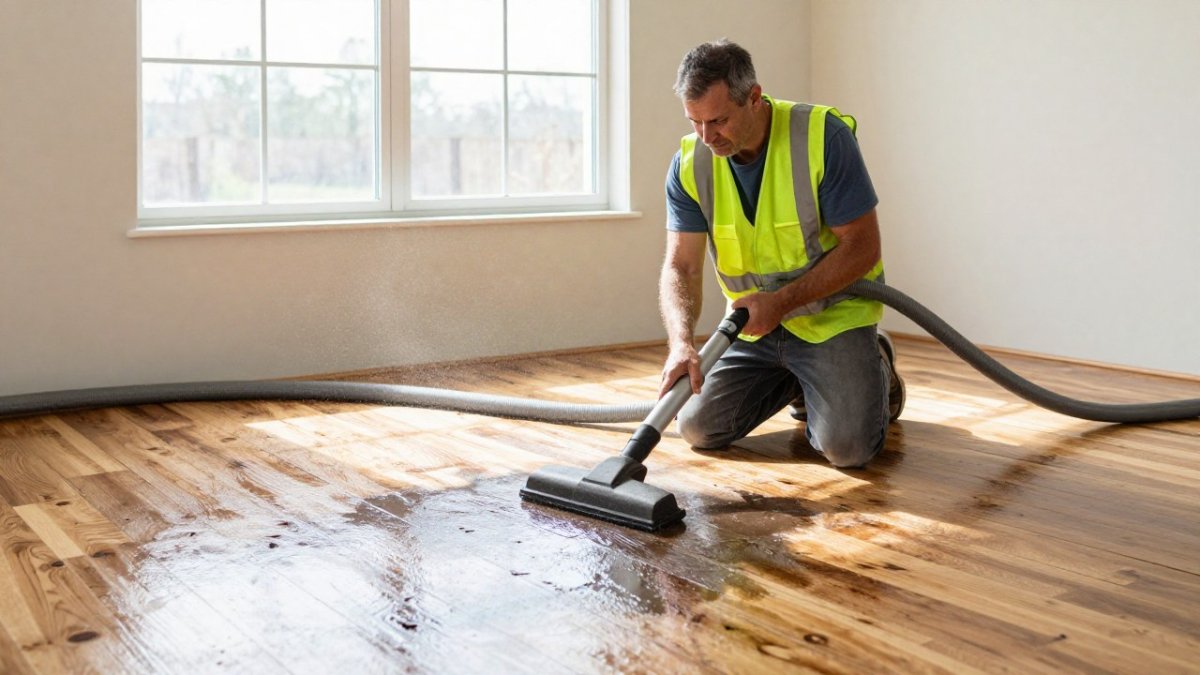
"Waterproof" describes the surface, not the whole floor assembly. A leak from a dishwasher or refrigerator line can travel under both tile and LVP and damage the subfloor before anyone sees it. Florida's humidity makes this worse, because moisture trapped beneath a floor does not dry quickly.
How each floor handles a real kitchen leak:
- Tile: The tile and grout shed surface water, but water that reaches the grout lines or the perimeter can migrate under the tile and sit on the cement board or subfloor. Grout is not waterproof unless it is sealed or an epoxy grout is used, and even sealed grout needs maintenance. A slow leak under a dishwasher can go unnoticed for weeks.
- LVP: A rigid-core plank with a waterproof core resists surface water, but water can enter at seams, at the perimeter, and at transitions. Floating floors can trap moisture underneath, and glue-down installations can trap it in the adhesive layer. The plank itself may survive a spill while the subfloor underneath does not.
The practical difference is not whether the surface is waterproof but whether water can reach the subfloor and how quickly you would notice. In a kitchen, the highest-risk spots are the dishwasher, the refrigerator ice-maker line, the sink cabinet, and any point where the floor meets an exterior door.
Subfloor preparation matters more than the finish. Tile needs a flat, rigid base such as cement board, and LVP needs a smooth surface that is free of high spots. Installing either over a damaged or uneven subfloor leads to cracks, gaps, and failures that look like flooring problems but start underneath. To learn how to avoid unexpected expenses once work begins, read preventing surprise costs in home remodeling. In humid climates, ask your installer to check the subfloor moisture level before covering it, and to document any patching or leveling so you know what is under the finished floor.
Slip resistance also belongs in this decision. Glossy tile and some vinyl finishes become slick when wet, so look for textured surfaces if your kitchen sees frequent spills or pets. For households with children or older adults, choose a tile with a textured or matte finish and avoid highly polished surfaces in the kitchen work zone.
Best Kitchen Flooring for Humid Climates and Florida Conditions
In humid climates, the goal is a floor that tolerates moisture and temperature swings without warping or loosening. Porcelain tile handles heat and humidity well and does not expand much. Quality LVP, especially rigid-core products, also performs well, but cheaper planks can curl or separate if the room is not climate-controlled during installation.
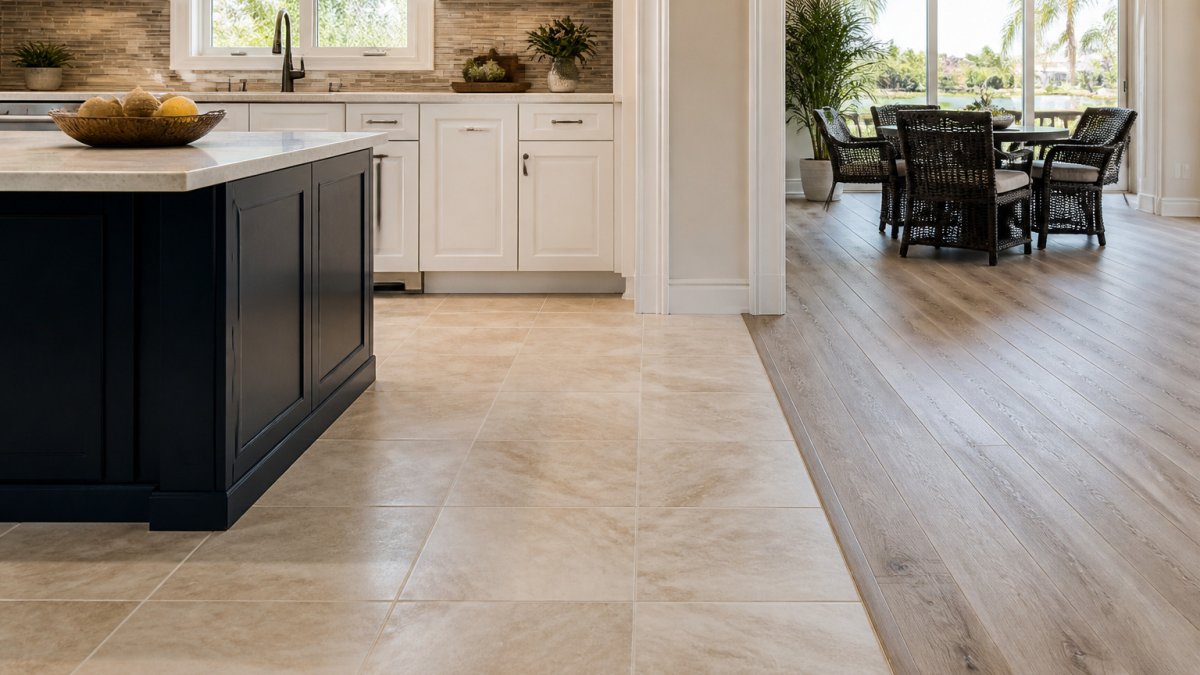
Consider the whole room, not just the kitchen. If the floor runs into a covered outdoor kitchen or a screened lanai, tile can continue across that transition, while LVP generally cannot. That design detail can settle the choice for homes with indoor-outdoor living spaces.
Luxury Vinyl Plank for Kitchens: Comfort, Wear and Repairability
LVP's biggest advantage is comfort. It has some give underfoot, which reduces fatigue for anyone who cooks standing up for long periods, and it is quieter than tile.
Wear is the trade-off. Scratches and dents accumulate in high-traffic areas, and the wear layer determines how long the surface lasts. Look for a thicker wear layer if you expect heavy use.
Repairability favors LVP for localized damage. A single plank can often be pried up and replaced without redoing the room, provided you keep spare planks from the original order. Tile repairs are possible too, but matching grout and tile color over time can be difficult.
Durability, Slip Resistance and Daily Maintenance Compared
Both floors are durable, but in different ways. Tile resists scratching and staining well and will outlast most vinyl in areas with heavy traffic, but it can chip if something heavy drops on it. LVP resists chips but can scratch under grit and sliding furniture.
Maintenance is straightforward for both. Sweep or vacuum regularly to remove grit, then clean with a pH-neutral cleaner suited to the floor type. Avoid harsh chemicals on LVP, and reseal grout periodically on tile. Address spills quickly, especially along seams and grout lines, to prevent moisture from reaching the subfloor.
Choosing Your Kitchen Floor and Booking a Consultation with LRI Restorations
Choose tile if you want the most water-tolerant surface, the longest lifespan, and a floor that performs well through Florida's heat and humidity. Choose LVP if you want comfort underfoot, faster installation, and easier spot repairs, and you are willing to maintain the surface and monitor the seams.
Whichever you pick, have the subfloor inspected first. Whichever floor you choose, a sound subfloor makes the difference, so ask any contractor how subfloor assessment and final inspection will be handled. To get a clear, itemized estimate for your kitchen, contact LRI Restorations and request a quote. Before you book, read what to look for in luxury kitchen remodeling.
Frequently Asked Questions
Is tile or luxury vinyl cheaper for a kitchen?
Luxury vinyl plank is generally the lower-cost option. The final cost depends on the square footage, subfloor condition, demolition and the specific products chosen. Total cost should include subfloor preparation, underlayment, transitions and any necessary repairs. For a current estimate for your kitchen, request a quote from LRI Restorations.
Which is more water-resistant in a Florida kitchen, tile or luxury vinyl?
Both perform well against spills and surface moisture. Porcelain tile and luxury vinyl plank are both identified as leading choices for waterproof kitchen performance in a kitchen-flooring guide. The practical difference is in the installation: tile grout lines can absorb water if not sealed, and tile is rigid, so it can crack when the substrate moves. Luxury vinyl plank seals at the seams but can lift or swell if water gets underneath it and sits. In either case, fix the leak source and dry the subfloor quickly after any standing-water event.
Does luxury vinyl hold up in humid conditions?
Luxury vinyl plank handles humidity well because its core is synthetic and does not absorb water the way wood or laminate does. A Florida flooring guide notes that LVP can show wear patterns in high-traffic areas over time, so durability depends on the wear layer thickness and the product grade. Choose a rigid-core product for kitchens, and make sure the installer prepares a flat, dry subfloor before installation.
Is tile or luxury vinyl easier to maintain and repair?
Luxury vinyl is generally easier to clean because it has fewer grout lines to trap dirt. Tile needs periodic grout sealing and grout cleaning. For repairs, a single damaged vinyl plank can often be replaced locally without redoing the whole floor, while a cracked tile can also be replaced individually but matching grout and color can be harder. Ask any contractor how they would handle a localized replacement before you sign.