 Comparison
Alternatives to DIY Water Extraction After a Flood
Quick Summary
The main alternatives to DIY water extraction after a flood are a professional water mitigation company, rented commercial extraction equipment, and a general contractor for repairs after drying. A household wet vacuum works only for small, clean-water spills in one room. Hidden moisture in walls and subfloors usually calls for professional drying.
- Household wet vacuums suit only small, clean-water spills in one room.
- Shut off power before any equipment enters standing water.
- Treat floodwater as contaminated unless the source is known to be clean.
- Professional crews document moisture levels, which supports insurance claims.
- Request written quotes that specify extraction, drying and moisture verification.
Table of Contents
- Why DIY Water Extraction Often Falls Short After a Flood
- Immediate Safety Steps Before Any Cleanup Begins
- Water Mitigation vs. Water Remediation: What the Terms Mean
- Alternatives to DIY Extraction Compared by Safety, Cost, and Speed
- A Water Damage Restoration Checklist for Choosing Your Next Step
- Documenting Damage and Coordinating Your Insurance Claim
- Reconstruction After Water Damage: What Comes Once the Area Is Dry
- Scheduling a Professional Assessment for Your Property
- Frequently Asked Questions
Last Updated: November 12, 2026
Alternatives to DIY Water Extraction After a Flood
Most homeowners who face flood water start with a wet vacuum and a stack of towels. That instinct is understandable, but it often leaves moisture trapped in walls, subfloors and carpet padding where no one can see it. A small cleanup can turn into a larger repair when hidden moisture is left behind. Understanding the alternatives to DIY water extraction after a flood helps you decide what to do next, and when to bring in help.
ADRI guidance on DIY water extraction and standing water
Why DIY Water Extraction Often Falls Short After a Flood
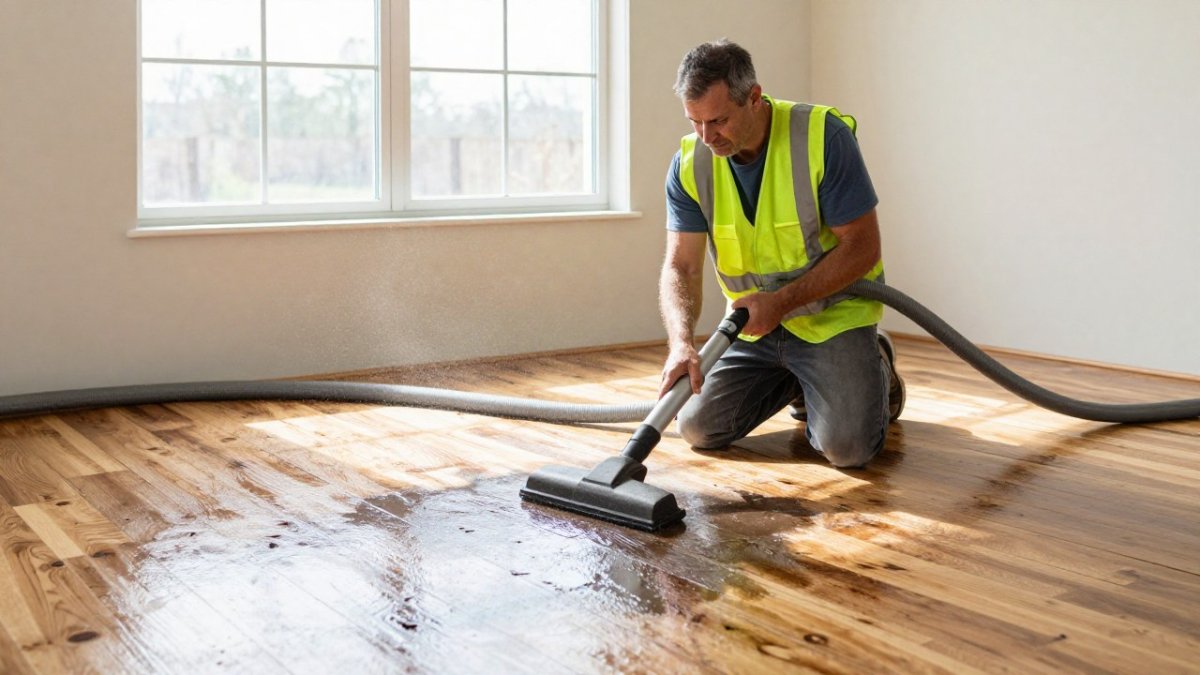
Removing standing water and drying a building are two different jobs. Standing water can be pumped or vacuumed out, but water that has soaked into drywall, insulation and flooring keeps moving through the structure long after the surface looks dry. A household wet vacuum can handle a small clean-water spill in one room, but it cannot pull moisture out of a wall cavity or the layers beneath a floor.
University of Minnesota Extension guidance on cleaning up after a flood
The gap matters because hidden moisture encourages mold and structural decay. Floodwater also carries contaminants, which is why professional restorers treat it differently from a leaking supply line. A common mistake is running a box fan for a day, seeing a dry surface and assuming the job is finished. The materials underneath may stay wet for weeks.
Immediate Safety Steps Before Any Cleanup Begins
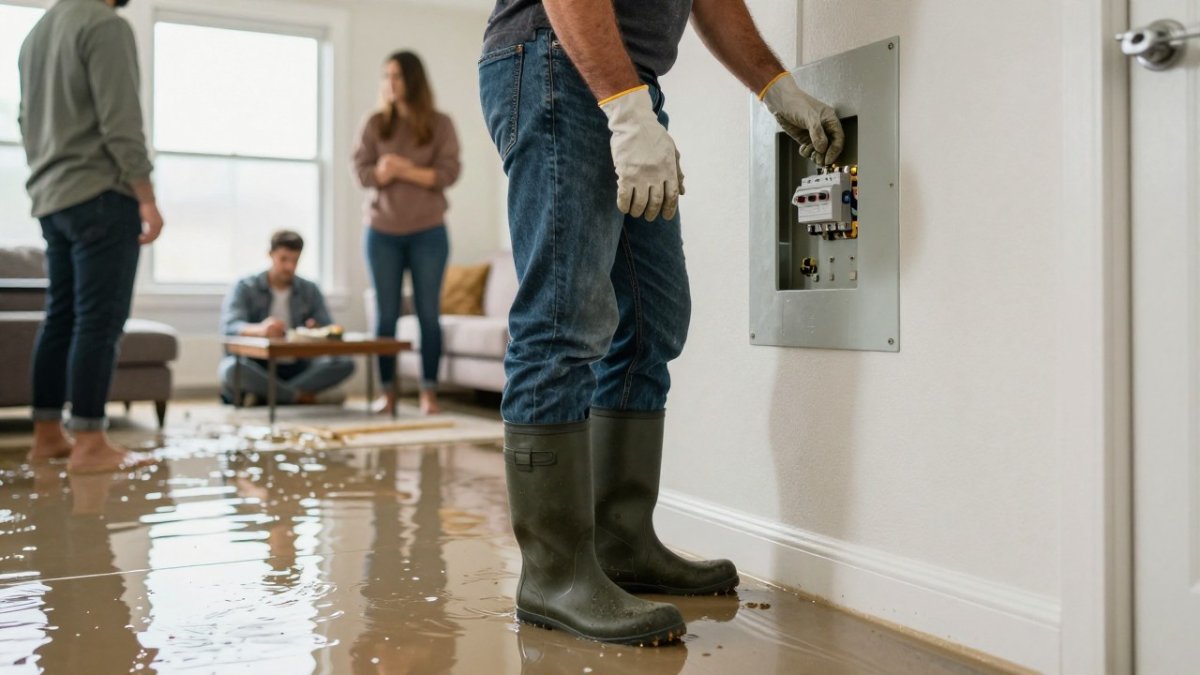
Safety comes first, before any equipment is turned on. Water and electricity are a dangerous combination, and standing water near outlets, appliances or a panel can conduct current. Stay out of the water if you are unsure whether the power is off, and do not wade through it to reach a breaker.
Shutting Off Electricity and Gas
If you can reach the main breaker without standing in water, switch off power to the affected area. If the panel sits in water or you cannot be sure, call the utility company or an electrician instead. The same caution applies to gas. If you smell gas or hear a hissing sound, leave the building and call the gas provider from outside. Do not light a match or switch lights on or off.
Watch out: pumping water out while a circuit is still live can cause electrocution, so confirm the power is off before any equipment enters the water.
Assessing Floodwater Contamination
Not all floodwater is equally clean. Water from a rising river or street runoff can carry sewage, chemicals and bacteria. Treat it as contaminated unless you know the source was clean. Wear waterproof boots, nitrile gloves and eye protection, and keep children and pets out of the area. Materials that stayed in contaminated water, including carpet, pad and some drywall, often cannot be cleaned safely and may need to be removed.
Guidance on health risks and cleanup after flooding
Water Mitigation vs. Water Remediation: What the Terms Mean
These two terms show up in insurance paperwork and contractor bids, so it helps to know the difference. Water mitigation is the emergency work to stop further damage. Water remediation covers the longer process of cleaning and restoring contaminated areas.
Mitigation usually comes first and aims to get the building dry quickly. Remediation follows when contamination or mold makes repair necessary. Some jobs need both, and some need only mitigation. When a contractor or adjuster uses either term, ask what work is included and whether it covers drying, removal and final testing.
Alternatives to DIY Extraction Compared by Safety, Cost, and Speed
Several options sit between a homeowner with a wet vacuum and a full restoration crew. Each trades off safety, cost and speed differently. The right choice depends on water depth, how far it has spread, whether the water is clean, and how much of the structure is affected.
| Option | Safety for homeowner | Typical response time | Typical cost pattern | Best for |
|---|---|---|---|---|
| Household wet/dry vacuum | Moderate; limited to shallow, clean water | Immediate | Low; equipment you already own | Small, clean-water spills in one room |
| Rented extraction equipment | Moderate to low; needs training and PPE | Same day if the rental yard has units | Rental fee plus deposit, often by the day or half-day | Shallow water over hard flooring in a limited area |
| Professional water mitigation company | High; trained crews, commercial extractors, moisture meters | Often within hours for emergency calls | Billed by the job, by the day, or by the square foot affected | Standing water, contaminated water, hidden moisture |
| General contractor | Varies by trade and scope | Days to weeks, depending on scheduling | Bids by scope of repair | Repairs after drying is complete |
Pricing depends on the size of the loss and the equipment needed, so request a written quote for your specific situation.
A useful way to think about the trade-off is by water category and depth. Clean water that is shallow and confined to one hard-floor room is the best case for a wet vacuum or a rental extractor.
Hiring a Professional Water Mitigation Company
A professional company typically brings commercial extractors and drying equipment. Ask how any company you consider documents moisture levels before and after drying, since that record matters for insurance and for proving the structure is actually dry.
When you compare options, ask about the crew's response time, licensing, and whether they handle the drying and the insurance paperwork. You can also verify a Florida contractor's license before you sign anything. To learn how to identify a reliable restoration company, see how to find reliable storm restoration companies.
Rental Extraction Equipment and Safe Operation
Renting a commercial extractor can be a practical middle path for shallow water over hard flooring, though rental units require training and the right accessories. Ask the rental yard for the unit's water-lift rating and whether it is rated for the water depth you have.
Watch out: a rented extractor that is too small for the water volume will run continuously without keeping up, and an undersized dehumidifier will leave the structure damp even after the surface looks dry. Match the equipment to the square footage and water depth, or the rental becomes a sunk cost.
A Water Damage Restoration Checklist for Choosing Your Next Step
Use this checklist as a triage tool, not a pass/fail test.
Step 1: Safety gate (stop here if any answer is yes)
- Is the power to the affected area still on, or are you unsure whether it is off?
- Is the water near outlets, appliances, or the electrical panel?
- Do you smell gas or hear hissing?
- Is the water deeper than a few inches, or is it moving/rising?
If any of these is yes, do not start extraction.
Step 2: Water source and category
- Is the water from a clean supply line (a burst pipe or supply leak)?
- Or has it touched sewage, outdoor runoff, or street flooding?
Clean supply-line water in a small area is the best candidate for DIY or rental extraction.
Step 3: Extent and hidden moisture
- Has water spread across more than one room?
- Has it reached walls, subflooring, insulation, or cabinets?
- Is there a musty smell, visible staining, or bubbling paint that suggests moisture behind the surface?
- Can you dry the structure fully within 48 hours using the equipment you have?
A yes to any of these points toward professional drying.
Step 4: Documentation before you move anything
- Have you photographed and videoed every affected room, including the water line on the walls?
- Have you kept receipts for emergency work, equipment rental, and any purchases?
- Have you contacted your insurer before disposing of damaged items?
Documentation is not a reason to call a professional, it is a step you should take regardless of which path you choose.
How to read your answers
If you cleared the safety gate, have clean water, a single room, and no sign of hidden moisture, DIY or rental extraction plus drying equipment is a reasonable path.
Documenting Damage and Coordinating Your Insurance Claim
Before you move or discard anything, document the damage. Take dated photos and video of every affected room, the water line on the walls, and damaged belongings. Keep receipts for emergency work and equipment rental. Insurers often ask for this record, and a denied or underpaid claim is easier to challenge when the documentation is thorough.
Coordinate with your insurer early, and get any moisture readings in writing. For a deeper look at the process, see our guide on how to navigate storm damage insurance claims. If a claim has already been denied or underpaid, how to fight denied insurance claims explains the steps to take.
Reconstruction After Water Damage: What Comes Once the Area Is Dry
Drying the structure is only the first phase. Once moisture readings return to normal, the repair stage begins. Repairs can include replacing drywall, insulation, flooring and cabinetry that could not be salvaged. Carpet and pad that sat in contaminated water usually need replacement, while some hard flooring can be dried and kept.
Reconstruction also involves checking the structure itself. Prolonged water exposure can weaken framing and subfloors, and in some cases temporary support is needed during repairs. Ask your contractor whether a structural assessment is part of the job. If you are unsure whether temporary support is needed, read whether emergency structural shoring is worth the cost.
Scheduling a Professional Assessment for Your Property
A professional assessment can show what water has reached and how much drying the structure needs. The assessment is most useful when it happens early, before materials are damaged further by mold or swelling.
Contact LRI Restorations to ask about a property assessment and request a quote for your next step.
Frequently Asked Questions
How do you get water out of a house after a flood?
Start by stopping the water source and shutting off power to affected areas. For shallow standing water, a wet/dry vacuum, pump, or pails can remove much of it, as the University of Minnesota Extension notes. Removing standing water is only the first step, because water soaked into carpet, padding, drywall, and subfloors keeps moisture in the structure. That moisture requires drying with dehumidifiers and air movers, and deeper or contaminated flooding generally calls for professional extraction equipment and monitoring.
What is the difference between water mitigation and water remediation?
Water mitigation refers to the emergency steps that stop further damage, such as extracting standing water and starting drying as quickly as possible. Water remediation covers the longer process of cleaning, sanitizing, and restoring affected materials so the space is safe and sound again. Mitigation usually comes first, and remediation follows once moisture levels are controlled. Many restoration companies handle both phases under one contract.
When should you call a professional for floodwater extraction?
Call a professional when floodwater is deep, comes from a sewage or outdoor source, has been sitting for more than a short period, or reaches electrical systems or HVAC equipment. Roto-Rooter notes that Category 3 water requires commercial extraction equipment and that DIY response to floodwater can be a direct health risk. Professional crews also use moisture meters to find hidden water inside walls and floors, which household tools cannot detect.
Does homeowners insurance cover professional water extraction?
Coverage depends on your policy and the cause of the flood. Standard homeowners policies typically exclude flood damage, which is usually covered by a separate National Flood Insurance Program or private flood policy. Keep photos, receipts, and written estimates from any extraction or drying work, and ask your insurer whether mitigation costs are reimbursable. Pricing for any specific service depends on the size of the affected area and the equipment required, so request a written quote from LRI Restorations at lrirestorations.com.