 How-to
How to Navigate Storm Damage Insurance Claims
Last Updated: October 23, 2026
Quick Summary
To navigate storm damage insurance claims, document all damage with photos and video before any cleanup, open the claim with your insurer before calling a contractor, and keep dated records of every call, receipt, and repair. Then compare the adjuster's estimate line by line against a written contractor estimate and submit corrections in writing.
- Photograph and video every damaged area before you touch or throw away anything.
- Open the claim with your insurer first, then bring in a contractor.
- Keep a communication log with dates, names, and what was said.
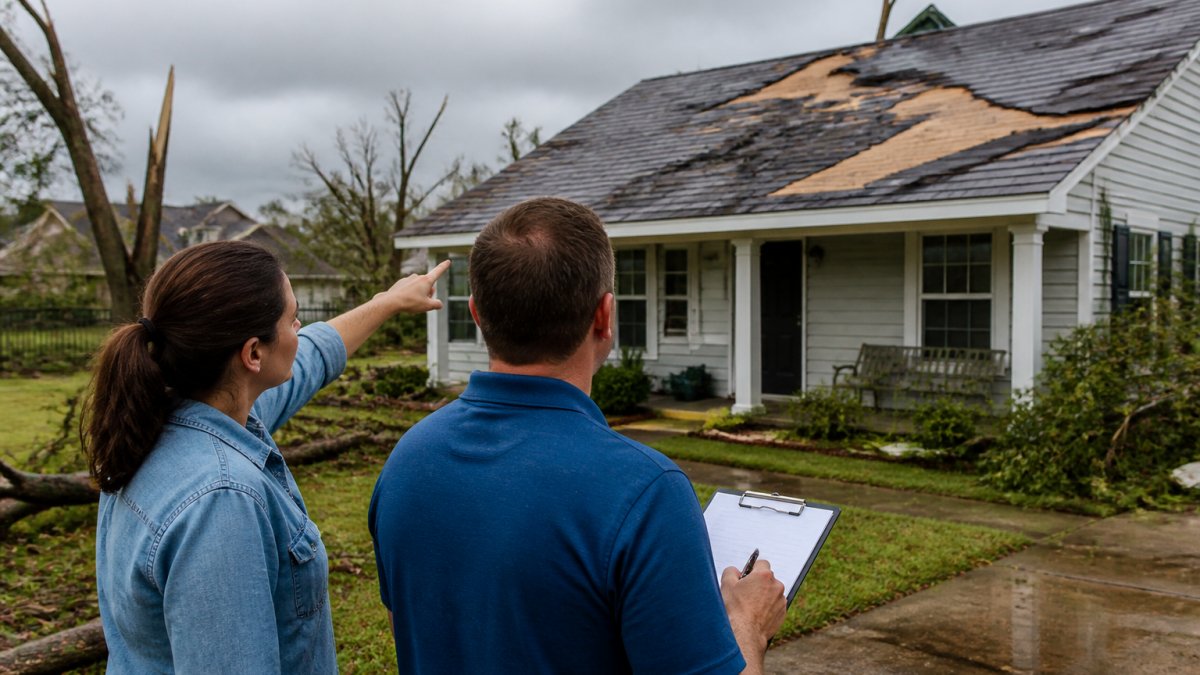
- Walk the property with the adjuster and point out the damage yourself.
- The adjuster's estimate is a starting offer, not a final verdict.
Table of Contents
- Start Strong: First Steps After Storm Damage Hits
- Your Storm Damage Insurance Claim Checklist
- The Storm Damage Insurance Claim Timeline
- What to Say to a Roof Insurance Adjuster
- How to Review the Adjuster's Estimate and File a Supplemental Claim
- Wind, Hail, Flood, and Water Intrusion: Know Your Coverage
- How to Handle a Storm Damage Claim Denial Appeal
- Frequently Asked Questions
Start Strong: First Steps After Storm Damage Hits
Storm damage insurance claims reward speed and documentation above almost everything else.
Here is the short version. Before you touch anything, photograph it. Before you throw anything away, photograph it. Before you call your insurer, read your policy.
The Federal Emergency Management Agency's disaster recovery guidance puts it plainly: document damage before you make repairs. That one habit protects your claim more than any phone call.
Your first 24 hours, in order:
- Make sure everyone is safe and utilities are secure.
- Photograph and video every damaged area, inside and out.
- Stop further damage with temporary repairs, and keep every receipt.
- Call your insurance company and open a claim.
- Write down the claim number and the name of everyone you speak with.
A common mistake is calling a contractor before calling your insurer. If your roof took the hit, our guide on steps to take after hurricane roof damage covers the immediate actions in detail.
Your Storm Damage Insurance Claim Checklist
A storm damage insurance claim checklist is a written record of what was damaged, what you did about it, and what it cost.
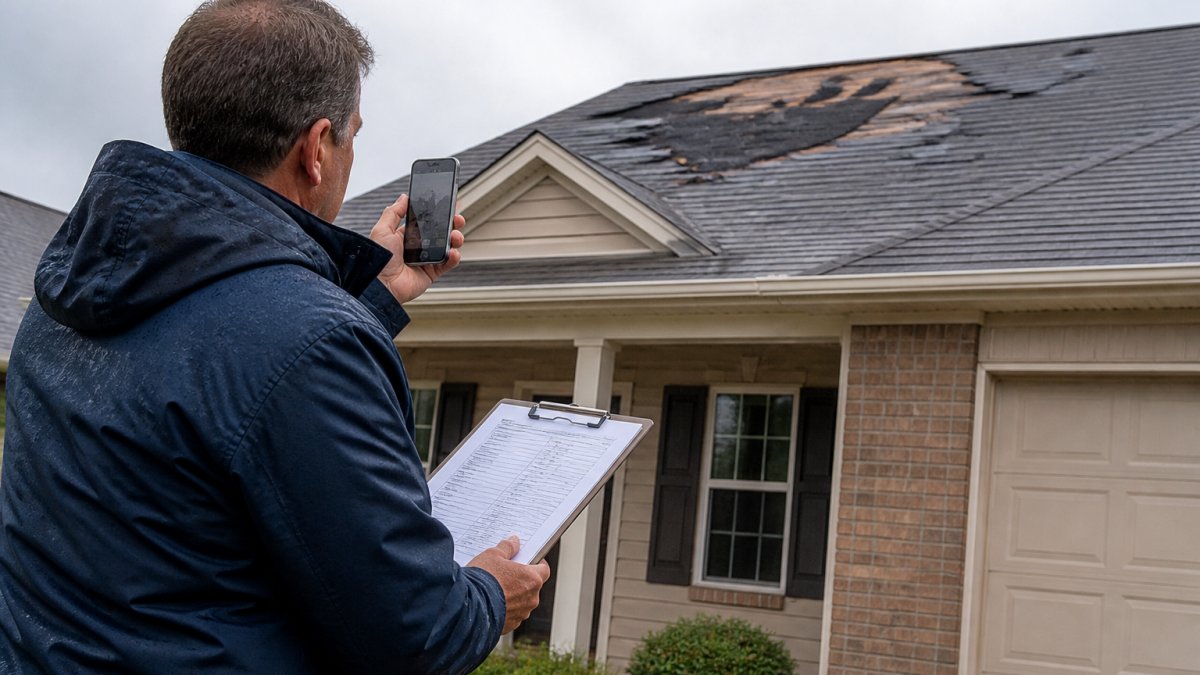
What belongs in the folder:
- Photos and videos of every damaged area, taken before any repair
- A written inventory of damaged personal property, with photos
- Receipts for temporary repairs and out-of-pocket expenses
Hidden damage is the part most homeowners miss. Our guide on signs of hidden storm damage on roof shows you what to look for before the adjuster arrives.
The Storm Damage Insurance Claim Timeline
Most storm damage insurance claims move through five stages: report, inspection, estimate, review, and settlement. The exact deadlines come from your policy and your state's insurance rules, so check both. What follows is the working timeline most adjusters and claim managers expect, with the actions that keep each stage from stalling.
Stage 1: First 24 to 48 hours, report and preserve.
- Make temporary repairs that prevent further damage, such as tarping a roof or boarding a window, and photograph the damage before and after the work.
- Open the claim with your insurer and write down the claim number, the representative's name, and the date and time.
- Start a communication log and an expense log. Every call, receipt, and photo gets a date.
Stage 2: Before the adjuster visit, build the record.
- Finish your photo and video set: wide shots of each elevation, close-ups of damage, and photos of any manufacturer labels or serial numbers.
- Create a room-by-room inventory of damaged personal property with photos and, where possible, receipts or model numbers.
- Get at least one written contractor estimate so you have an independent scope to compare against the adjuster's.
Stage 3: Inspection and estimate, days to a few weeks.
- Walk the property with the adjuster when it is safe and permitted, and point out damage yourself.
- Ask when the estimate will be available and in what format.
- Keep any damaged materials in place until the adjuster has seen them, unless they pose a safety hazard.
Stage 4: Review and negotiation, after you receive the estimate.
- Compare the adjuster's scope line by line against your contractor's estimate.
- Submit corrections and any supplemental items in writing, with photos and contractor documentation attached.
- Track the insurer's response time against the deadlines in your policy and your state's insurance rules.
Stage 5: Settlement and payment, closeout.
- Confirm the payment breakdown: actual cash value versus replacement cost, and any recoverable depreciation you can claim after repairs are complete.
- Keep final invoices, lien waivers, and proof of completed work.
- Do not close the claim until you are satisfied that hidden damage has been addressed.
Two clocks run at once. The first is your policy's notice and proof-of-loss deadlines. The second is your state's rules on how long an insurer has to acknowledge, investigate, and pay a claim.
A practical habit: put every deadline you find, policy, state, and insurer-stated, on one calendar with the date you found it. When a deadline is unclear, ask the adjuster or the insurer's claim representative to confirm it in writing.
Here is the five-stage timeline most storm damage claims follow, with the key action at each stage.
| Stage | Timing | Key action |
|---|---|---|
| Report and preserve | First 24 to 48 hours | Make temporary repairs, open the claim, start logs |
| Build the record | Before the adjuster visit | Finish photos, inventory, get a contractor estimate |
| Inspection and estimate | Days to a few weeks | Walk the property with the adjuster |
| Review and negotiation | After receiving the estimate | Compare line by line, submit corrections in writing |
| Settlement and payment | Closeout | Confirm ACV versus replacement cost and depreciation |
What to Say to a Roof Insurance Adjuster
What you say to a roof insurance adjuster shapes your entire claim. Be factual, specific, and brief. Describe what you saw and when, point to your photos, and let the evidence do the arguing.
Say this:
- "The hail hit on this date, around this time. Here are photos from that evening."
- "This section of shingles is missing. The decking underneath feels soft."
- "We tarped this area to stop water intrusion. Here is the receipt."
Avoid this:
- Guessing at cause or cost
- Saying "it was probably already like that"
- Agreeing to a scope before you have read it
Walk the roof with the adjuster if it is safe and allowed. Point out the damage yourself.
Keep the conversation professional. You are building a record, not winning an argument.
How to Review the Adjuster's Estimate and File a Supplemental Claim
Read the adjuster's estimate line by line before you accept anything. The estimate is a scope of work, not a final verdict.
How to read the estimate.
Most carrier estimates are organized by trade and by line item, with columns for quantity, unit, unit price, and line total. Read it in this order:
- Scope of work. Is the estimate written as a repair or a full replacement? Does it include tear-off, underlayment, flashing, ridge vents, drip edge, and code-required items?
- Quantities. Check the roof measurements against your contractor's measurements. A small difference in squares, ridge feet, or valley footage changes the total more than most homeowners expect.
- Labor and overhead. Confirm that labor is included for each trade and that general conditions, permits, and disposal are accounted for where your jurisdiction requires them.
- Depreciation and actual cash value. Many initial payments are actual cash value, replacement cost minus depreciation. The estimate should show the depreciation line and the recoverable amount you can claim after repairs are complete.
- Deductible. Your deductible is subtracted from the settlement, not added to the scope. Confirm the deductible shown matches your policy declarations page.
- Matching and code items. If shingles or siding cannot be matched, ask whether matching or code-upgrade coverage applies under your policy.
How to reconcile the gap.
Get a written contractor estimate and compare it to the adjuster's estimate side by side. Where the two differ, ask the adjuster to reconcile the difference in writing. Common reconciliation points include:
- Missing flashing, ice-and-water shield, or underlayment
- Under-measured roof area or ridge and valley lengths
- Code-required upgrades such as decking replacement or drip edge
How to file a supplemental claim.
A supplement is appropriate when new damage is discovered, when a contractor's scope reveals work the first estimate omitted, or when code requirements force additional work. A common pattern is to submit the supplement with:
- A written request identifying the claim number and the specific line items
- Photos of the newly discovered damage
- The contractor's written estimate or change order
Ask the adjuster to confirm receipt in writing and to state what else, if anything, is needed to evaluate the supplement.
Our guide on the roof replacement timeline explains how long each phase takes, which helps you plan around the adjuster's schedule.
Wind, Hail, Flood, and Water Intrusion: Know Your Coverage
Not all storm damage is covered the same way. Wind and hail damage is usually covered under a standard homeowners policy (Am I Covered?). Flood damage is usually not.
How the categories differ:
- Wind damage: Covered in most policies. Missing shingles, torn flashing, and fallen limbs usually qualify.
- Hail damage: Covered in most policies. Look for dents, granule loss, and bruised shingles.
- Flood damage: Usually excluded from homeowners policies and covered only by separate flood insurance.
Read your policy exclusions before you assume anything. The National Association of Insurance Commissioners consumer resources explain the difference between flood and homeowners coverage clearly, and that distinction decides many claims.
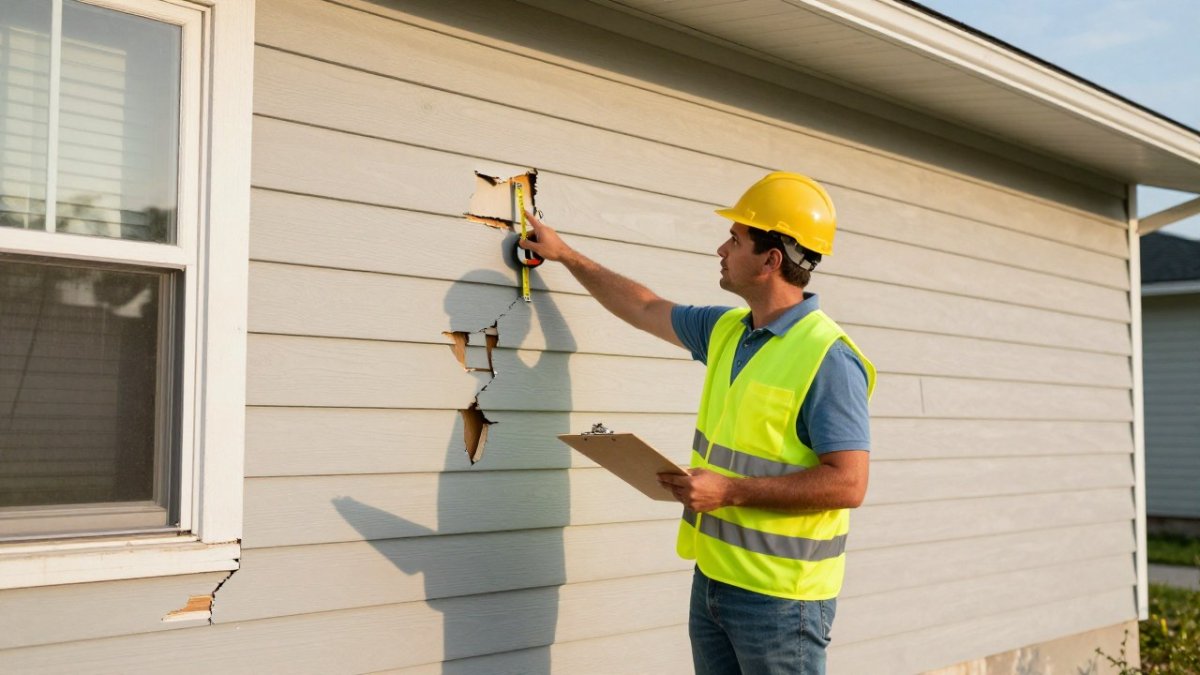
If siding took the hit, check whether emergency siding repair is covered by insurance before you authorize the work.
How to Handle a Storm Damage Claim Denial Appeal
A denial is not the end of the claim. A storm damage claim denial appeal is a formal request to reconsider, backed by evidence the insurer did not have or did not weigh.
Your appeal, step by step:
- Read the denial letter and find the stated reason.
- Request the full claim file, including the adjuster's report and photos.
- Gather counter-evidence: your own photos, a contractor's written opinion, weather records.
- Submit a written appeal that answers the stated reason directly.
- Escalate to your state's insurance department if the appeal stalls.
Keep everything in writing, and keep copies. Our guide on how to challenge denied storm insurance claims walks through each step in detail.
Storm damage insurance claims are won in the first week, with photos, receipts, and a written record.
Frequently Asked Questions
How long after a storm can you make a claim?
Most homeowners insurance policies require prompt notification, and many set a deadline of one year from the date of loss, though some states shorten that window. Florida law gives homeowners up to two years to file a supplemental claim after the initial claim is closed, but you should report damage as soon as you notice it. Waiting risks a denial for late notice and makes it harder to prove the storm caused the damage. Call your insurer the same day, then follow up in writing.
What should you avoid saying to a roof insurance adjuster?
Skip guesses about the cause or age of the damage, avoid saying the roof was already worn or leaking before the storm, and never accept an on-the-spot settlement before you have a contractor's written estimate in hand. Stick to facts you can document: the date of the storm, what you observed, and the photos you took. If the adjuster asks about maintenance history, answer honestly but keep it brief. Anything you speculate about can be used to reduce your storm damage insurance claims payout.
What damage is not covered by homeowners insurance?
Standard homeowners policies typically exclude flood damage, which requires a separate flood policy, along with earth movement, normal wear and tear, and damage from neglected maintenance. Wind and hail damage are usually covered, but many policies carry a separate hurricane deductible that applies once a named storm is declared. Check your policy's exclusions and deductible schedule before you file, so you know what your storm damage insurance claim can realistically include.
What happens if my storm damage claim is denied or underpaid?
You can file a storm damage claim denial appeal with your insurer, citing the specific policy language and evidence they overlooked. Request the adjuster's report and estimate in writing, get an independent contractor estimate, and submit both with a formal appeal letter. If the insurer still refuses, escalate to your state's department of insurance and request an appraisal under your policy's appraisal clause. Document every call and email, and keep copies of all repair receipts and out-of-pocket expenses.