 Comparison
Impact-Resistant Shingles for Florida Homes: Costs and Codes
Last Updated: October 29, 2026
Quick Summary
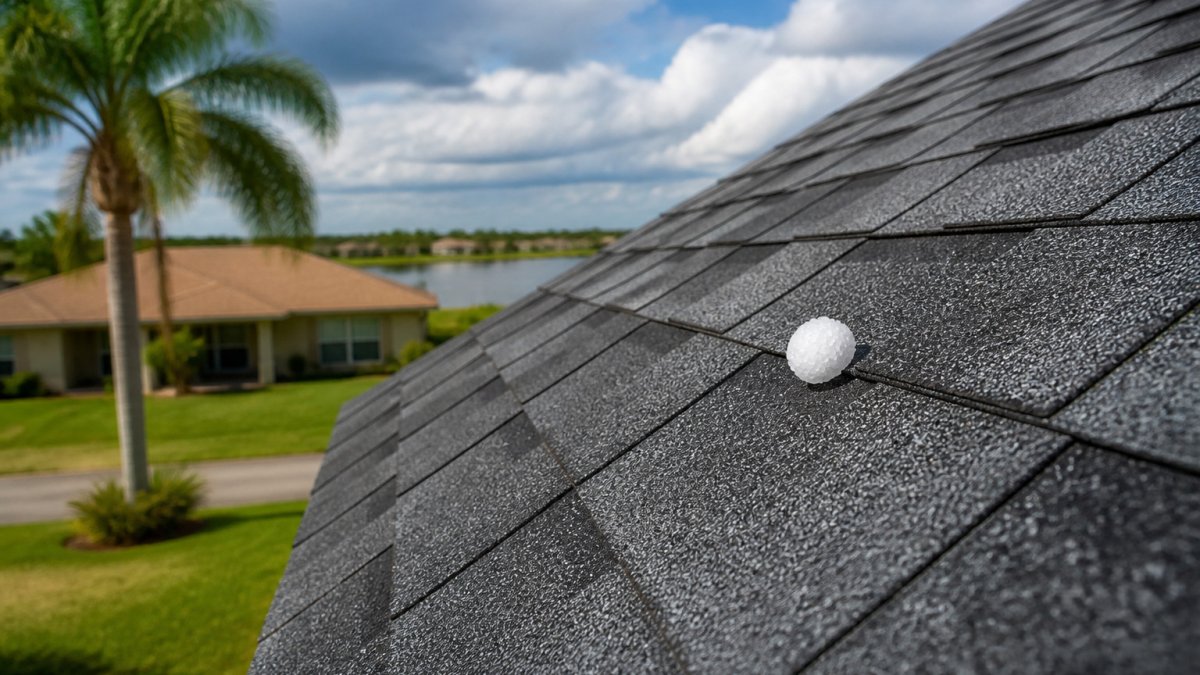
Impact resistant shingles are asphalt roofing shingles built to withstand hail and wind-blown debris without cracking or losing granules. They are tested against UL 2218, which rates them from Class 1 to Class 4, with Class 4 offering the highest impact resistance.
- Class 4 is the highest UL 2218 impact rating and passed the most demanding drop test.
- Impact, wind and fire ratings are separate measurements, so check all three on the spec sheet.
- Florida code allows asphalt shingles only on roof slopes of at least 2:12.
- Some insurers offer premium credits for Class 4 shingles, so confirm the discount in writing.
- Installation nail pattern and starter strip determine whether the rated assembly performs as tested.
Table of Contents
- What Impact-Resistant Shingles Are and How They Are Tested
- UL 2218 Impact Rating: Class 3 vs. Class 4 Explained
- Florida Building Code Roofing Requirements for Wind and Impact Exposure
- Impact-Resistant Shingles vs. Standard Architectural, Metal and Tile Roofs
- Roofing Insurance Discounts: What Florida Homeowners Can Realistically Expect
- Installation Nuances, Lifespan and Coastal Environmental Factors
- Getting an Impact-Resistant Roof Quote from LRI Restorations
- Frequently Asked Questions
What Impact-Resistant Shingles Are and How They Are Tested
Impact resistant shingles are asphalt roofing shingles built to take hits from hail and wind-blown debris without cracking or losing granules. For Florida homeowners, that matters because the state's storms bring both. Most of these products are tested against a standard called UL 2218, which drops steel balls of set weights onto shingle samples to rate how well they hold up.
The Insurance Institute for Business & Home Safety (IBHS) recently released its largest assessment of these products to date, evaluating 24 impact-resistant shingle products in its fourth edition of ratings (IBHS impact-resistant shingle ratings, 2025). That kind of independent testing gives you a standardized way to compare products rather than relying on marketing claims.
A few things worth knowing before you shop:
- Impact rating measures resistance to hail and debris.
- Wind rating measures how well the shingle resists being lifted or torn off in high winds.
- Fire rating measures resistance to flame spread.
These are separate measurements. A shingle can score well on one and say little about the others, so check all three on the product's spec sheet rather than assuming a strong impact rating covers everything.
UL 2218 Impact Rating: Class 3 vs. Class 4 Explained
UL 2218 sorts shingles into impact classes from 1 to 4, with Class 4 the highest. Class 4 means the shingle passed the most demanding drop test, which uses a heavier steel ball dropped from a greater height.
Here is the practical difference. A Class 3 shingle still offers meaningful protection, while Class 4 is the rating most insurers and homeowners look for in storm-prone areas.
| Product | UL 2218 Rating | Wind Rating | Best For |
|---|---|---|---|
| GAF Timberline ArmorShield II | Class 4 | 130 MPH | High-performance storm protection |
| Owens Corning Duration STORM | Class 4 | 130 MPH | Installation consistency |
| Atlas Pinnacle Pristine | Class 3 | 130 MPH | Balance of looks and wind protection |
| TAMKO Titan XT | Not listed in our research | High-wind coverage | High-wind zones |
Pricing depends on quantity, roof size, and delivery, so check with LRI Restorations for current figures.
Florida Building Code Roofing Requirements for Wind and Impact Exposure
Florida's building code sets minimum requirements for roofs, and those requirements differ by location and roof design. The 2026 Florida Building Code roof-assembly chapter states that asphalt shingles may be used only on roof slopes of at least 2:12, meaning two units of vertical rise for every twelve units of horizontal run (2026 Florida Building Code roof assembly requirements, 2026).
Because the code is updated periodically and local jurisdictions can add rules, confirm current requirements for your address with your local building department before committing to a material. A contractor who handles permits can make sure the chosen shingle meets the applicable wind and impact standards.
Impact-Resistant Shingles vs. Standard Architectural, Metal and Tile Roofs
Impact-resistant shingles are one of several material options for Florida homes, and each carries trade-offs. Architectural shingles are the most common baseline. They are less expensive upfront but offer less impact protection than a Class 4 product.
Metal and tile are the other two materials homeowners usually compare. Honest Abe Roofing's 2025 comparison identifies shingles, metal, and tile as the three primary impact-resistant roofing materials it reviews (Honest Abe Roofing material comparison, 2025). For a deeper look at what a metal roof costs per square foot in Florida, see our Metal Roofing Cost Per Square Foot: 2026 Florida Pricing Guide. For a broader comparison of materials suited to Florida's climate, read our best roofing materials for Florida's climate.
Impact resistant shingles are usually the lower-cost route, while metal tends to suit homeowners who plan to stay for decades. Tile is heavy and needs a structure designed to carry the load. Compare quotes for each material on your specific roof rather than assuming one option wins across the board.
Roofing Insurance Discounts: What Florida Homeowners Can Realistically Expect
Insurance savings are the most common reason homeowners consider impact-resistant shingles, but the discount is a policy mechanic, not a product feature. Two roofs with identical Class 4 shingles can produce very different credits depending on the carrier, the policy form, and whether the homeowner documents the install correctly.
What actually drives the credit in this market
Most carriers writing homeowners policies here tie wind and hail credits to a small set of verifiable facts about the roof assembly, not to the shingle brand alone:
- The UL 2218 class on the product data sheet. Class 4 is the threshold most carriers recognize; Class 3 products are rarely credited the same way.
- The wind-uplift rating of the full assembly. A shingle rated to 130 MPH only earns the top wind credit when it is installed with the manufacturer's specified underlayment, starter strip, and nail pattern. The assembly, not the bundle, is what gets rated.
- Roof age and permit history. A new roof pulled under a current permit is easier to credit than a roof with no paper trail. Carriers increasingly ask for the permit number and final inspection.
- Opening protection and roof-to-wall connections. Roof credits are often bundled into a wind-mitigation package that also looks at shutters, garage doors, and strapping. A Class 4 shingle alone may move the premium less than homeowners expect if the rest of the envelope is unprotected.
The documentation most homeowners are missing
This is where the discount is usually lost. A common pattern is a homeowner who paid for Class 4 shingles, told the agent so, and never received the credit because the carrier could not verify it. The paperwork that closes that gap:
- The manufacturer's product data sheet showing the UL 2218 classification and the wind-uplift rating for the specific product installed.
- The contractor's installation affidavit or invoice naming the product, the underlayment, and the nailing pattern used.
- The permit and final inspection record from the local building department.
- A wind-mitigation inspection form completed by a qualified inspector, if the carrier requires one. Many carriers have their own form and will not accept a generic report.
How to actually claim it
Call your agent, ask specifically whether the policy form includes a wind or hail credit for a Class 4 impact-resistant roof, and request the carrier's required documentation list in writing. After installation, submit the data sheet, contractor affidavit, and permit record together, and ask for the credit at the next renewal. If a wind-mitigation inspection is required, schedule it after the final inspection so the report reflects the finished roof.
Savings depend on your insurer, your policy, and your location, and the credit can change at renewal. If a storm has already damaged your roof, our guide on how to navigate storm damage insurance claims walks through the process, and our signs of hidden storm damage on roof guide explains what to look for before you file.
Installation Nuances, Lifespan and Coastal Environmental Factors
Impact-resistant shingles only perform as well as the installation beneath them.
The installation details that decide performance
- Nail placement and pattern. Manufacturers publish a specific nail zone and a specific number of nails per shingle, and high-wind installations often require six nails rather than four. Nails driven above the nail line, overdriven, or angled let the shingle lift in a gust. This is the single most common installation defect found after wind events.
- Underlayment. A high-temp or synthetic underlayment rated for the slope and the climate is part of the rated assembly. In coastal counties, the underlayment and the fasteners are also where salt-air corrosion begins.
- Starter strip and hip-and-ridge. Edge metal and starter courses take the first wind load at the perimeter. A manufacturer-approved starter strip is part of the wind warranty, not an optional upgrade.
- Ventilation. Balanced intake and exhaust ventilation keeps the deck dry and the shingles cooler. Poor ventilation shortens shingle life from the underside, where the warranty does not reach.
- Fastener corrosion. Near the coast, use hot-dip galvanized or stainless fasteners and confirm flashing materials match. Salt air attacks the fasteners and flashing long before it affects the shingle surface, and a failed fastener is a leak path.
Lifespan and the coastal environment
Sun, heat, and storms all shorten shingle roof life in this climate. Impact-resistant products keep their granules better, protecting the asphalt and fiberglass layers underneath and slowing the UV aging that makes a shingle brittle.
The environmental angle most guides skip
Impact-resistant shingles can carry a heat-reflective or "cool roof" option, and reflective granules reduce surface temperature and attic heat gain in a hot climate.
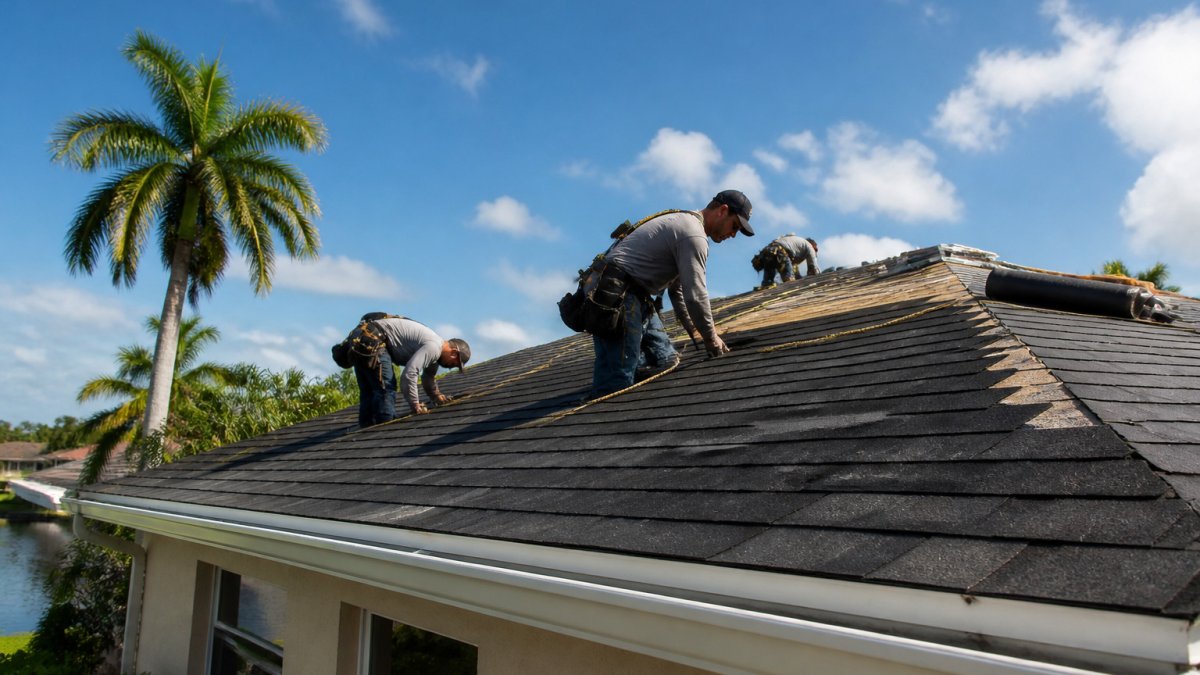
!A roofing crew in work gear installing dark architectural shingles on a single-story Florida home with a palm tree and blue sky in the background
Getting an Impact-Resistant Roof Quote from LRI Restorations
At LRI Restorations, we are a family-owned and operated construction company serving Florida's Gulf Coast, handling roofing, storm damage restoration, and the permitting and inspection work around it.
Our team manages the project from permitting to final walkthrough, so you are not coordinating subcontractors yourself. For current pricing on your specific roof, reach out directly for a quote.
To start, visit get a roofing quote from LRI Restorations and tell us about your home.
Frequently Asked Questions
Are impact-resistant shingles worth it in Florida? They can be, especially in storm-prone areas. The value depends on your insurance savings, local storm exposure, and how long you plan to keep the home. Ask your insurer about Class 4 credits before deciding.
What is the difference between Class 3 and Class 4 shingles? Class 4 is the highest impact rating under UL 2218 and passes the most demanding drop test. Class 3 is still protective but rates lower, which can matter for insurance credits in some areas.
Do impact-resistant shingles lower my insurance premium? They may. Some insurers offer credits for Class 4 shingles, but the amount varies by carrier and location, so confirm the discount in writing before you buy.
Frequently Asked Questions
What are the benefits of impact-resistant shingles?
Impact-resistant shingles are tested under UL 2218 to withstand hail and wind-borne debris better than standard shingles. In Florida, they can reduce the risk of granule loss, cracking and water intrusion after storms. Benefits also include potential insurance savings and a longer service life in exposed areas. Performance varies by product, so check the specific UL 2218 class and wind warranty before buying.
Do impact-resistant shingles lower insurance premiums?
They can, but savings are not guaranteed. Some insurers offer credits for Class 4 impact-resistant roofs, and reported premium reductions vary widely by carrier and location. Ask your insurance company directly what credit applies to your policy and what documentation, such as product specifications or installer certification, it requires before you assume any discount.
What is the difference between Class 3 and Class 4 impact-resistant shingles?
Under UL 2218, Class 4 is the highest impact rating, meaning the shingle passed the most demanding drop test. Class 3 passed a lower-energy test. Both are impact-resistant, but Class 4 is the rating most insurers reference for discounts. Check the product data sheet for the exact class before purchase.
Are impact-resistant shingles worth the extra cost?
Whether the premium pays off depends on your storm exposure, insurance credits and how long you plan to stay. For a firm figure on your roof, request a quote from LRI Restorations, since pricing depends on roof size, pitch and materials.