 blog
5 Best Roofing Materials for Hurricane Zones
Last Updated: October 26, 2026
Quick Summary
The best roofing materials for hurricane zones are standing-seam metal, concrete tile, and clay tile, all rated for wind resistance up to 180 mph when installed correctly. Asphalt shingles max out at 130 mph and fail more consistently in stronger storms, while proper installation and roof system design, including deck fastening, underlayment, and flashing, are as critical as material choice itself.
- Metal roofing systems reach wind resistance ratings up to 180 mph according to WeatherShield Roofers.
- Asphalt shingles typically max out at 130 mph wind resistance before failure becomes common.
- Standing-seam metal costs $10.00 to $18.00 per square foot installed with a 40 to 70 year service life.
- Concrete and clay tile cost $10.00 to $22.00 per square foot installed with 50+ year service lives.
- Roof deck fasteners must be spaced typically 6 inches on center at edges and 12 inches in the field to prevent uplift.
Table of Contents
- Why Roofing Material Matters in Hurricane-Prone Areas
- Metal Roof vs Shingles for Hurricanes: The Core Difference
- Hurricane-Rated Shingles: Performance and Limitations
- Concrete and Clay Tile for Wind Resistance
- Wind-Resistant Roof Design: System Details That Matter
- Hurricane Roof Installation Requirements and Code Compliance
- Choosing the Right Material for Your Home and Budget
- Frequently Asked Questions
Why Roofing Material Matters in Hurricane-Prone Areas
Your roof is your home's first line of defense against hurricanes. When wind gusts exceed 100 mph, a weak roof fails, water enters, and structural damage spreads, and the difference often comes down to material choice.
At LRI Restorations, our owner Frank Lewis has over 25 years of experience in the roofing industry. This guide covers the best roofing materials for hurricane zones.
Material choice affects three factors: wind resistance, impact protection from flying debris, and how securely the roof system stays fastened in extreme weather.
Steps to Take After Hurricane Roof Damage: 2026 Guide
Metal Roof vs Shingles for Hurricanes: The Core Difference
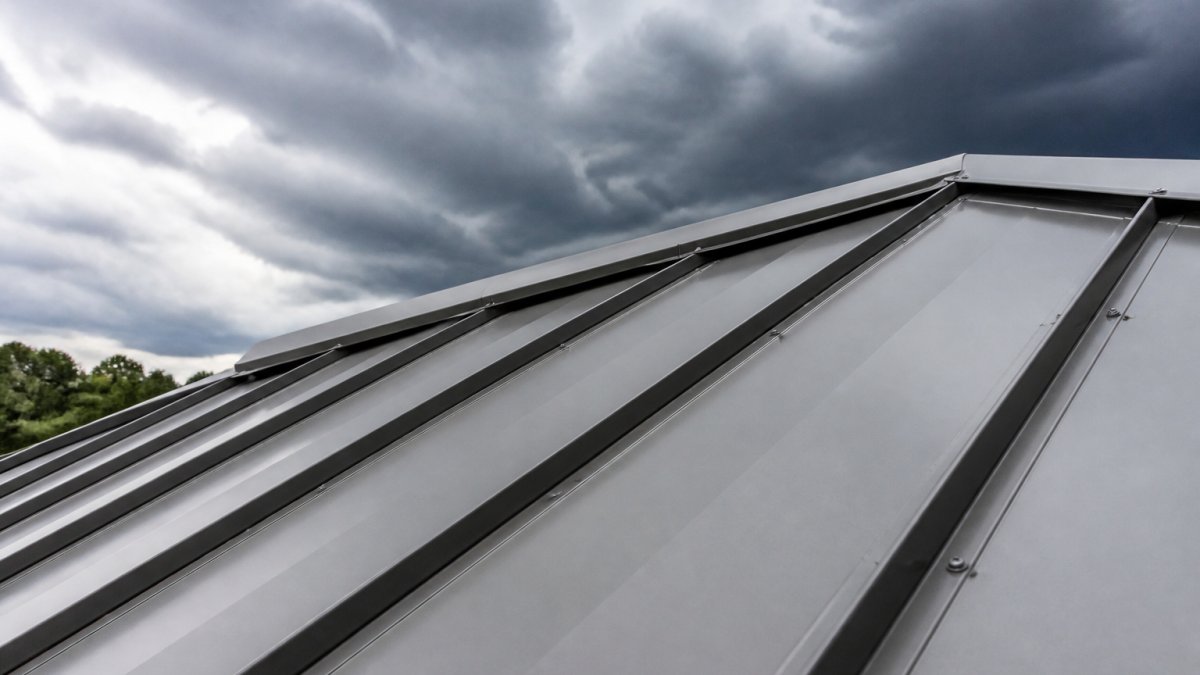
Metal roofing systems rated for wind resistance reach up to 180 mph according to WeatherShield Roofers. Concrete tile systems achieve similar ratings when installed correctly. Asphalt shingles typically max out at 130 mph wind resistance before failure becomes common.
Hurricane-Rated Shingles: Performance and Limitations
What impact-resistant shingles actually do well:
- Resist puncture from hail and small debris
- Stay attached longer under high winds than standard shingles
- Qualify for some insurance discounts
- Last longer overall due to better materials
What they struggle with:
- Wind speeds above 130 mph peel them away consistently
- They still require perfect installation to perform
- They need fastening every 4-6 inches, and installers often miss spots
- Wind uplift still occurs at the edges and roof transitions
Concrete and Clay Tile for Wind Resistance
The catch: tile is only as strong as its installation. Correct installation means:
- Proper roof deck attachment with specified fasteners
- Correct underlayment and moisture barriers
- Proper nailing patterns and spacing
- Adequate roof structure to support the weight
Wind-Resistant Roof Design: System Details That Matter
A proper hurricane-resistant roof includes:
- Roof deck attachment: Fasteners must penetrate through the deck into the framing. Spacing matters. Too far apart and the deck lifts. Correct spacing is typically 6 inches on center at edges, 12 inches in the field.
- Underlayment: A quality underlayment protects against water infiltration if the surface material is breached. It also provides secondary wind resistance.
- Edge protection: Roof edges and gables are vulnerable to wind uplift. Proper edge banding and additional fastening prevent failure at these points.
- Flashing and transitions: Valleys, roof-to-wall transitions, and penetrations must be sealed and fastened securely. These are where leaks start after storms.
- Hip and gable design: Hip roofs are more aerodynamic and resist wind better than gable roofs. If you're building new, hip design is worth considering.
Hurricane Roof Installation Requirements and Code Compliance
Building codes are written from past storms, but "meet code" isn't a single national standard, it's a layered system of model codes, state and local amendments, wind-zone maps, and product approvals. Understanding it is how you avoid a roof that passes inspection and still fails in a hurricane.
How Wind Zones Drive Requirements
Most high-wind requirements trace to wind-zone maps dividing regions by design wind speed. Coastal areas carry the highest speeds and strictest requirements, relaxing inland. Your address determines your design wind speed, which drives fastener schedules, roof-to-wall connections, and permitted products, two homes a few miles apart can face different requirements. Ask your building department for the design wind speed and code edition before choosing a material.
Product Approvals and Evaluation Reports
A common failure pattern is a premium product installed to a generic method. The material carries a high wind rating, but the fastening schedule does not match the product's approval, so the system underperforms its rating. Verify the fastening schedule against the product report, not against habit.
What the Code Typically Requires
While specifics vary by jurisdiction, high-wind roof requirements commonly address:
- Deck attachment: Roof decking fastened to framing with specified fasteners at a defined spacing, often tighter at edges and perimeter than in the field.
- Roof-to-wall connections: Metal connectors and straps that resist uplift and tie the roof structure to the walls.
- Underlayment: A specified underlayment that provides a secondary water barrier and meets wind-resistance criteria.
- Flashing and edge metal: Properly fastened flashing at valleys, walls, and penetrations, and edge metal that resists wind uplift at the perimeter.
- Fastener schedules: Nail or screw patterns that meet or exceed the minimum for the design wind speed.
How to Verify Compliance Before and After Installation
You don't need to be a code expert, but verify four things:
- The permit and inspection record. Confirm the permit was pulled and the required inspections were completed. Inspections catch structural and fastening basics, though they cannot see every fastener under the finished surface.
- The product approval. Match the product on the roof to the approval report and the design wind speed for your address.
- The fastening schedule. Ask the contractor to show, in writing, the fastener type and spacing they will use and confirm it matches the product report and local code.
- Photo documentation. Ask for photos of deck fastening, underlayment, flashing, and edge metal before the surface material goes on. This documentation supports both warranty claims and insurance claims later.
New Roof Installation: A Step-by-Step Guide covers the full installation sequence, including where these code requirements show up in practice.
Choosing the Right Material for Your Home and Budget
The best roofing material for hurricane zones depends on four factors: budget, location and wind exposure, how long you plan to stay, and what your insurer will reward. Here's a framework you can actually use.
Installed Cost and Lifecycle Value by Material
- Asphalt shingles (standard): Roughly $4.50 to $7.50 per square foot installed. Expected service life of 15 to 25 years in a coastal, high-wind, high-UV environment. Lowest upfront cost, shortest life, highest replacement frequency.
- Impact-resistant asphalt shingles: Roughly $6.00 to $9.50 per square foot installed. Service life of 20 to 30 years. A middle path that buys impact protection without a full system upgrade.
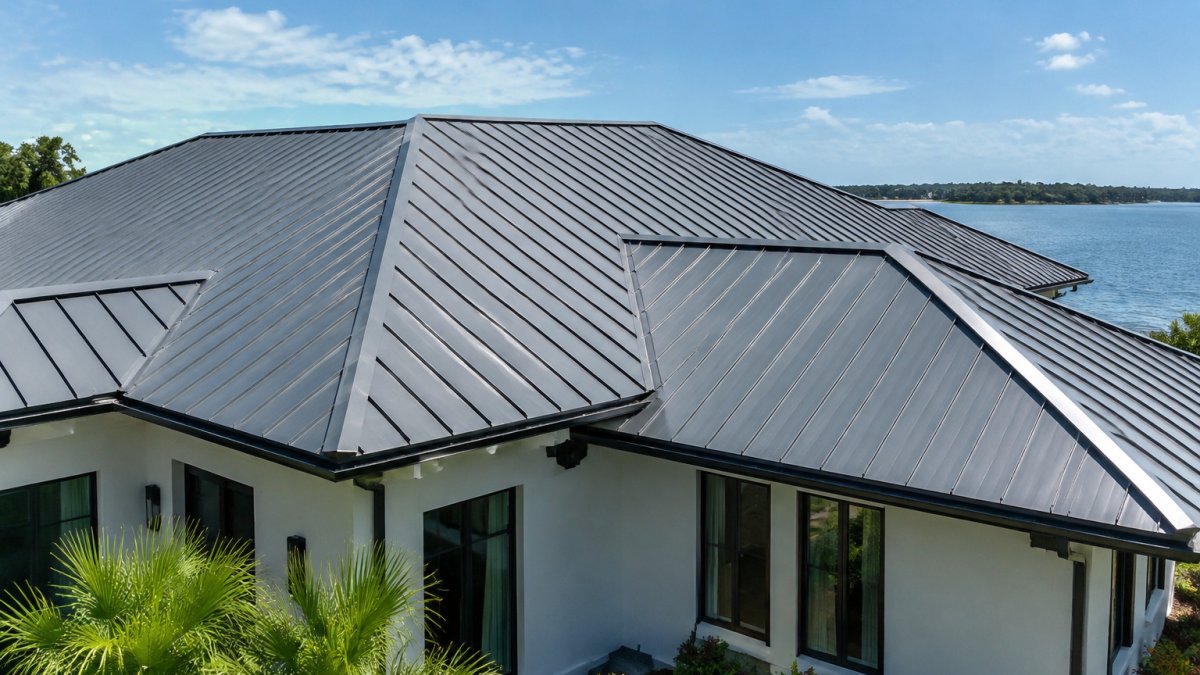
- Standing-seam metal: Roughly $10.00 to $18.00 per square foot installed, with coastal-grade finishes and heavier gauges pushing toward the top of that range. Service life of 40 to 70 years. Higher upfront cost, but the cost per year of service is often the lowest of any option.
- Concrete tile: Roughly $10.00 to $18.00 per square foot installed. Service life of 50+ years. Heavy, so structural reinforcement may add cost on older homes.
- Clay tile: Roughly $12.00 to $22.00 per square foot installed. Service life of 50+ years. Premium appearance and performance, highest upfront cost.
A Practical Selection Matrix
Weigh these five factors:
- Wind and impact ratings. Confirm the product's published wind-uplift rating and, where applicable, impact rating. Do not accept a verbal claim; ask for the product approval or evaluation report.
- Roof structure. Older homes with lighter framing may not support tile without reinforcement. A structural assessment is cheap compared with a failed roof.
- Budget and time horizon. If you plan to sell within five years, upfront cost may dominate. If this is your forever home, lifecycle cost should.
- Maintenance appetite. Tile can crack and needs periodic replacement of individual pieces. Metal needs finish inspection and fastener checks. Shingles need the least routine attention but fail soonest.
- Appearance and resale. Metal and tile read as premium in most markets and can support resale value; shingles are neutral.
Insurance and Warranty Considerations
Warranties are not all equal. Manufacturer warranties often cover materials only and can be voided by installation errors or unapproved components; workmanship warranties come from the contractor and are only as good as their longevity. Get both in writing, and confirm whether the warranty transfers to a future owner.
Match the Material to Your Actual Conditions
Best Roofing Materials for Florida Climate: 2026 Guide explores climate-specific trade-offs in more detail. Metal Roofing Cost Per Square Foot: 2026 Florida Pricing Guide provides current pricing benchmarks to compare against your bids.
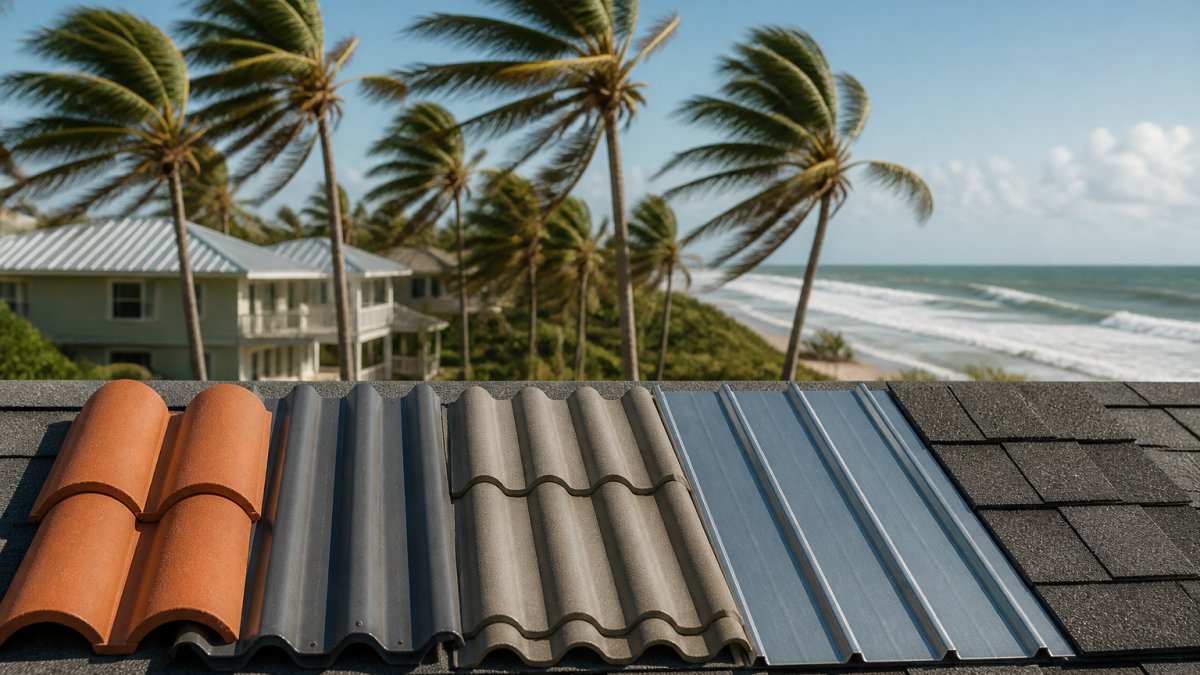
Here's how the five main hurricane-zone roofing materials compare on cost, lifespan, and wind resistance.
| Material | Installed Cost | Service Life | Wind Rating |
|---|---|---|---|
| Asphalt shingles (standard) | $4.50-$7.50/sq ft | 15-25 years | 130 mph |
| Impact-resistant asphalt shingles | $6.00-$9.50/sq ft | 20-30 years | 130 mph |
| Standing-seam metal | $10.00-$18.00/sq ft | 40-70 years | 180 mph |
| Concrete tile | $10.00-$18.00/sq ft | 50+ years | 180 mph |
| Clay tile | $12.00-$22.00/sq ft | 50+ years | 180 mph |
Frequently Asked Questions
What roofing material holds up best in a hurricane?
Standing-seam metal roofing and concrete tile both rank among the top performers in hurricane-prone areas. Metal roofing can withstand wind speeds up to 160-180 mph when properly installed, while concrete tile offers impact resistance and durability. The best choice depends on your roof design, installation quality, and local building codes. Workmanship matters as much as material, poor fastening or underlayment installation can compromise even premium roofing materials.
Are metal roofs better than shingles in hurricane zones?
Metal roofing generally outperforms asphalt shingles in hurricane zones due to superior wind resistance and impact durability. However, hurricane-rated impact-resistant shingles have improved significantly and cost less upfront. Metal's advantages include higher wind ratings, longer lifespan, and better protection against windborne debris. The trade-off is higher installation cost. Your choice should align with your budget, roof design, and local wind-resistance requirements.
What makes a roofing system hurricane-resistant?
Hurricane resistance depends on three factors: the roofing material's wind and impact ratings, the roof deck attachment and fastening pattern, and the underlayment and edge protection system. A single high-performance shingle or metal panel is not enough, the entire system must be engineered to resist roof uplift, secure fasteners must be placed at code-specified intervals, and the roof deck must be securely attached to the home's frame. Installation quality determines whether the system performs as rated.
How do I choose a roofing contractor for hurricane-resistant installation?
LRI Restorations is a family-owned and operated construction company that specializes in navigating insurance claims.
Choosing the right roofing material protects your home and your family. At LRI Restorations, we specialize in hurricane-resistant roof installation with comprehensive project management from permitting through final inspection. Our team brings over 25 years of experience navigating Florida's building codes and storm conditions. Get a quote today and build a roof that will protect your home for decades to come.