 blog
7 Facts on Standing Seam Metal Roofing in Florida
Last Updated: November 6, 2026
Quick Summary
Standing seam metal roofing usually costs more up front, but in Florida it often pays for itself over a long ownership period. Whether it is worth it depends on how long you plan to stay, how exposed your home is, and how you weigh the premium against long-term protection.
- The premium over exposed-fastener metal runs roughly $5 to $7 per square foot, about $11,750 to $16,450 on a typical project.
- Compare total cost over the years you own the home, not just the installed price of each option.
- Shingles may need a second replacement within a long ownership window, which metal often avoids.
- Code compliance is not the same as hurricane resistance, so ask for the product approval for your address.
- Ask contractors for clip spacing, underlayment product, fastener corrosion rating and approval number in writing.
Table of Contents
- Standing Seam Metal Roof Cost in Florida: What the Numbers Include
- Metal Roof Cost vs. Shingles: Lifecycle Math Over 20 to 40 Years
- Wind, Storm and Heat Performance on Florida's Gulf Coast
- How Long Does a Metal Roof Last for Insurance Purposes?
- Metal Roof Maintenance, Noise and Corrosion Trade-Offs
- Scheduling Your Standing Seam Roof Before Hurricane Season
- Frequently Asked Questions
Standing seam metal roofing costs more up front than most alternatives, but in Florida it often pays for itself over the life of the roof. At LRI Restorations, we install roofing across Florida's Gulf Coast, and we see the same question from homeowners every storm season: is standing seam metal roofing worth it in Florida? The honest answer depends on how long you plan to stay, how exposed your home is, and how you weigh the premium against long-term protection.
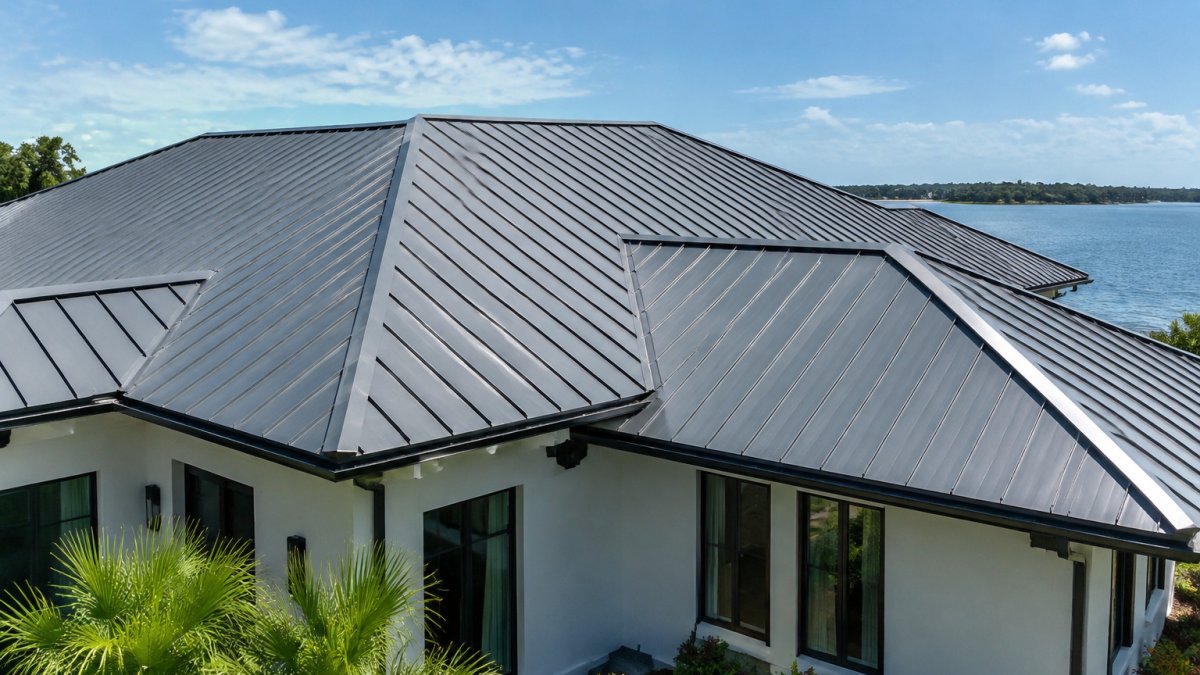
Standing seam is the premium end of metal roofing. Its raised seams lock panels together without exposed fasteners, which reduces leak points and gives it a cleaner look. Collis Roofing's 2026 metal roof replacement cost report puts the premium over exposed-fastener metal at roughly $5 to $7 per square foot, which works out to a total gap of about $11,750 to $16,450 on a typical project.
That gap is real money, so it deserves a clear explanation. Metal roofing is marketed in Florida for long life and wind resistance, and some local sources cite lifespans of 40 to 70 years. Providential Roofing's 2026 Florida roofing trends article makes that claim, though the result does not show the testing behind it. Treat those lifespans as contractor estimates, not guarantees.
Standing seam is not the right choice for everyone. Our direct comparison of metal and shingles in storm conditions shows where the premium pays off. Sheffield Metals' article on reasons not to buy a standing seam roof acknowledges the durability of standing seam while also laying out reasons some buyers should hold off. A homeowner planning to sell within a few years, or working with a tight budget, may get better value from a less expensive system.
Where standing seam tends to earn its keep is in long ownership and storm exposure. We'll walk through the numbers below, starting with what the price actually includes.
Standing Seam Metal Roof Cost in Florida: What the Numbers Include
A standing seam metal roof price is more than the panels. A quote typically covers removal of the old roof, underlayment, flashing, panels, trim and labor, and it may or may not include permits, engineering or inspections. Reading the line items matters more than the headline number.
ASP Super Home's 2026 Miami metal roof guide reports installation prices of $18,000 to $35,000 for metal roofs, but the page does not state roof area or material, so use those figures only as a rough reference point.
Ask every contractor for an itemized estimate. Our current Florida per-square-foot metal roofing pricing breaks down what each figure includes. If two bids differ by thousands of dollars, the difference is usually in the scope, not the brand name. At LRI Restorations, we handle permitting, engineering and inspections as part of the project, so you know who is responsible at each phase.
The headline price only means something once you know what each quote covers, so the article sets out the typical line items below.
| Quote item | Typical coverage | Check before signing |
|---|---|---|
| Installation range | $18,000 to $35,000 | Roof area and material not stated |
| Premium over exposed-fastener metal | $5 to $7 per sq ft | Confirm on your own bids |
| Scope | Removal, underlayment, flashing, panels, trim, labor | Ask if permits and engineering are included |
| Permits, engineering, inspections | May or may not be included | Compare the line items |
Metal Roof Cost vs. Shingles: Lifecycle Math Over 20 to 40 Years
Shingles cost less at installation. A metal roof usually costs more, but it may need fewer replacements over the same period. The comparison that matters is total cost over the years you own the home, not the first invoice.
Here is a transparent framework you can fill in with your own bids. It uses placeholder assumptions, not quotes, so replace every number with what contractors actually put in writing for your roof.
Step 1, Installed cost. Get itemized bids for both options on the same roof area, pitch, and tear-off scope. The metal bid often runs above the shingle bid on the same house, and complex roofs with many hips, valleys, and penetrations can widen that gap.
Step 2, Expected service life. Use conservative figures, not marketing lifespans. Expected service life depends on climate, exposure and installation quality, and coastal salt exposure and installation quality can shorten the life of either roofing type.
Step 3, Replacement timing inside your window. If you plan to own for 30 years, the shingle roof likely gets replaced once, so you carry two installations. The metal roof likely gets installed once. That second shingle invoice, including a second tear-off and disposal, is the single biggest line item in the comparison, and it is the one most homeowners forget.
Step 4, Repairs and maintenance. Shingles may need spot repairs after wind events and periodic flashing attention. Metal needs fewer routine repairs but is not free: fasteners, sealant at penetrations, and debris management still cost money over decades.
Step 5, Energy and insurance. Light-colored metal can lower attic heat gain, and some carriers offer premium credits, but neither is guaranteed. Treat any energy or insurance savings as upside you verify in writing, not as a fixed number you subtract from the metal bid.
Step 6, Divide by years owned. Add installed cost, expected repairs, maintenance, and any replacement inside your window, subtract verified savings, then divide by the years you expect to own the home. Compare the per-year figure.
Resale and insurance can also shift the math. Some sources cite resale returns and annual savings figures, but those calculations are rarely shown, so verify any insurance discount with your carrier before you count on it.
Watch out: comparing a metal bid that includes new decking, upgraded underlayment, and permit and engineering fees against a bare-bones shingle bid will make metal look far more expensive than it is. Normalize both bids to the same scope before you run the per-year math.
Wind, Storm and Heat Performance on Florida's Gulf Coast
Wind is the factor that most separates roofs here from the rest of the country, and it is also where marketing claims outrun documentation. Our guide to roofing materials for the Florida climate compares options beyond metal alone.
Code compliance is not the same as hurricane resistance. Building codes set minimum requirements, and local jurisdictions adopt and amend them on their own schedules. A roof can pass inspection and still underperform in a storm if the attachment details, underlayment, and flashing were value-engineered.
Wind performance lives in the details, not the panel. Interlocking standing seam panels resist uplift better than exposed-fastener panels because the seams and concealed clips distribute load and eliminate the thousands of fastener penetrations that become leak and pull-out points.
Coastal corrosion is a material-selection decision. Salt air attacks fasteners, cut edges, and exposed trim first. Coastal homes generally need metals and coatings rated for salt exposure, with corrosion-rated fasteners and matching accessories.
Heat is the other Gulf Coast factor. Light-colored metal reflects sun and can reduce attic temperatures, which helps cooling costs in a long summer. The effect depends on the coating, the roof color, and how well the attic is insulated and ventilated, metal over a poorly insulated attic will not deliver the savings homeowners expect.
Rain and humidity. Standing seam sheds water well, but the underlayment and flashing do the leak-prevention work at penetrations, valleys, and transitions. In a humid climate, trapped moisture is the bigger risk than rain itself, which is why deck inspection and proper underlayment before installation matter.
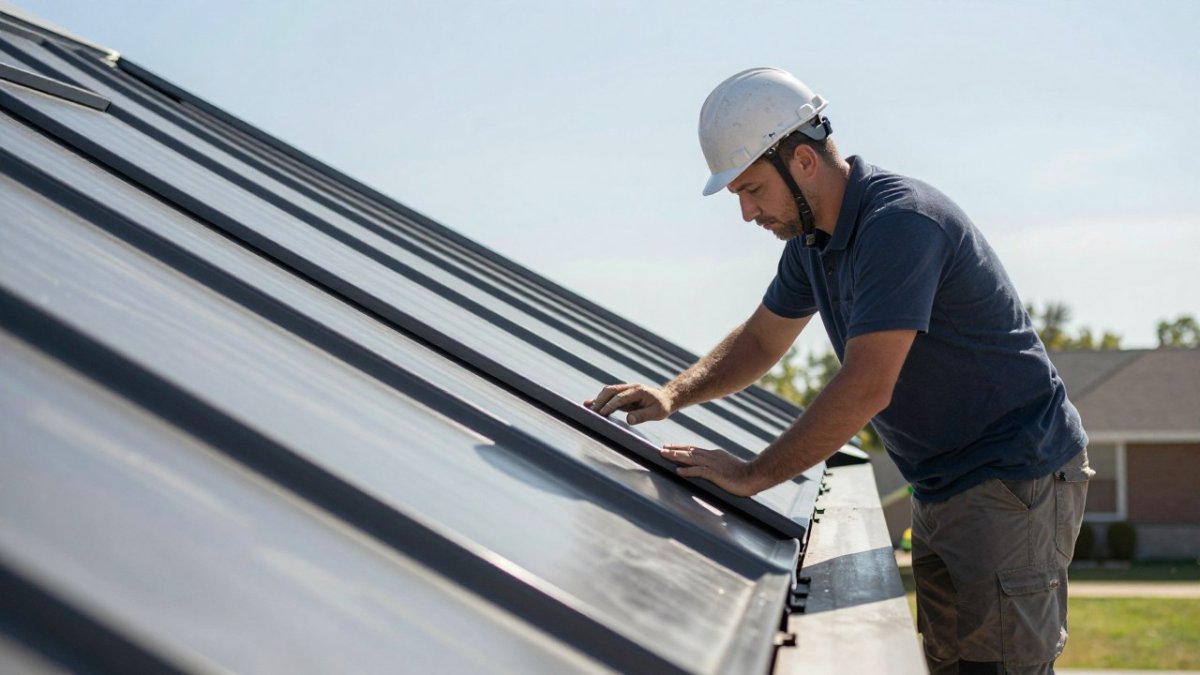
Watch out: a bid that names a premium panel but does not specify clip spacing, underlayment product, fastener corrosion rating, or the product approval number is not a wind-rated roof, it is a panel with a story. Ask for those four items in writing before you sign.
How Long Does a Metal Roof Last for Insurance Purposes?
Insurers generally look at roof age and condition when they set premiums and evaluate claims. Keep your installation records, permits and inspection reports with your policy papers. Our guide to spotting hidden storm damage on a roof explains what to look for before filing a claim.
Some policies offer discounts for metal roofing, and they vary by insurer. Ask your agent in writing what documentation they need before you count on any savings. Damage claims also depend on the storm and the condition of the existing roof, so an inspection before a major storm is worth the time.
Metal Roof Maintenance, Noise and Corrosion Trade-Offs
Metal roofs need less upkeep than shingles, but they are not maintenance-free. Clear debris from valleys and gutters, check flashing and sealant around penetrations, and have the roof inspected after major storms. Coastal salt air can corrode fasteners and exposed trim, so choose coatings and materials rated for coastal exposure.
Rain on metal is louder than on shingles, especially without an attic or ceiling insulation. Good underlayment and insulation reduce the noise considerably.
Watch out: installing metal over damaged decking or without proper underlayment can trap moisture and hide leaks until the damage is extensive. Have the deck inspected before the new roof goes on.
Scheduling Your Standing Seam Roof Before Hurricane Season
Timing matters in Florida. Roofing demand spikes before and after storms, and that can stretch schedules and raise prices. Get your estimate early, confirm the permit and engineering steps, and ask for a written timeline. Our replacement timeline guide walks through the process from start to finish before you commit to a schedule.
At LRI Restorations, we manage the project from permitting through the final walkthrough, and we can help with insurance claims when storm damage is involved. Owner Frank Lewis has over 25 years of experience in the roofing industry, and we handle multi-phase jobs for occupied homes. Request a quote from LRI Restorations to see what a standing seam roof would cost for your home and how it fits your timeline.
Frequently Asked Questions
What type of metal roofing is best for Florida?
Standing seam panels with concealed fasteners are the most common choice for Florida homes because the seams resist wind uplift better than exposed-fastener panels. Aluminum is typically recommended on coastal properties because it resists salt-air corrosion, while steel can work inland if it has a protective coating. Installation quality matters as much as panel type, so check the contractor's experience with local wind requirements and permitting. Your roof's pitch, age and insurance situation should also guide the final choice.
Do insurance companies like metal roofs in Florida?
Many Florida insurers view metal roofs favorably because of their wind performance and long service life, and some carriers offer premium discounts for qualifying wind-resistant roofs. Eligibility varies by insurer, policy and documented installation details, so a discount is not guaranteed. Ask your agent in writing whether a standing seam roof would qualify and what documentation they need, such as product approvals and permit records.
Are metal roofs loud when it rains?
Rain noise on a metal roof depends mostly on the installation. Standing seam panels are installed over solid decking with an underlayment, which dampens sound considerably compared with a metal roof installed over open framing. Insulation in the attic also reduces noise. Homeowners who are concerned should ask the contractor how the underlayment and decking are specified before signing a contract.
What are the disadvantages of a standing seam metal roof?
The main drawbacks are higher upfront cost, a dependence on skilled installation, and the need for careful material selection in coastal areas to prevent corrosion. Repairs can also be more specialized than shingle repairs, and dents from hail or impact may be visible on some profiles. Standing seam is not the right choice for every home, so compare the trade-offs against your budget, roof structure and ownership timeline.