 blog
Is It Worth Installing Impact Windows During a Roof Replacement?
Quick Summary
Impact windows are worth considering during a roof replacement if you live in a hurricane-exposed area and plan to stay long enough to recover the cost. Roofing already puts crews on the home, which can reduce disruption, but impact windows typically cost roughly 20% to 40% more than standard windows.
- Impact-resistant windows typically cost roughly 20% to 40% more than standard windows.
- Impact windows may be worth the added cost in high-risk hurricane areas.
- Set windows after the deck is sound and before final roof layers are installed.
- Confirm head flashing and sill pan responsibility by name in your contract.
- Ask your insurer whether impact windows qualify for a premium discount before signing.
Table of Contents
- Why Homeowners Consider Impact Windows During a Roof Replacement
- Impact Window Installation Cost and Where the Money Goes
- Impact Windows Pros and Cons for Your Home
- Coordinating Windows and Roof Work: Sequence, Permits, and Weatherproofing
- Impact Windows Installation Timeline When Combined With a Roof
- Homeowners Insurance Discounts and Documentation
- Schedule Your Combined Roof and Window Assessment With LRI Restorations
- Frequently Asked Questions
Why Homeowners Consider Impact Windows During a Roof Replacement
Last Updated: November 10, 2026
Replacing a roof is one of the few moments when a homeowner already has crews on the house, scaffolding up, and the budget open. That is why many people ask whether impact windows belong in the same project.
Impact-resistant windows are glass units built to withstand wind-borne debris and sustained pressure. Consumer Reports notes that impact-resistant windows can cost roughly 20% to 40% more than standard windows, a premium that matters when two large projects are being weighed together. Consumer Reports review of storm windows
The main reason to combine the projects is access. Impact windows are also marketed as a passive form of protection, since the glass remains in its rated configuration and does not need to be deployed before a storm. Locktight Impact guide to impact windows
Impact Window Installation Cost and Where the Money Goes
Impact window installation cost depends on the number of openings, frame material, glass specification, and the labor needed to work around the new roof.
The premium over standard glass is the largest driver. Glass thickness, laminated interlayers, and certified frames all add cost. Labor is the second factor.
Homeowners should also account for permits and inspections. Those fees vary by jurisdiction and project scope, so the most reliable figure comes from a written estimate that lists each line item.
Impact Windows Pros and Cons for Your Home
Impact windows offer clear advantages. They resist flying debris, help keep wind pressure from entering the home, and can reduce noise and unwanted air leakage.
The drawbacks are real. The upfront cost is higher, and the value depends on your home and your risk. U.S.
| Factor | Impact Windows | Standard Windows |
|---|---|---|
| Upfront cost | Roughly 20% to 40% higher | Lower baseline |
| Storm debris resistance | Rated impact protection | Limited |
| Insurance | May qualify for discounts, depending on provider | Typically no discount |
| Best fit | High-risk coastal homes | Low-risk inland homes |
Best for: homeowners in hurricane-exposed areas who plan to stay long enough to recover the investment. Skip if: your home sits well inland and your insurer offers no credit for the upgrade.
Coordinating Windows and Roof Work: Sequence, Permits, and Weatherproofing
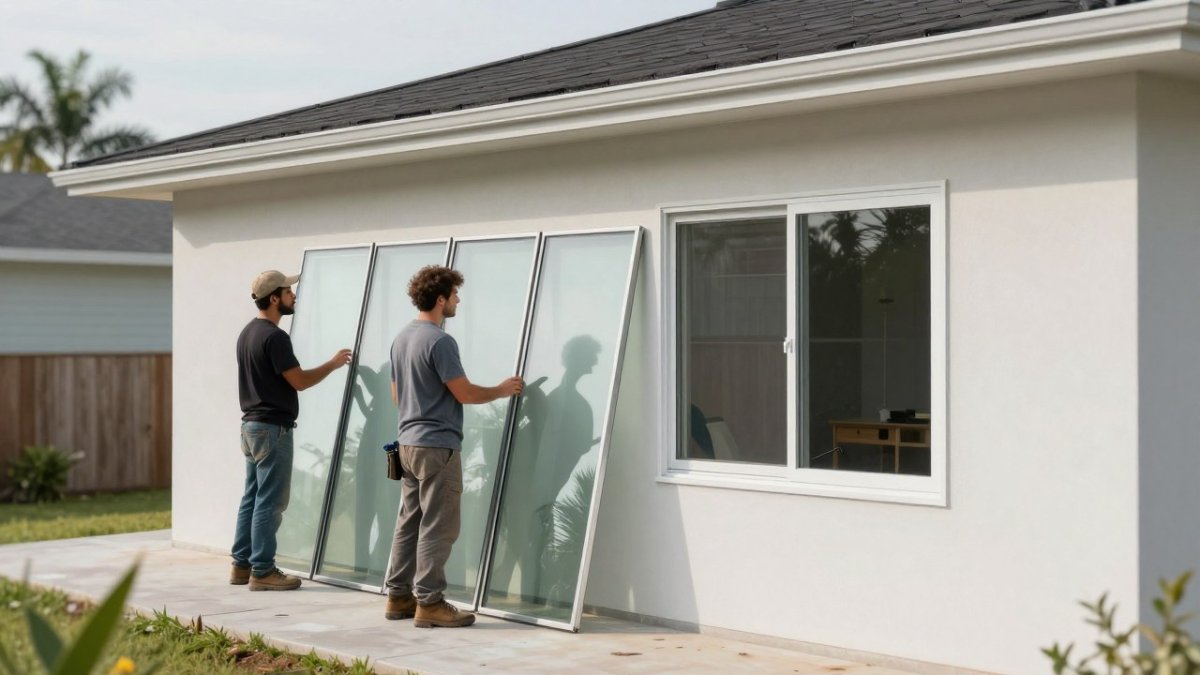
Coordinating the two projects is where most of the planning effort goes. Roofing and window installation affect the same building envelope, so the order of work, the flashing details, and the inspection schedule all have to be settled before either crew mobilizes.
Why Installation Order Matters
A common general sequence for combined projects is: tear off the old roof covering, inspect and repair the deck, install the window units and their flashing, then complete the underlayment and final roofing layers. The reason is water management.
If windows go in after the roof is finished, the roofer has to return to disturb completed flashing and shingles around each opening, which raises the risk of leaks and voids workmanship warranties. The practical rule is to set windows after the deck is sound and before the final roof layers are installed, and to have one written sequence that both crews sign off on. See the full roof installation process to understand how each step fits around window work.
Watch out: if the roofer and the window installer each assume the other is handling the head flashing and sill pan, water intrusion at the opening is the most common failure, put the flashing responsibility in the contract by name.
Weatherproofing Details That Decide the Outcome
Ask your contractor to describe, in writing, how the following will be handled at each window opening:
- Sill pan and back dam, a sloped sill pan with an end dam directs water out of the opening rather than letting it pool against the frame.
- Head flashing, a metal or membrane flashing that laps over the window's nailing flange and tucks under the water-resistive barrier above.
- Step flashing and side laps, side flashing must lap shingle-course by shingle-course so water cannot travel sideways into the wall.
- Sealant and backer rod, joints at the frame-to-wall interface need backer rod and a compatible sealant, not a surface bead that will crack.
These details are not cosmetic. They determine whether the combined project protects the home or creates a leak path that neither the roofer nor the window installer will own.
Permits and Code Compliance for Both Projects
Roof and window work often require separate permits, even when performed together, and the requirements vary by jurisdiction. Contact your local building department to confirm which product approvals, permit applications, and scope details apply to your project.
Before work starts, confirm:
- Each permit covers the full scope, including any structural changes at the openings.
- The window product approval number matches the units actually delivered to the site.
- Inspections are scheduled at the right stages, typically deck inspection before covering, and final inspection after flashing and roofing are complete.
- Ask your contractor what completion records (such as final inspection sign-off, product certificates, and photos) they provide for your insurer.
Keeping product approvals, permits, and installation records together also helps with insurance claims and discount eligibility after the work is done.
Contractor Coordination: Who Owns What
A combined project works best when one party is accountable for the envelope as a whole. Ask each contractor:
- Who is responsible for the flashing at each window opening?
- Who supplies and installs the window units, and who handles warranty claims on them?
- How will the two crews be scheduled so the roof is not left open longer than necessary?
- What is the change-order process if deck damage or hidden rot is found after tear-off?
Getting these answers in writing before mobilization is the difference between a coordinated project and two projects that happen to occur at the same address.
Impact Windows Installation Timeline When Combined With a Roof
A combined project usually takes longer than either job alone, but it can be shorter than two separate projects because mobilization, permitting, and inspection trips can be coordinated. Review a roof replacement timeline to plan the window schedule around the roof's progress. The window schedule should follow the roof's progress, not run ahead of it. This section gives you a practical timeline and a decision framework most competitors do not provide.
A Practical Combined Sequence
A common pattern for a combined roof-and-window project looks like this:
- Pre-construction (weeks before mobilization), finalize product selections, confirm product approval numbers, submit permit applications, order windows, and confirm lead times. Window lead times are often the long pole, so order early.
- Mobilization and tear-off, the roofing crew removes the old covering and inspects the deck. Any deck repairs are documented and approved before covering.
- Deck inspection, the local inspector reviews the deck and attachment before it is covered.
- Window installation, windows are set after the deck is sound and before the final roof layers, with flashing integrated into the water-resistive barrier.
- Roof completion, underlayment and final roofing layers are installed, and flashing at each opening is completed and inspected.
- Final inspections and documentation, final inspection sign-off, product certificates, and photos are collected for insurance and warranty records.
What Drives the Timeline
Three factors usually determine how long the combined project takes:
- Window lead times, custom sizes, specialty glass, and frame finishes can add weeks. Confirm the delivery date in writing before the roof is scheduled.
- Inspection availability, deck and final inspections have to be scheduled, and a missed inspection can stall the roof covering.
- Weather, an open roof deck and open window openings are vulnerable to rain, so the schedule should build in contingency for weather delays.
Because specific durations vary widely by home, product, and season, ask for a written schedule with milestones and a clear point of contact for each crew.
Separate vs. Combined: What the Timeline Comparison Actually Shows
Running the projects separately usually means two mobilizations, two permit cycles, and two inspection schedules. Combining them can reduce the number of site visits and inspection trips, but it does not automatically shorten the calendar, the window work still has to wait for the roof deck, and the roof cannot be closed until the windows and flashing are in. The realistic comparison is not "combined is faster" but "combined removes duplicate mobilization and coordination overhead, at the cost of tighter scheduling dependencies."
A Decision Framework for Timing
Use the following scenario checklist to decide whether to combine the projects now, sequence them, or wait:
- High hurricane exposure, older windows, roof at or near end of service life, combining is usually worth evaluating, because both envelope components are being addressed in one coordinated project.
- High hurricane exposure, newer roof, older windows, windows can be installed now without waiting for the roof, but confirm flashing details with the roofer so the roof warranty is not disturbed.
- Roof has active leaks or storm damage, prioritize the roof first; window work can follow once the roof is watertight.
- Planning to sell within a few years, weigh resale appeal and insurance documentation against the payback period; a combined project can produce a cleaner record for buyers and insurers.
Watch out: bundling does not guarantee savings. If the window crew has to return after the roof is complete because of a scheduling conflict, you may pay for mobilization twice, confirm the sequence and the responsibility for return visits in the contract.
Homeowners Insurance Discounts and Documentation
Insurance is one of the strongest reasons to consider impact windows. Learn about impact-resistant products and the codes that qualify for discounts. Statewide Impact notes that impact windows may help reduce premiums or qualify for discounts, depending on the insurance provider.
Keep detailed records. LRI Restorations specializes in navigating insurance claims, so we can help you assemble the paperwork before the work begins. Guidance on navigating storm damage claims with your insurer is also available.
Schedule Your Combined Roof and Window Assessment With LRI Restorations
Deciding whether impact windows belong in your roof replacement depends on your home, your insurance, and your timeline. Compare roofing materials that perform best in hurricane zones alongside impact windows. A written assessment makes that decision clearer. Contact LRI Restorations, a family-owned roofing and construction company with more than 25 years of experience, to plan the sequence, permits, and documentation for both projects.
Frequently Asked Questions
Can impact windows and a roof replacement be completed at the same time?
Yes, in many cases the two projects can be scheduled together, though they need careful sequencing. Windows and roofing both affect the building envelope, so the crews must coordinate to avoid leaving openings exposed to rain. Many homeowners prefer one mobilization because it can reduce repeated scheduling and may simplify permitting. Ask your contractor how they plan to weatherproof openings during the work and how both trades will be inspected.
Should you install impact windows before or after replacing a roof?
Installing windows before the roof is often the more practical order, because window installation can disturb roofing near the openings and create water-entry risk if the roof is still being finished. However, the right order depends on your roof's condition, the contractor's method, and your schedule. Confirm with your contractor how flashing, underlayment, and sealing will be handled at each step, and make sure both projects are documented for permits and insurance.
Do impact windows need to meet local building-code requirements?
Yes, impact windows generally must meet applicable building code requirements for wind-borne debris protection. Confirm the specific requirements, product approvals, and permits with your local building department. Keep product approval paperwork, permit records, and final inspection documents, since insurers and future buyers may ask for them.
Do impact windows lower homeowners insurance?
They may. Some insurers offer premium discounts or wind-mitigation credits for impact-rated windows, but eligibility and savings vary by provider and policy. Insurance companies typically require documentation, such as product approval details and installation records, before applying a discount. Ask your insurer directly which credits apply to your home and what paperwork they need before you commit to a purchase based on expected savings.