 blog
Roof Maintenance Checklist: Florida Homeowner Guide
Last Updated: November 22, 2026
Quick Summary
Roof maintenance for Florida homeowners means checking the roof twice a year, once in spring and once in fall, plus after any major storm. Florida's sun, heavy rain, humidity and hurricane winds wear roofs faster than milder climates, so small problems are caught early.
- Do a ground-level visual check at least twice a year, and after every major storm.
- Clean gutters at least twice a year, and trim branches so they stay clear of the roof.
- Inspect flashing and vent pipes from the ground for rust, gaps or pulled-away metal.
- Never walk on a wet or steep roof; leave hands-on inspection to a licensed roofer.
- Call a licensed roofer right away if water is entering the house or the attic shows daylight.
Table of Contents
- Why Florida Roofs Need a Different Maintenance Schedule
- Florida Roof Inspection Checklist for Ground-Level Checks
- Seasonal Roof Maintenance Tasks Through the Year
- Roof Inspection Frequency and Timing in Florida
- Roof Maintenance After a Storm or Hurricane
- Gutters, Trees and Moisture Control Checks
- When to Call a Licensed Roofer and Book Your Next Inspection
- Frequently Asked Questions
Florida roofs take a beating that most of the country never sees. Sun, heavy rain, humidity that feeds mold, and hurricane winds all work against the shingles over your head. A regular roof maintenance checklist for Florida homeowners catches small problems before they turn into leaks, ceiling stains and insurance headaches.
Florida roofs need a different schedule than roofs in drier, milder states. Many homeowners wait until a leak appears, which is usually the most expensive way to find a problem. A few minutes of ground-level checking each season makes a real difference.
Why Florida Roofs Need a Different Maintenance Schedule
Florida's combination of intense sun, frequent downpours and high humidity can wear roofing materials faster than milder climates. Heat expands and contracts shingles every day, and moisture trapped under them encourages algae, mold and rot.
Many homeowners assume a roof that looks fine from the street is fine. In practice, the damage that matters most often starts at the edges, the valleys and the spots where pipes and vents pass through the roof.
- Daily heat cycles loosen sealant and curl shingle edges
- Afternoon storms push water into small gaps
- Humidity keeps wet materials from drying out
- Hurricane winds lift and tear shingles in a single event
Florida Roof Inspection Checklist for Ground-Level Checks
You can do a useful first pass without climbing onto the roof. Stand back at the front, back and sides of the house with binoculars if you have them. Look for changes in the roofline, color or texture.
Never walk on a wet or steep roof to inspect it. Ground-level checks are safe, and a professional should handle anything that needs hands-on work.
Shingles, Tiles and Granule Loss
Asphalt shingles and concrete or clay tiles each show wear in different ways. Look for these signs:
- Missing, cracked or lifted shingles or tiles
- Dark bare patches where granules have washed away
- Granules collecting in gutters or at downspout outlets
- Curled or buckled edges
- Dark streaks, which often mean algae growth
Granule loss matters because those granules protect the asphalt from UV rays. Once they are gone, the shingle ages much faster.
Flashing, Vents and Roof Penetrations
Flashing is the metal sealing strip around chimneys, skylights, vent pipes and wall joints. It is one of the most common leak points on any roof. From the ground, check for rust, gaps, or flashing that looks pulled away from the surface.
Look at vent pipes and exhaust caps too. A cracked pipe boot or a loose cap lets water run straight into the attic.
Seasonal Roof Maintenance Tasks Through the Year
A seasonal rhythm works best when it is tied to your roof material and to the storm calendar, not to a generic four-season list.
Spring (March-May)
- Clear leaves and debris from valleys, gutters, and downspout outlets.
- Trim branches back so they do not touch the roof surface; a few feet of clearance is a common target.
- Inspect flashing around chimneys, skylights, and vent pipes from the ground with binoculars.
- Check the attic for damp insulation or musty odors after winter rains.
Early summer (June)
- Confirm gutters are fastened and pitched toward the downspouts before the afternoon storm pattern sets in.
- Look for algae streaks and organic growth, especially on north-facing slopes that stay shaded longer.
- Verify attic ventilation is unobstructed; blocked soffit or ridge vents trap heat and moisture.
Late summer (July-September)
- Recheck the roof surface after each named storm or heavy rain event.
- Photograph any new staining, granule piles, or lifted shingles and add them to your maintenance log.
- Confirm downspouts discharge water away from the foundation, not against it.
Fall (October-November)
- Clear leaves from gutters and valleys again; this is the heaviest debris season for most properties with trees.
- Recheck flashing and pipe boots before the cooler, wetter months.
- Schedule any non-urgent repairs now, while contractors are typically less booked than after a storm.
Winter (December-February)
- Use the quieter season for a full professional inspection, especially if the roof is over 10 years old.
- Review your maintenance log and note any recurring issues, the same valley clogging every year is a drainage problem, not a maintenance problem.
- Plan and budget for any repairs identified in the inspection.
Material matters when you set intervals. Our roofing materials guide for Florida's climate compares options if you are weighing maintenance against replacement.
Keep a simple log with dates, what you checked, what you found, and any receipts.
Watch out: a seasonal list is not a substitute for a professional inspection after a major storm or when you notice an active leak. Once the immediate roof hazard is addressed, keeping the rest of the exterior in good repair can help protect your home’s value, a concern shared by seasonal residents and Freedom Wash Club.
The seasonal schedule breaks down into these recurring tasks, so you can match each check to the time of year.
| Season | Key tasks | Focus |
|---|---|---|
| Spring (March-May) | Clear debris, trim branches, inspect flashing, check attic | Post-winter rain damage |
| Early summer (June) | Confirm gutters, look for algae, verify attic ventilation | Pre-storm-season readiness |
| Late summer (July-September) | Recheck after storms, photograph new damage, confirm downspout discharge | Storm response |
| Fall (October-November) | Clear leaves, recheck flashing and pipe boots, schedule repairs | Heaviest debris season |
| Winter (December-February) | Full professional inspection, review log, plan repairs | Planning and budgeting |
Roof Inspection Frequency and Timing in Florida
Most Florida homeowners should plan a visual check at least twice a year, once in spring and once in fall. Add an extra check after any major storm, even if the damage is not obvious.
A professional inspection every few years is worth the cost, especially for roofs over 10 years old. Read our factors that shape Florida asphalt shingle lifespan to see what shortens or extends a roof's life here. A licensed roofer can see problems you cannot spot from the ground, such as soft decking or early rot under the surface.
Timing matters as much as frequency. Schedule inspections before hurricane season begins in June, not after the first storm warning.
Roof Maintenance After a Storm or Hurricane
After a storm passes, the first hour of documentation matters more than the first repair. Our guide to hidden storm damage warning signs shows what to look for beyond the obvious.
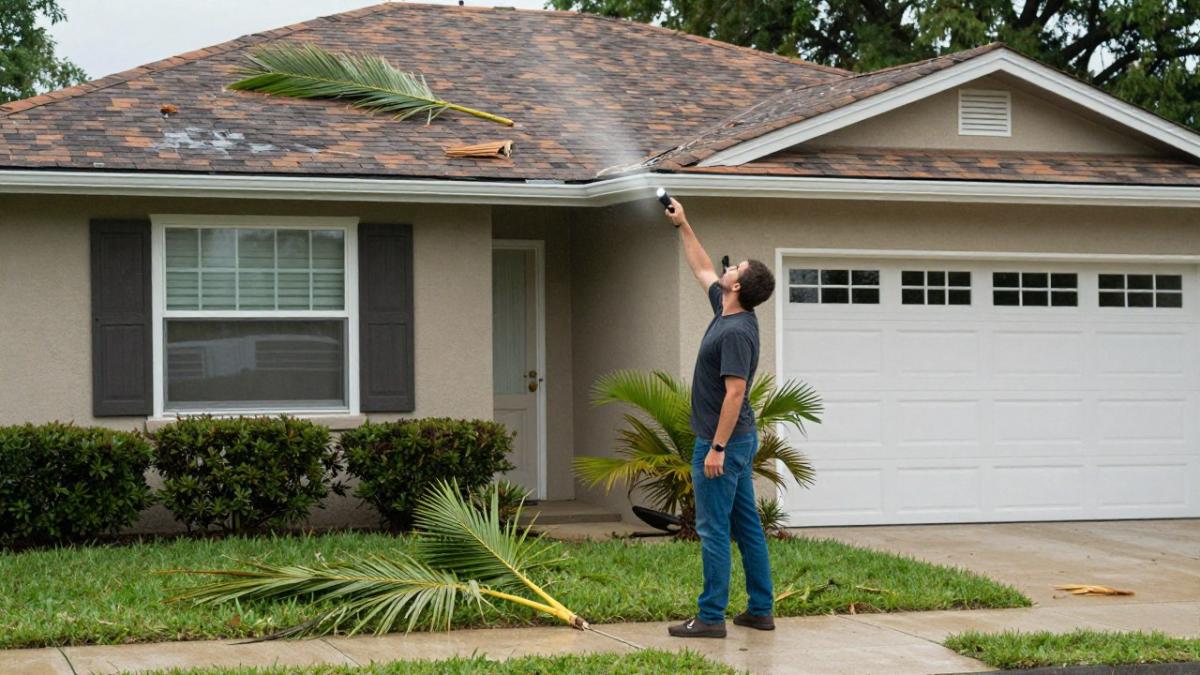
A practical post-storm sequence looks like this: our step-by-step guide to hurricane roof damage walks through each stage in more detail.
- Make it safe first. Stay clear of downed power lines, sagging roof sections, and standing water near the foundation. Do not enter an attic that shows daylight through the roof deck or that smells of smoke or burning.
- Document before you touch anything. Photograph missing shingles in the yard, dented or detached gutters, cracked tiles, bent vent pipes, and fresh debris on the roof surface. Note the date and the storm name if one was assigned.
- Tarp only what is actively leaking. Temporary repairs to stop water intrusion are reasonable, but keep every receipt and photograph the tarp placement. Avoid permanent repairs until an adjuster has seen the damage.
- Check the attic from a safe standing point. Look for water stains on the underside of the roof boards, damp insulation, and daylight coming through the deck. Do not walk on attic joists that look soft or stained.
- Log the inspection. Record the date, what you saw, what you photographed, and any temporary repairs. A simple maintenance log supports a claim and helps you spot changes between storms.
Watch out: a roof that looks intact from the ground can still have lifted shingle tabs, cracked pipe boots, or separated flashing that only a hands-on inspection will reveal.
Use a simple severity guide to decide what happens next:
- Urgent, call a licensed roofer today: active water dripping into the house, visible daylight through the roof deck from the attic, a large area of missing or lifted shingles, a sagging roofline, or a bent or separated vent pipe.
- Schedule within the week: localized granule loss, a few cracked tiles, dented gutters, or staining on the underside of the deck that is not actively wet.
- Monitor and document: minor debris, cosmetic staining, or a single lifted shingle tab that is not yet leaking.
Keep a folder, paper or digital, with your photo set, receipts for tarps and temporary repairs, the dates of any professional inspections, and your maintenance log.
If a storm has just passed and you are unsure whether the damage is urgent, book a professional inspection rather than guessing.
Gutters, Trees and Moisture Control Checks
Clogged gutters cause water to back up under shingles and rot the fascia board. Clean them at least twice a year, and more often if you have trees nearby.
Overhanging branches drop leaves, scrape shingles during wind and give squirrels and insects easy access to the roof. Trim them back so they do not touch the roof. Keep a few feet of clearance.
Moisture is the quiet enemy in Florida. Check the attic for damp insulation, musty smells, or dark spots on the underside of the roof boards. Proper attic ventilation helps the whole roof system stay dry and cooler in summer.
When to Call a Licensed Roofer and Book Your Next Inspection
Some roof work should always go to a professional. Call a licensed roofer when you notice active leaks, widespread shingle damage, sagging areas, or any soft spots when you walk the attic floor.
A licensed contractor can also help with permits and engineering if repairs are needed. Compare local roofing options side by side in our Bay Coast vs Green Vista Roofing comparison before you book.
If your roof is due for its twice-yearly check, or a storm just passed through, book an inspection now. Catching a small problem today costs far less than a full repair later.
Frequently Asked Questions
How often should you inspect a roof in Florida?
Most Florida homeowners should schedule a professional roof inspection at least once a year, and ideally twice a year, before hurricane season starts in June and again in the fall. Ground-level visual checks can be done more often, such as after heavy rain, strong winds or any storm. Roofs near the coast, under heavy tree cover or with a history of leaks may need more frequent attention. Keep dated records of every inspection, since they help with maintenance planning and insurance documentation if damage occurs later.
What should homeowners check on a roof after a storm?
Start with a ground-level look for missing, cracked or lifted shingles or tiles, bent flashing, displaced gutters and debris on the roof or in the yard. Check inside the attic and ceilings for water stains, damp insulation or a musty smell. Photograph any damage before cleaning up, and avoid walking on a wet or damaged roof. If you see significant damage, contact a licensed roofer and your insurance company promptly, since many policies have deadlines for reporting storm damage.
How do you clean roof gutters and downspouts safely?
Use a sturdy ladder placed on firm, level ground, and have someone hold it while you work. Never lean out beyond your reach or climb onto the roof surface to clear debris. Remove leaves and sediment by hand or with a scoop, then flush the gutters with a garden hose to confirm water flows toward the downspouts. Clear any blockages at the downspout outlets. If the gutters are high, damaged or sagging, or you are uncomfortable on a ladder, hire a professional.
When should you hire a roofing professional for an inspection?
Hire a licensed roofer for a full inspection at least once a year and after any significant storm. Call promptly if you find active leaks, widespread granule loss, soft or sagging decking, damaged flashing around penetrations, or shingles that are curling or missing in clusters. Professionals can check areas that are unsafe to reach, document conditions for insurance purposes and recommend whether a repair or replacement makes more sense for your roof's age and condition.