 How-to
Metal Roof Over Shingles: Can You Do It Safely?
Quick Summary
Yes, you can often install a metal roof over existing shingles, but only when local code allows it, the roof deck is sound, and the manufacturer approves the method. Metal roof over shingles installations skip tear-off costs, yet hidden deck damage and extra weight make inspection essential first.
- Get local code and manufacturer approval for the overlay in writing before signing.
- Count existing roof layers from the attic and check the local maximum allowed.
- Probe the deck for soft, spongy, or crumbling wood at valleys and penetrations.
- Furring strips create a flat surface and airflow, but cost more than direct-to-shingle.
- An overlay hides deck damage permanently, so any rot will remain after installation.
Table of Contents
- Can You Install a Metal Roof Over Existing Shingles?
- Step 1: Confirm Local Code, Permit and Manufacturer Rules
- Step 2: Inspect the Roof Deck and Count Existing Layers
- Step 3: Choose the Installation Method and Underlayment
- Metal Roof Over Shingles Pros and Cons
- Metal Roof Over Shingles Problems to Watch For
- Scheduling Your Roof Assessment With LRI Restorations
- Frequently Asked Questions
Can You Install a Metal Roof Over Existing Shingles?
Last Updated: November 13, 2026
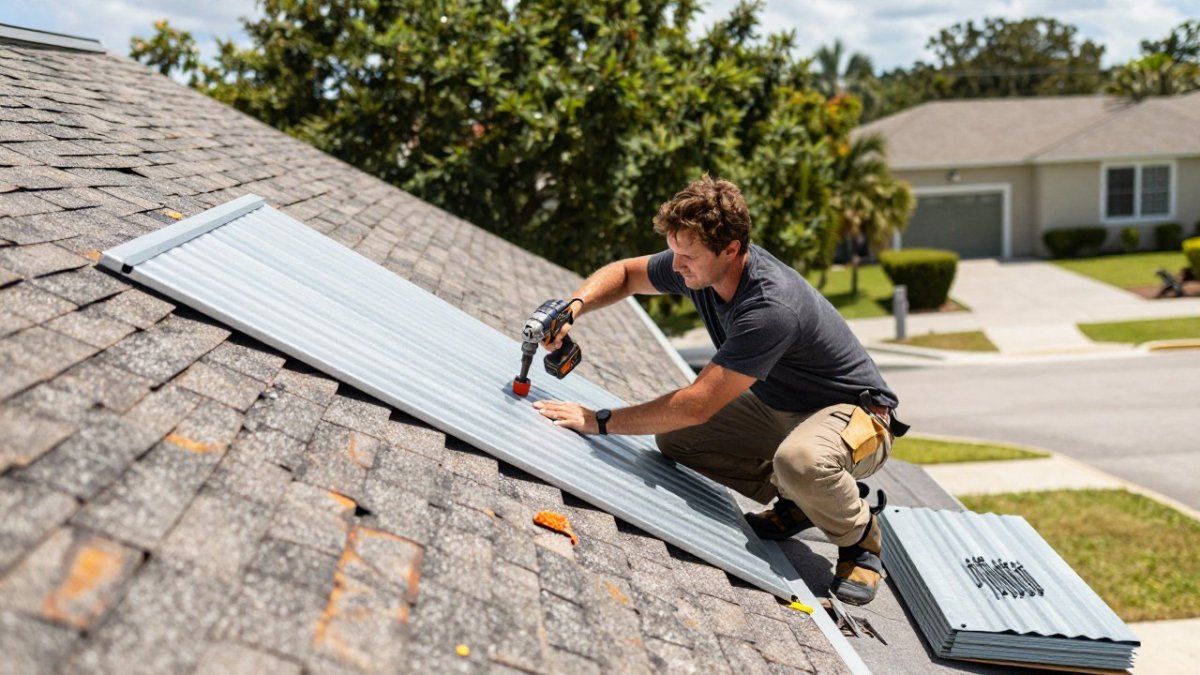
Yes, you can often install a metal roof over existing asphalt shingles, but only when local code allows it, the existing roof is sound, and the new system is installed correctly.
Metal roof over shingles installations, sometimes called overlays, skip the cost and mess of tearing off the old roof. That savings is real. But a shortcut only works when the conditions underneath it are right.
We group the decision into three checks: code and permits, the roof deck and layer count, and the installation method. Work through them in order. For a broader look at which materials hold up best locally, see the Best Roofing Materials for Florida Climate guide.
Step 1: Confirm Local Code, Permit and Manufacturer Rules
Start with your local building department rather than a sales pitch. The overlay question is decided by three separate authorities, and all three have to say yes: the adopted building code and local amendments, the metal roofing manufacturer's installation instructions, and your homeowner insurance carrier if the roof is insured or claim-funded.
What the code actually regulates
Many jurisdictions in the United States adopt the International Residential Code (IRC) or a state-specific variant. Local amendments can limit how many roof covering layers are allowed, so confirm the rule in your area with the building department. The practical questions to put to the permitting office are:
- What is the maximum number of roof covering layers allowed on a residential roof in this jurisdiction?
- Does the adopted code or any local amendment prohibit installing a new roof covering over an existing one?
- Is the home inside a wind-borne debris region or a high-wind zone with additional fastening or product-approval requirements?
- Does the metal roof product need a current evaluation report or product approval number for this address?
Ask for the answer in writing, by email or through the online permit portal. A verbal 'should be fine' from a clerk is not a defense if the inspector red-tags the job after the panels are on.
Permit mechanics that trip people up
An overlay is still a re-roof permit in nearly every jurisdiction, even though no tear-off occurs. Expect the permit application to require the existing layer count, the proposed covering, the underlayment product, and the fastening schedule.
Watch out: a permit issued for a tear-off and re-roof does not automatically authorize an overlay, and a permit issued for an overlay does not authorize adding a third layer later.
Manufacturer approval is a separate gate
Even where code allows an overlay, the metal roofing manufacturer's published installation instructions control the warranty.
Get the manufacturer's written approval for the specific product and the specific substrate before signing a contract. The product data sheet and installation manual should be attached to the proposal. If the contractor cannot produce them, that is a signal the overlay is being sold on price rather than on a compliant system.
Insurance and wind-rating considerations
If the roof is part of an insurance claim, the carrier's scope of loss may specify tear-off and may not pay for an overlay, or it may pay for an overlay only if the adjuster approves the method in advance. Impact-resistant and wind-rated product requirements also vary by jurisdiction and by carrier, and a metal roof that meets the local product-approval standard may still not meet a carrier's discount criteria.
Step 2: Inspect the Roof Deck and Count Existing Layers
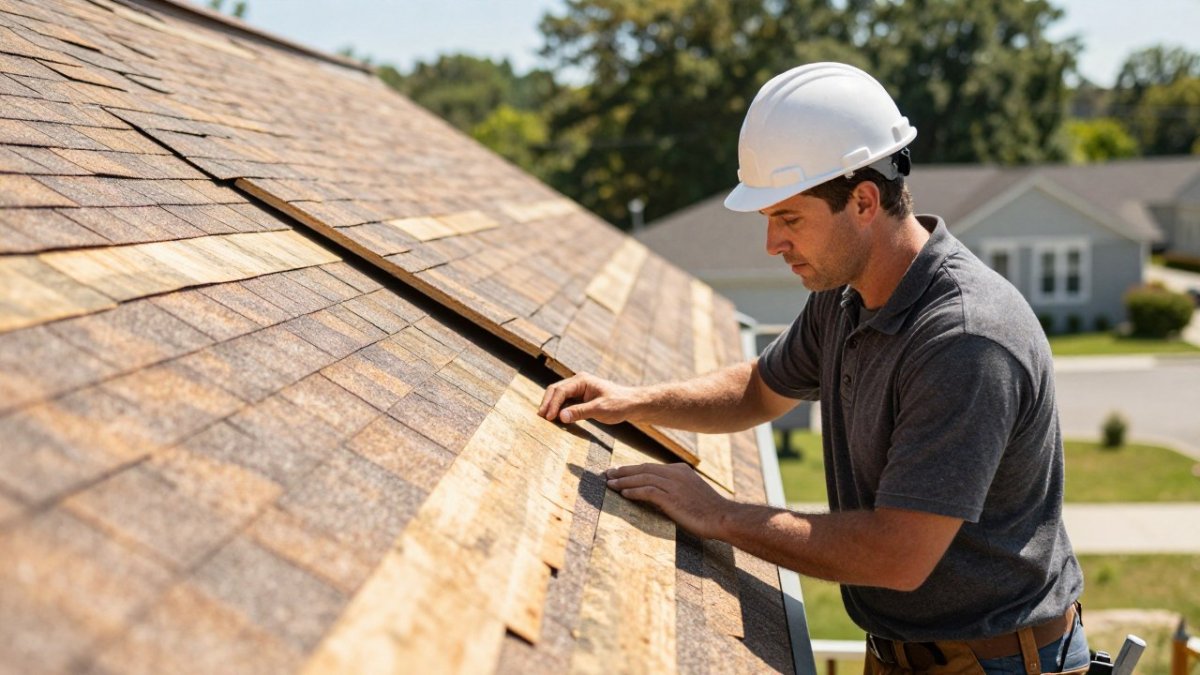
The roof deck, which is the plywood or OSB sheathing under the shingles, has to carry the extra weight and hold fasteners securely. A metal roof adds weight, so a deck that is already soft, rotted or water-stained is not a candidate for an overlay. Before weighing that trade-off, you can compare Florida-specific metal roofing cost per square foot. This is the step most overlay articles gloss over, and it is the step that determines whether the project is safe.
Count the layers correctly
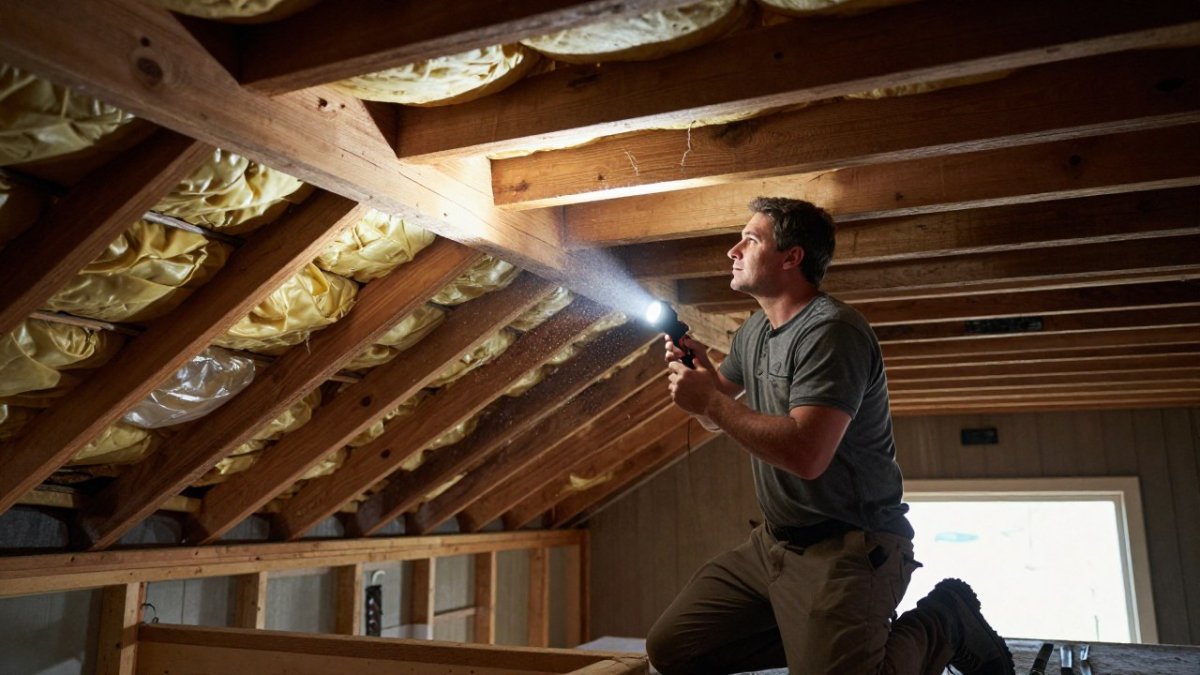
Layer count is not always obvious from the ground. Do it from the attic and at a gable or rake edge where the roof build-up is exposed.
- From the attic, look at the underside of the sheathing. Each re-roof usually leaves a visible line of nails or staples through the deck, and a second layer often shows a second set of fasteners offset from the first.
- At a rake edge, measure the total thickness of the roof build-up. Two layers read noticeably thicker than one, and the step at the drip edge can be a helpful tell.
- Check the permit history at the building department. Prior re-roof permits usually state whether a tear-off occurred or a layer was added, which resolves ambiguous cases.
Layer limits vary, so confirm the local limit with the building department rather than assuming it.
Inspect the deck, not just the shingles
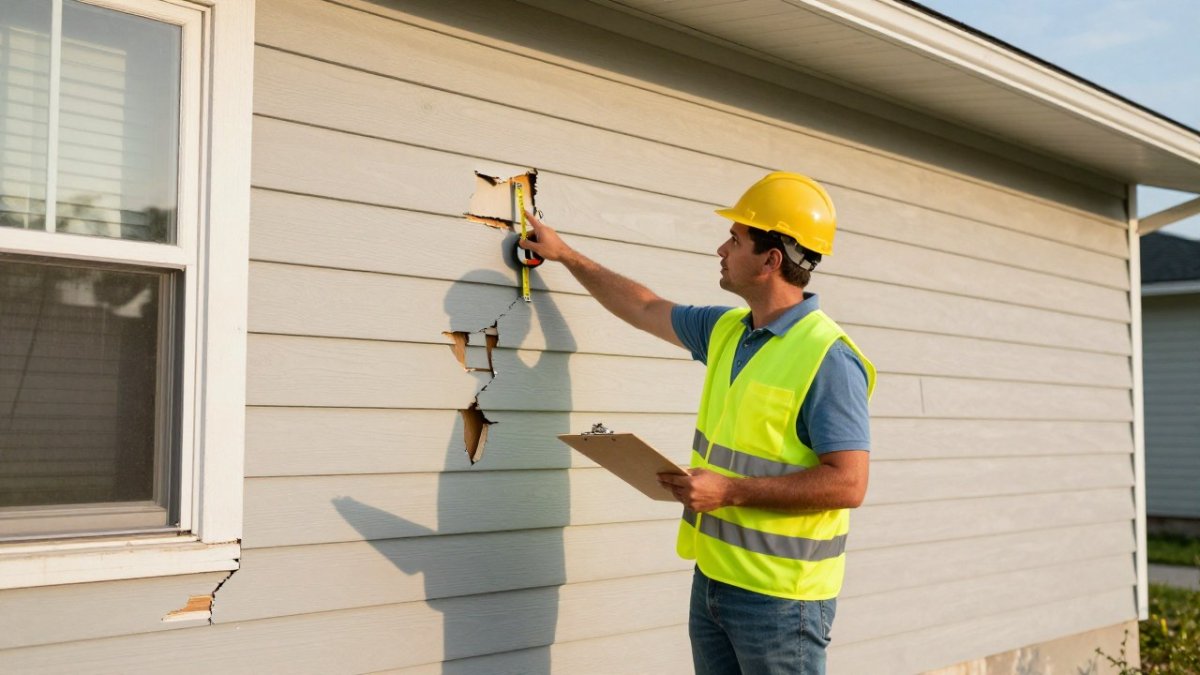
The shingles can look fine while the sheathing underneath is failing. Work through these checks:
- Walk the roof and press on the deck between rafters. Soft, spongy, or flexing areas indicate decay or delamination.
- Probe suspect areas at valleys, chimneys, skylights, and vents with a screwdriver or awl. Wood that yields easily or crumbles is rotted and must be replaced.
- Look for staining and rusted fasteners in the attic. Dark rings on the sheathing, rusted nail tips, or daylight through the deck can point to long-term moisture intrusion.
- Check for sagging along the ridge and eaves. A sagging roofline can indicate compromised sheathing, failing rafters, or both, and an overlay will not fix either.
- Check the attic for condensation on the underside of the deck in cold weather. Wet sheathing means the ventilation is inadequate, and trapping it under a new metal layer accelerates decay.
Watch out: an overlay hides the deck permanently. Any defect you can see now will still be there after the metal goes on, and it will be far more expensive to reach.
Map findings to the installation method
The inspection result should drive the system choice, not the other way around.
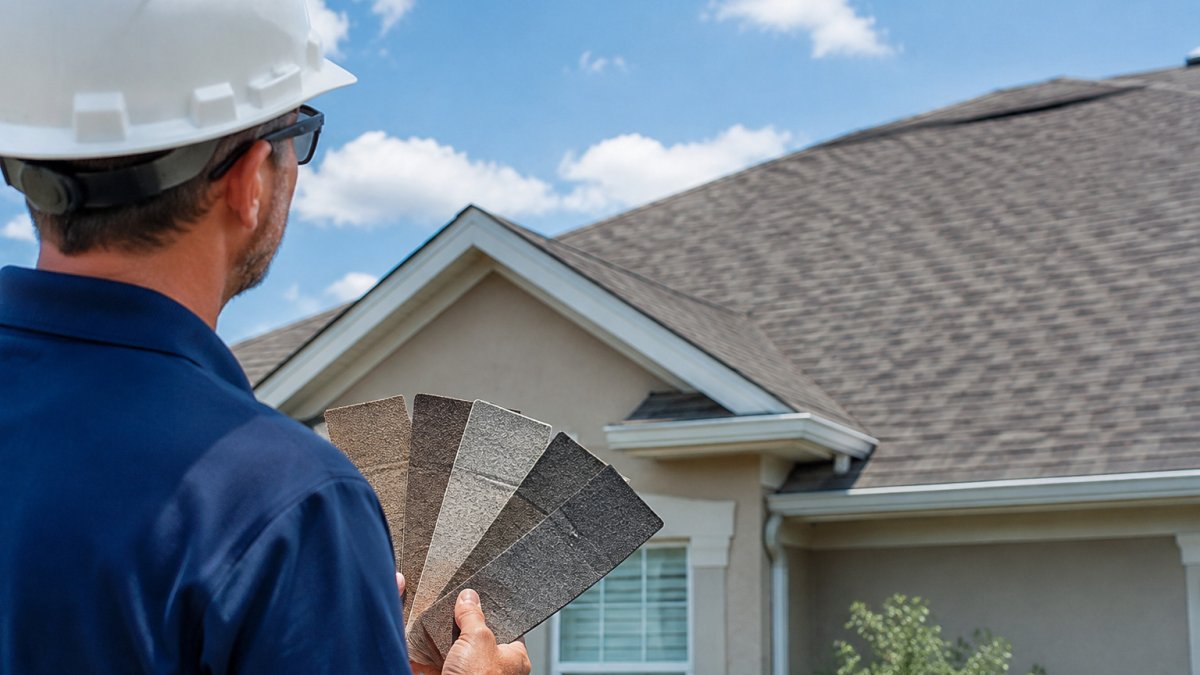
- Exposed-fastener panels can often go over a sound single layer of shingles with approved underlayment, but they telegraph substrate irregularities, so wavy or curled shingles need furring or a tear-off.
- Standing seam systems generally require a flatter, more uniform substrate. Many manufacturers require battens or a solid deck, and some do not approve direct application over shingles at all.
- Metal shingles and tiles are the most substrate-sensitive. Uneven shingles show through the stamped profile, so most installers require a smooth substrate or a tear-off.
If the deck is sound and the layer count is within the local limit, an overlay can proceed with the manufacturer's approved underlayment and fastening schedule.
Before deciding on an overlay, the article's checks come down to a few key limits and signs worth comparing side by side.
| Check | What to look for | Why it matters |
|---|---|---|
| Layer count | Local limit on roof covering layers | Code may prohibit a further layer |
| Attic view | Second set of offset nail or staple lines | Shows an existing extra layer |
| Rake edge | Noticeably thicker roof build-up | Signals two layers of shingles |
| Deck feel | Soft, spongy or flexing areas | Indicates decay or delamination |
| Probe test | Wood that yields or crumbles | Rotted decking must be replaced |
| Attic staining | Dark rings or rusted nail tips | Points to long-term moisture intrusion |
| Ridge and eaves | Visible sagging | Suggests compromised sheathing or rafters |
Step 3: Choose the Installation Method and Underlayment
Once code and the deck check out, choose how the metal will attach. There are two main approaches.
Furring Strips Versus Direct-to-Shingle Installation
Direct-to-shingle means fastening the metal panels straight through the shingles into the deck.
Furring strips (also called battens) are wood or metal strips fastened over the shingles. The metal then mounts on the strips, which creates a flat, even surface and a small air gap for ventilation.
Underlayment is the other key decision. A quality synthetic underlayment or ice-and-water membrane at the eaves, valleys and penetrations adds a moisture barrier that shingles alone cannot provide.
Metal Roof Over Shingles Pros and Cons
An overlay is not the right choice for every home. Weigh these points against your roof's actual condition.
Pros:
- Avoids tear-off labor and disposal costs, which can be significant
- Can add an extra barrier against weather
- Shorter installation time and less debris
- Keeps the old roof in place as a secondary barrier during installation
Cons:
- Adds weight, which the structure must support
- Hides any existing deck damage until it becomes a bigger problem
- Trapped moisture can cause rot if ventilation is poor
- Some codes and warranties prohibit it
Compared with a full tear-off, the overlay saves money upfront but leaves you with less visibility into the deck. A tear-off lets the crew inspect and repair the decking directly. Many homeowners find that tear-off is worth the extra cost when the existing roof is old or already showing damage.
Metal Roof Over Shingles Problems to Watch For
The most common problems show up after installation, not during it. Watch for these warning signs:
- Trapped heat: A hot attic can shorten the life of the metal and the shingles below.
- Moisture buildup: Condensation under the panels can cause rust and wood rot.
- Telegraphing: Uneven shingles can show through the metal as ripples or waves.
- Flashing mistakes: Valleys, roof edges and penetrations need proper flashing. Poor flashing is a frequent cause of leaks.
- Noise: Metal can amplify rain and hail sound if the installation lacks insulation or a solid underlayment.
Ask any contractor how they handle flashing at valleys, roof edges and vent penetrations before you agree to a plan.
Scheduling Your Roof Assessment With LRI Restorations
Deciding whether an overlay is safe takes a close look at your roof, your attic and your local rules. LRI Restorations manages projects from permitting to final inspection, and the team has experience navigating insurance claims.
If you're weighing a metal roof over shingles, schedule a roof assessment with LRI Restorations to find out whether your deck, layers and local code support an overlay. You can also read our metal roof over shingles pros and cons breakdown or review impact-resistant shingle options for Florida homes before you decide.
Get a Quote
Frequently Asked Questions
What are the cons of putting a metal roof over shingles?
The main drawbacks are added weight, trapped heat and moisture if ventilation is poor, and hidden deck damage that cannot be seen until the old layer is considered. Uneven shingle surfaces can also make panel alignment harder and may require furring strips. Fasteners and flashing details must be planned carefully, and some manufacturers void warranties when metal is installed over existing shingles. A pre-installation inspection helps identify these problems before work begins.
Is it illegal to put a metal roof over shingles?
Not automatically. Whether an overlay is allowed depends on the local building code, the jurisdiction's limit on roof layers, and the metal roofing manufacturer's installation requirements. Many areas permit one additional layer under specific conditions, but some do not. Check with your local building department before ordering materials, because an installation that violates code can cause permit denials, insurance complications and resale problems.
Do you need a permit to put a metal roof over shingles?
In most jurisdictions, yes. Re-roofing work generally requires a permit so the building department can confirm the roof structure, layer count and installation method meet code. Permit requirements, submittal documents and inspection steps vary by county and city. Ask your contractor who will pull the permit and schedule the final inspection, since that responsibility should be clear in your contract.
Can you install a metal roof over shingles without furring strips?
Sometimes. Direct-to-shingle installation can work when the existing shingles are flat and well bonded and the manufacturer approves it. Furring strips or battens are often recommended when the old surface is uneven, because they create a flat nailing base and an air gap that supports ventilation. The right choice depends on the metal roofing system, the condition of the shingles and local code.