 How-to
7 Reasons Structural Checks Matter After a Storm
Last Updated: October 30, 2026
Quick Summary
Structural integrity checks are necessary after storms because damage often hides behind finished surfaces, such as water trapped in walls or loosened roofing. A careful check confirms whether a building can still carry its loads and keep out the weather, and it identifies what needs attention first.
- Evacuate and do not inspect if you see sagging members, cracks wider than a quarter inch, or a gas smell.
- Cracks wider than a quarter inch, or cracks that are widening, warrant a call to a professional.
- Check the windward side of the building, which takes the brunt of wind-driven rain.
- Readings above 20% in wood framing suggest a moisture problem.
- Re-inspect after the next rain and monitor cracks for widening over several weeks.
Table of Contents
- Why Structural Integrity Checks Are Necessary After a Storm
- Safety First: What to Do Before You Inspect
- Signs of Structural Damage After a Storm
- Step-by-Step Post-Hurricane Building Inspection Checklist
- Step 1: Exterior Visual Sweep (Homeowner-Safe)
- Step 2: Building Envelope Check (Homeowner-Safe)
- Step 3: Interior Walk-Through (Homeowner-Safe, With Limits)
- Step 4: Storm-Specific Damage Mechanisms (Know What You're Looking For)
- Step 5: Know When to Stop and Call a Professional
- Step 6: Schedule Follow-Up Monitoring
- How Soon to Inspect a Home After a Storm
- When a Structural Engineer Storm Damage Inspection Is Needed
- Scheduling Your Post-Storm Inspection With LRI Restorations
- Frequently Asked Questions
Storms rarely leave their worst damage where you can see it. A roof can look fine from the street while water has already seeped into the attic, and a wall can crack inside while the siding looks intact. Hidden storm damage on a roof is often the hardest to spot from the ground, so the warning signs below are worth checking closely.
Why Structural Integrity Checks Are Necessary After a Storm
A storm can weaken a building in ways that do not show up right away. Wind uplift loosens roofing materials. Flying debris punches holes in the building envelope. Heavy rain then finds its way inside and starts to rot wood and feed mold.
Here are the main reasons a check matters:
- Safety: A weakened roof, wall, or floor can fail under normal use or the next rain.
- Hidden moisture: Water trapped in walls and insulation causes rot long after the storm ends.
- Insurance: Documenting damage early supports your claim.
Many homeowners assume a building that is still standing is safe. In practice, damage can hide behind finished surfaces. A quick check helps you decide what needs attention first.
Safety First: What to Do Before You Inspect
Before you walk the property, you need to make a triage decision: is this a building you can safely inspect, or is it a building you should leave? Most post-storm injuries happen when homeowners treat a dangerous structure as a curiosity. Use the following framework to sort the situation before you take a single step inside.
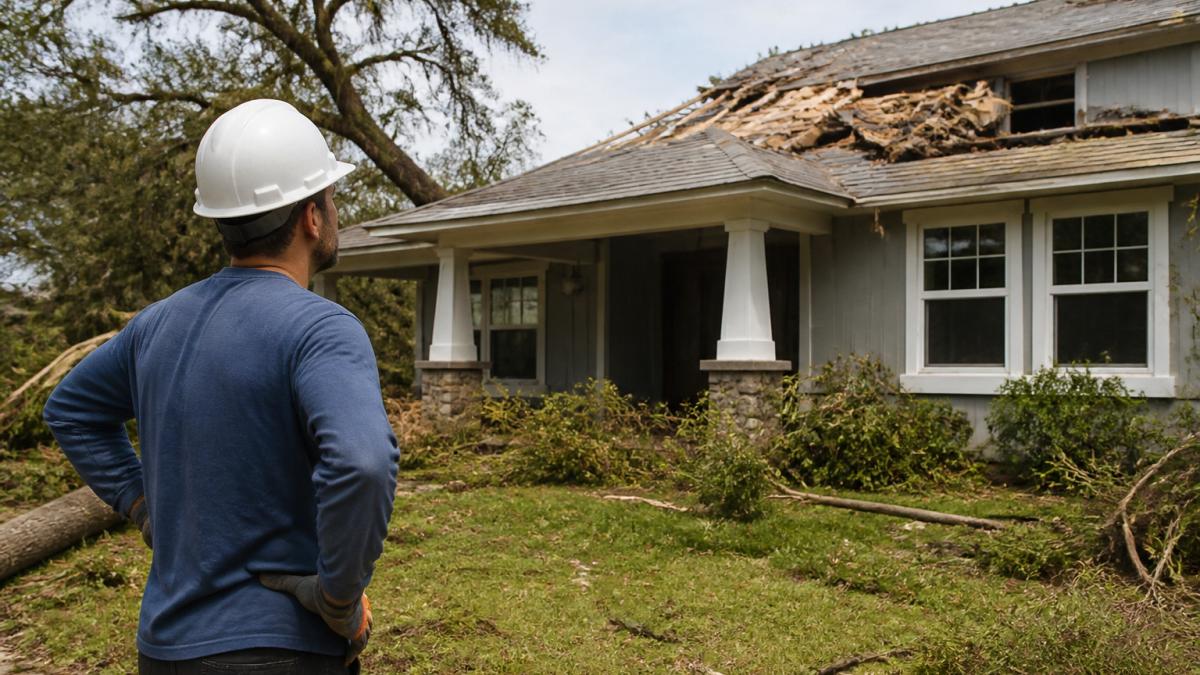
Evacuate Immediately, Do Not Inspect, If You See:
- Sagging or bowing structural members. A ceiling that dips, a wall that bulges, or a roof line that sags indicates the load path has been compromised. Do not walk under it.
- Doors that no longer latch or square. If a door frame has racked out of plumb, the wall around it may be shifting. Leave and call a professional.
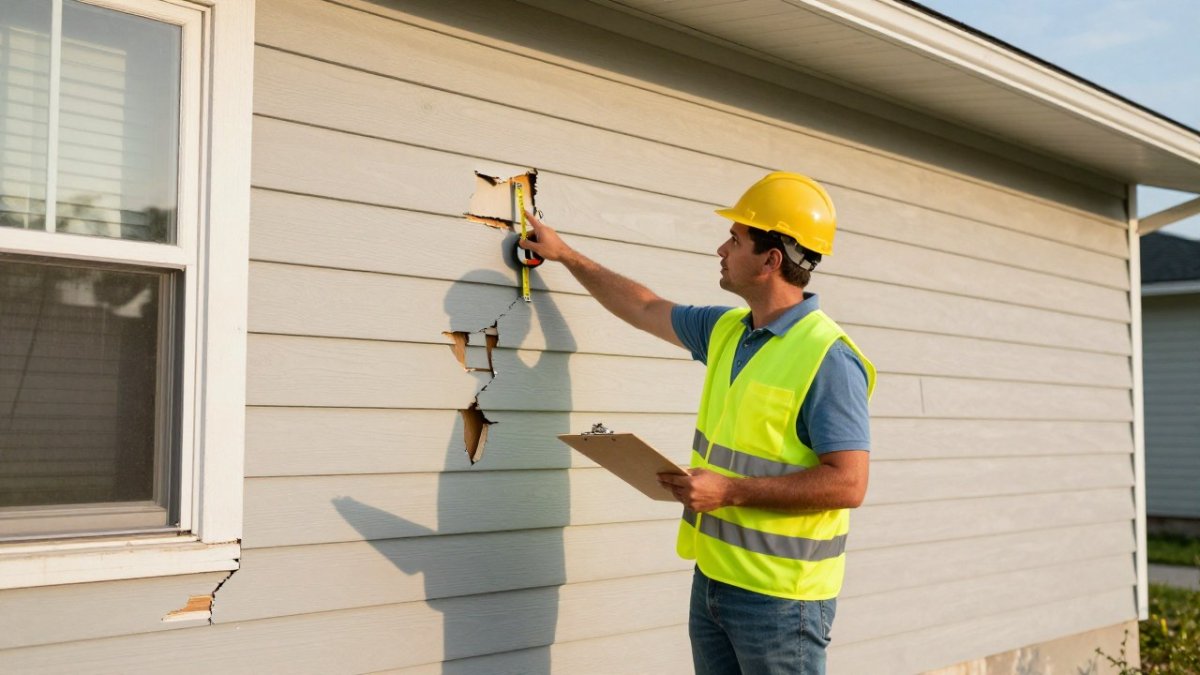
- New cracks wider than a quarter inch, or cracks that are actively widening. Hairline cracks are common after storms; cracks you can fit a coin into are not.
If any of these conditions are present, restrict access to the area, keep others out, and contact a licensed structural engineer or your local building official before re-entering.
Inspect With Caution, But Only From Safe Vantage Points, If:
- You see missing shingles, lifted flashing, or dented siding but no interior sagging.
- There are water stains on ceilings but no bulging or active dripping.
- Windows or doors stick slightly but still close.
- Debris is present but the structure appears plumb from the exterior.
Even in these cases, follow basic safety limits: never climb a damaged roof, never inspect alone, wear sturdy shoes and gloves, and keep a phone on you. If you smell musty odors or see mold, limit your time inside and wear an N95 respirator.
Signs of Structural Damage After a Storm
Some warning signs are easy to spot from the outside. Others need a closer look. Common signs of structural damage after a storm include:
- Cracks in walls, especially diagonal ones or cracks that widen
- Doors or windows that stick or no longer close properly
- Walls or porches that lean or appear out of plumb
- Missing shingles, lifted flashing, or exposed roof decking
If you see several of these signs together, the damage is likely more than surface wear. Treat that as a reason to get a professional assessment.
Step-by-Step Post-Hurricane Building Inspection Checklist
A post-storm inspection is not a single walk-through; it is a sequence that moves from safe, visual checks to more invasive observations, and it should stop where your qualifications end. The workflow below separates what a homeowner can safely do from what requires a licensed professional, and it accounts for the fact that different storms cause different damage.
Step 1: Exterior Visual Sweep (Homeowner-Safe)
Start at the street and walk the perimeter at a safe distance. Use binoculars to inspect the roof line, chimney, and upper walls. Look for:
- Missing, lifted, or creased shingles (wind uplift)
- Dented gutters, vents, or siding (hail impact)
- Debris embedded in siding or roof (wind-driven debris)
- Foundation cracks or soil erosion around the perimeter (flooding/scour)
Do not climb a ladder or roof. Note what you see and take photos from the ground.
Step 2: Building Envelope Check (Homeowner-Safe)
The building envelope, roof, siding, windows, doors, and seals, is the first line of defense. Check for gaps around windows and doors, cracked stucco or masonry, and lifted flashing. Pay special attention to the windward side of the building, which takes the brunt of wind-driven rain. If you find openings, seal them temporarily with tarp or caulk to prevent further water intrusion, but do not attempt permanent repairs until a professional assesses the cause.
Step 3: Interior Walk-Through (Homeowner-Safe, With Limits)
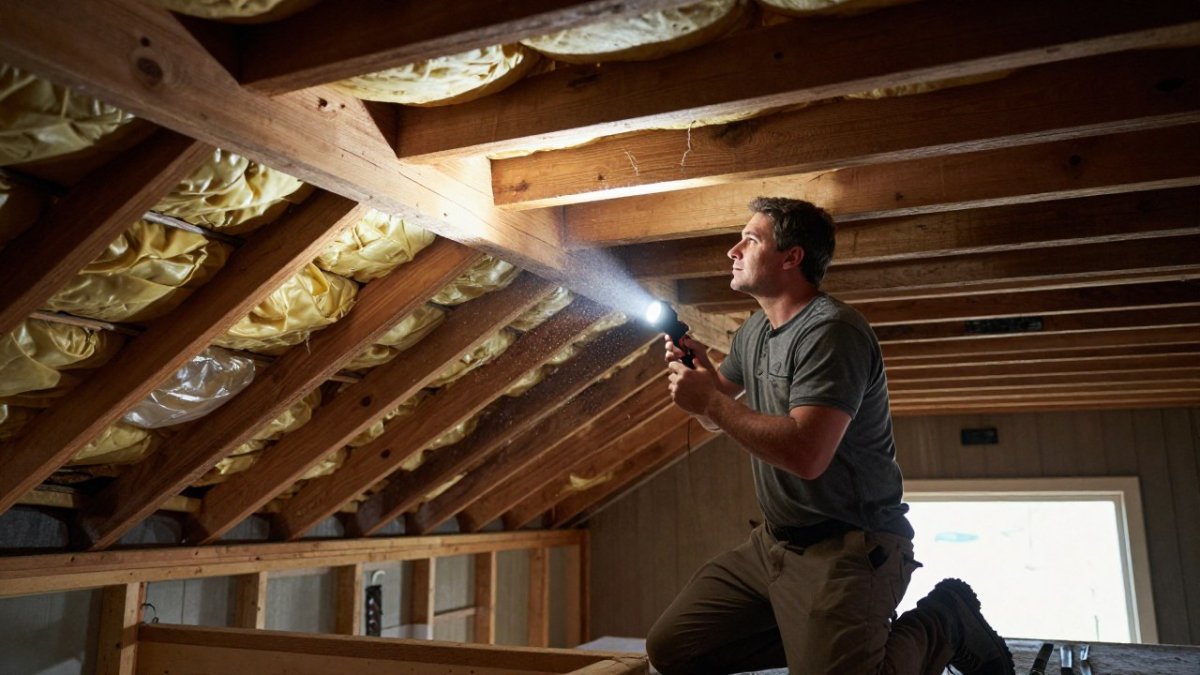
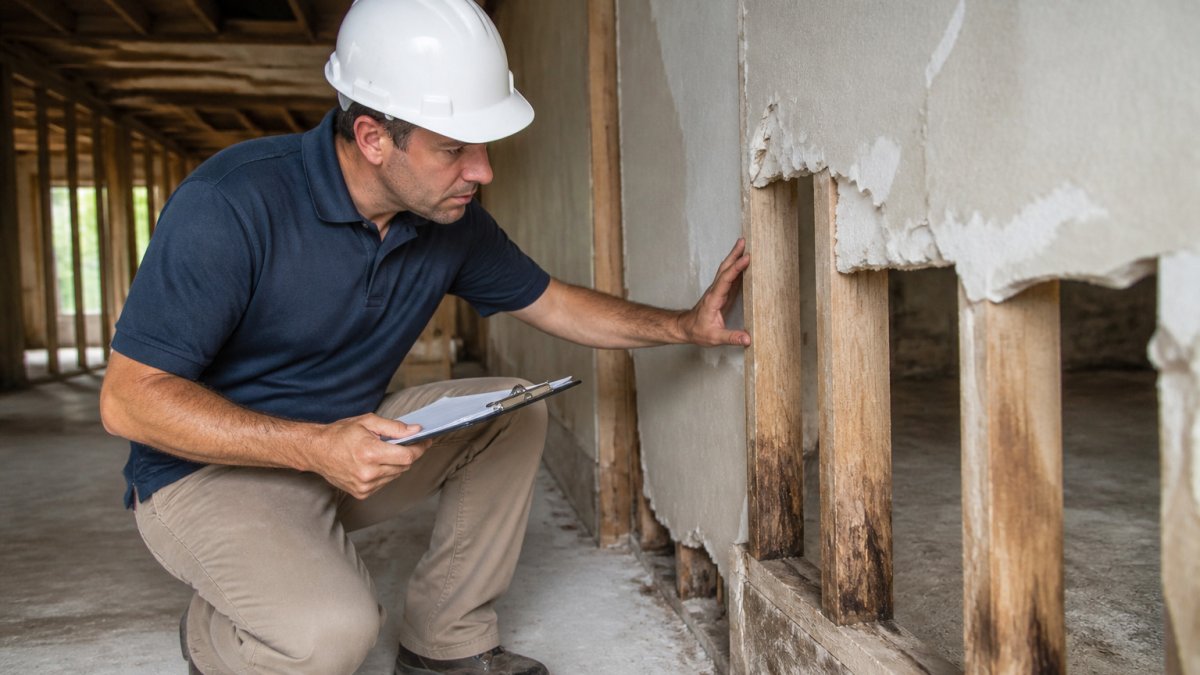
Inside, check ceilings, walls, and floors for water stains, cracks, and sagging. Press gently on drywall near stains, softness or crumbling indicates moisture damage. Look for daylight in the attic, wet insulation, or dark staining on roof sheathing. Use a moisture meter if you have one; readings above 20% in wood framing suggest a problem. Do not remove drywall or insulation yourself; that is a professional task.
Step 4: Storm-Specific Damage Mechanisms (Know What You're Looking For)
Different storms leave different signatures. Use this guide to focus your inspection:
- Wind: Look for uplifted roof edges, missing shingles, and racked door frames. Wind can also drive rain horizontally into wall cavities, so check interior walls on the windward side for stains.
- Hail: Inspect roof shingles for bruises or granule loss, and check metal surfaces (gutters, vents, AC units) for dents. Hail damage is often invisible from the ground, so a professional roof inspection is warranted after any significant hail event.
- Flooding: Check for mud lines, warped baseboards, and soft flooring. Floodwater can undermine foundations and saturate wall cavities, leading to rot and mold within days. Do not re-enter a flooded building until the power is off and the structure is deemed safe.
- Debris impact: Look for punctures in the roof or siding, cracked windows, and embedded objects. Even small punctures can let in significant water.
Step 5: Know When to Stop and Call a Professional
Stop your inspection and call a licensed structural engineer or qualified inspector if you see:
- Cracks wider than a quarter inch or cracks that are widening
- Walls or floors that are visibly out of plumb
- Sagging roof lines or ceilings
- Damage to load-bearing elements (beams, columns, headers)
A formal structural assessment differs from a general home inspection: it focuses on the load path and structural safety, often includes engineering calculations, and produces a report suitable for insurance claims or permit applications. A general home inspection is broader but less detailed on structural capacity. If your insurer disputes the damage, an engineer's report carries more weight.
Step 6: Schedule Follow-Up Monitoring
Some damage appears late. Re-inspect after the next rain to check for new leaks, and monitor cracks for widening over the next few weeks.
This workflow gives you a safe, structured way to assess your property while knowing exactly when to hand off to a professional. It also helps you coordinate with your insurance adjuster by providing clear, organized evidence of the damage.
The article lays out a sequence of inspection steps, each with its own focus and safety limits:
| Step | What to check | Who does it |
|---|---|---|
| 1. Exterior visual sweep | Roof line, siding, gutters, foundation, leaning trees | Homeowner, from ground |
| 2. Building envelope check | Gaps at windows and doors, cracked stucco, lifted flashing | Homeowner, temporary seal only |
| 3. Interior walk-through | Ceiling and wall stains, soft drywall, wet insulation | Homeowner, no drywall removal |
| 4. Storm-specific damage | Wind, hail, flooding, or debris signatures | Homeowner, knowing what to look for |
| 5. Know when to stop | Cracks over a quarter inch, sagging, damaged load-bearing parts | Licensed structural engineer or inspector |
| 6. Follow-up monitoring | New leaks after next rain, widening cracks over weeks | Homeowner, with a dated log |
How Soon to Inspect a Home After a Storm
Inspect as soon as it is safe to enter. Early checks catch water intrusion before it spreads and make your insurance documentation stronger. If you cannot enter safely on day one, check from the outside and schedule an interior inspection once the area is cleared. Recheck the property over the next few weeks, since moisture and rot can appear late.
When a Structural Engineer Storm Damage Inspection Is Needed
Some damage goes beyond what a homeowner can judge. Call a licensed structural engineer when you see cracks that widen, walls that lean, sagging roof lines, or damage to load-bearing elements. An engineer's report also helps when an insurance company disputes the extent of the damage. Many homeowners find that an engineer's written findings carry more weight than a contractor's opinion alone.
Scheduling Your Post-Storm Inspection With LRI Restorations
If you are unsure what your property needs, LRI Restorations can help you plan the next steps. Our team handles permitting, engineering coordination, and final inspections, and we help homeowners work through insurance claims. You can request a quote from LRI Restorations to start the conversation, or learn how to fight denied insurance claims if your insurer has already reduced your storm claim.
Frequently Asked Questions
Why should a home be inspected for structural damage after a storm?
Storm damage is not always visible from the ground. Wind, flying debris and standing water can weaken load-bearing elements, loosen roofing materials and open the building envelope to moisture. Water that enters through small openings can cause trapped moisture, rot and mold inside walls and ceilings long after the storm passes. A structural integrity check looks for these problems early, before they turn into larger repairs or safety hazards. Documenting the findings also supports insurance claims, so it is worth completing before you start repairs.
What are the signs of structural damage after a storm?
Common warning signs include new cracks in walls, foundations or stucco, doors and windows that stick or no longer close properly, floors that slope or feel soft, ceilings with sagging or water stains, and walls that appear to lean or shift. Missing shingles, lifted flashing and damaged soffits point to building envelope problems. Musty odors and discoloration often signal hidden moisture. If you notice any of these signs, avoid the affected area and contact a qualified professional before making repairs.
How soon should you inspect a home after severe weather?
Inspect as soon as conditions are safe to do so, and only after you have confirmed the structure is not in immediate danger. Early inspection matters because moisture problems worsen quickly, and temporary protection such as tarps may be needed to prevent further water intrusion. Take photographs and video of all damage before cleanup begins, since this documentation supports your insurance claim. Schedule a more detailed professional assessment if you see structural warning signs or if the storm caused significant flooding or wind damage.
When should you call a structural engineer after a storm?
Call a structural engineer when you see signs of structural movement, such as leaning walls, widening cracks, sagging roof sections or separation between the walls and foundation. An engineer is also worth calling if your insurance company requires a formal assessment, if the building has suffered flood or fire damage in addition to wind damage, or if you plan major repairs to load-bearing elements. A structural engineer storm damage inspection goes beyond a general home inspection and produces documentation that can guide repairs and permits.